Qazal Hesar Prison ‘Hacked’ by ‘Adalet Ali’ Group; Charges Against 1,846 Prisoners Exposed
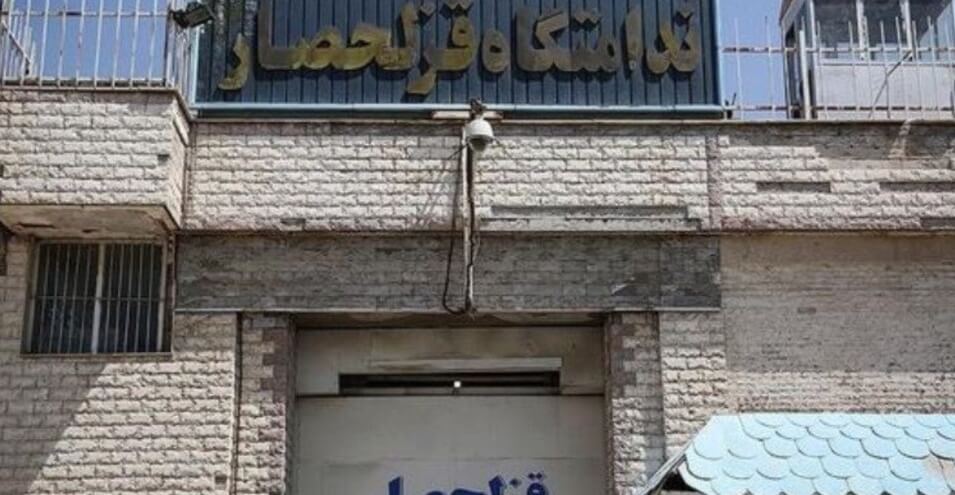
The cyber group ‘Adalet Ali’ told Radio Farda that it has hacked parts of the Qazal Hesar prison system in Karaj and provided documentation.
The group has provided Radio Farda with documents that include a list of hundreds of people arrested during the November 2019 protests and their charges. The list includes charges such as “disrupting public order,” “anti-regime propaganda activities,” “insulting” two leaders of the Islamic Republic’s history in cyberspace, and “assembly and conspiracy to act against the country’s security.”
In this list containing the names of 1,846 detainees, a large number have been sentenced to imprisonment ranging from one month to ten years, and a significant number have been sentenced to lashing.
Many examples of these charges and “criminal acts” in the list stand out.
For example, in the case of one detainee, it is written: “He repeatedly appeared at gathering locations on Pirouzi Street and sent a text message to relatives for showing off.” This person was sentenced in absentia to one year imprisonment and 74 lashes.
Another person received one year imprisonment and 20 suspended lashes for two years for “parking a car at an angle in Yaft Abad.”
For another detainee it is written: “While covering his face, although he claimed to have a cold, he chanted slogans against the system.” This defendant received 10 months imprisonment and 74 suspended lashes for three years.
The charge of another person who received three months imprisonment and 10 lashes was described as “admitting a mistake in parking and starting to watch on Imam Ali Highway following the riots with other citizens.”
Another detainee, based on “photos in the file regarding insulting the leader of the revolution on banknotes under the title of the headquarters for commemorating November 7,” received eight months of punitive detention and four months of recopying from books.
Among those released, only a small number received orders to cease prosecution. Almost all individuals released from the recent Qazal Hesar prison list were released conditionally and on bail, guarantee, or commitment, and thus effectively still had open cases at the time this list was published.
Many detainees faced charges of “disrupting public order” and “assembly and conspiracy.” Some examples, along with destruction of public property and stone-throwing and clashes, include the following:
Honking horns, shouting, clapping, taking photos of fires in the middle of the street, covering faces with masks, filming and photographing gatherings and sending them on WhatsApp, blocking Imam Ali Highway with a Peugeot Pars, being present at the gate of Tehran University at gathering locations and chanting slogans and participating in illegal protests and attempting to cancel university classes, videos showing support for monarchists and insulting clergy and leadership, creating a WhatsApp group to go to Shahid Hemmat Highway, sending videos to people outside the country, carrying brass knuckles, having a significant number of books in PDF format on the defendant’s phone supporting the Pahlavi era, shouting, moving with people towards a gas station, extensive activity in cyberspace (Twitter) as a social media leader, signing a statement on press freedom, discovery of a “Lion and Sun” flag from home, chanting slogans, presence at gatherings, blocking the highway.
In a new message sent by the ‘Adalet Ali’ group to Radio Farda, it stated: “Just moments ago we also hacked Qazal Hesar prison in Karaj to expose the oppression and suppression of the regime in another one of its terrifying prisons and to prevent it from concealing things again.”
The group added that “all of us Iranian people are political prisoners of this despotic regime and we will transform this Decade of Dawn into a decade of resuming nationwide protests.”
The cyber group ‘Adalet Ali’ also provided Radio Farda in August of this year with videos containing images of torture, mistreatment of prisoners, beating and stripping them, smuggling drugs into the prison, clashes between officials, and prisoners’ suicide attempts.
Following the publication of these images, several Islamic Republic officials reacted to the incident.
The First Vice President of the Judiciary and a member of the Islamic Consultative Assembly initially called the Evin prison videos “montage” and “Zionist filmmaking,” but then the head of the judiciary without any explanation dismissed Mohammad Mehdi Hajmohammadi, the head of the Prison Organization.
On February 3, the ‘Adalet Ali’ group also provided Radio Farda with a “highly confidential” seven-page document from the meeting of the “Crisis Prevention Working Group on Livelihood Security,” in which it was emphasized that “society is in a state of underground explosion” and social dissatisfactions in the past year had increased by “300 percent.”
This document is the complete text of the seven-page minutes from November 20, 2021 of the Tharallah Headquarters meeting, chaired by Brigadier General Hossein Nejat, Deputy Commander-in-Chief of the IRGC at the headquarters, in which representatives of the Tehran Prosecutor’s Office, Tehran Intelligence Organization, Police Information and Public Security of the IRGC, Basij Economic Intelligence, IRGC Seyyed al-Shohada Corps, IRGC Prophet Corps, Basij Tradesmen Organization, and IRGC Intelligence Organization were present.
Source: Radio Farda