Reporters Without Borders Criticizes Intensification of Internet Censorship in Iran
Reporters Without Borders has announced that Iran intends to hand over control of social networks to armed forces. Iran’s government has been called upon to abide by international commitments. Iran has decided to create a “digital wall.”
The issue concerns the plan “Protecting User Rights in Cyberspace and Organizing Social Messengers.” Behind this complex title lies a plan that, according to Reporters Without Borders, has been presented with the aim of intensifying internet censorship.
Reporters Without Borders has announced that the Islamic Republic of Iran, by presenting this plan to the Islamic Consultative Assembly, aims to completely hand over control of traffic on social networks and the internet to armed forces.
For example, Article Five of the “Protection Plan…” states: “Digital border control and cyber defense of the country and prevention of unauthorized exploitation of virtual data at the country’s bandwidth entry and exit gateways, centered on the General Staff of the Armed Forces, shall be carried out by relevant authorities.”
In the same article, it states that the scope and boundaries of the duties of “digital border control and cyber defense” shall be determined by the proposal of the General Staff of the Armed Forces and must be approved by the Leader of the Islamic Republic of Iran, Ayatollah Ali Khamenei.
Reporters Without Borders, in its statement, expressed concern about the imminent approval of this plan in parliament and called on the Iranian government to adhere to its international commitments and refrain from implementing this law.
Intensification of Internet Censorship
The Reporters Without Borders statement referred to another section of the “Protection…” plan and stated that anyone who violates the provisions envisioned in this plan will be imprisoned for “between 90 days to six months.”
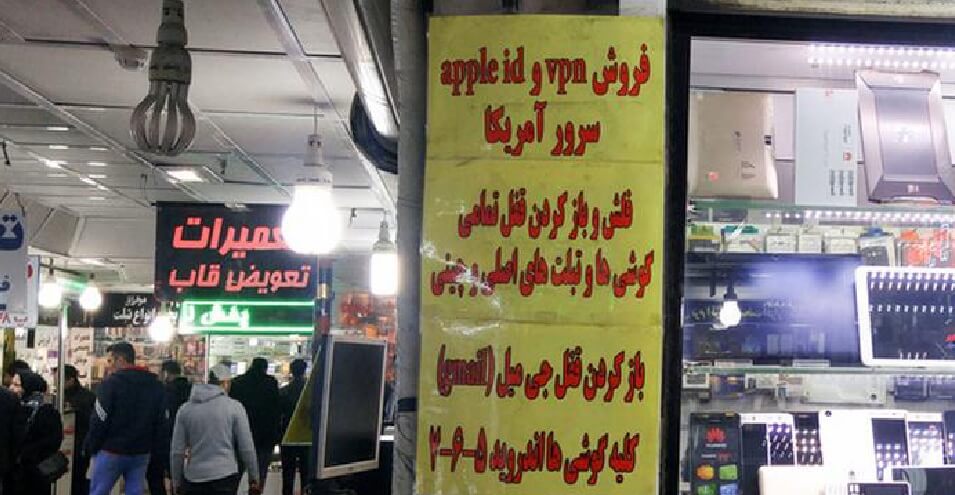
The report states that those who engage in producing or distributing various types of filter-breaking tools and electronic computer devices such as VPN (virtual private network) can be sentenced to two years in prison and payment of heavy fines.
Iris de Villarès, head of the technology section at Reporters Without Borders, stated that the approval of such a law would mean “completely controlling social networks, preventing access to information and denying the fundamental right of Iranians to obtain information.”
In the Reporters Without Borders statement, the implementation of such a plan under the title of creating a “digital wall” is mentioned.
The head of the technology section at Reporters Without Borders stated that the Iranian government, in exchange for restricting and blocking foreign social networks and messengers, will actually provide people with a version of what is called “halal internet.”
Iris de Villarès also stated that the Islamic Republic has signed many international treaties and including agreements governing free and unlimited access to the internet.
He described the approval of this law by the Islamic Consultative Assembly as a serious threat to freedom of expression in Iran.
The Reporters Without Borders statement said that despite censorship and restrictions imposed, social networks such as Facebook, Twitter, and Telegram continue to play an important role in providing news and information to the Iranian people.
In the statement, it is noted that the limitations and internet censorship imposed do not apply to senior government officials and not only do they have access to all websites and networks, but also enjoy the right to freely post their opinions. Reporters Without Borders described this as a clear example of digital discrimination.
The statement noted that in the 2020 global freedom of expression rankings, Iran ranked 173rd out of 180 countries.
Source: DW