Reporters Without Borders Says Arrest of Journalists in Iran Has Increased
Reporters Without Borders issued a statement warning about the increase in the number of detained and imprisoned journalists in Iran and called on the United Nations Special Rapporteur to immediately take action to investigate the human rights situation in Iran.
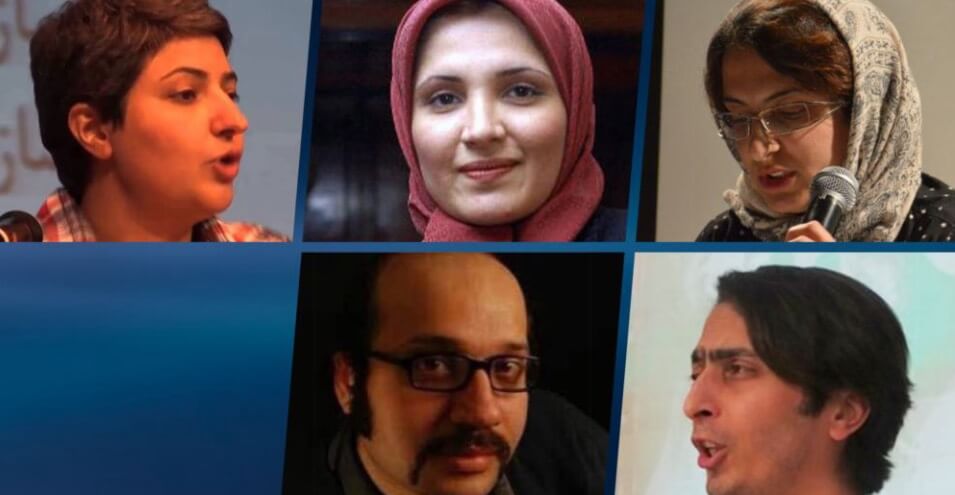
According to the statement released on Wednesday, December 18, with the arrest of four journalists named “Jelve Javaheri,” “Kaveh Mozaffari,” “Farugh Samieinia,” and “Ahmad Zahed Langrudi,” the editor of Gilan Monthly magazine on December 5, and during the ceremony of the fortieth day of mourning for Navid Behboudi, one of the victims of November protests held in Gorgan Zarmikh, Gilan Province, the number of detained journalists in Iran has reached 12 people.
Previously, Voice of America reported the arrest of some of these individuals; according to available reports, these detainees remain in detention despite their families’ follow-up, and Kaveh Mozaffari, one of the detainees, stated in a conversation with his family that a bail of 100 million tomans has been set for the release of each of these individuals, but when the families of these people approached the prosecutor’s office, they were told that the case is in the hands of the Ministry of Intelligence and the prosecutor’s office will not accept bail until the case file is received.
Reporters Without Borders described the inhumane and degrading treatment of ideological prisoners, including journalists and citizen reporters by the Islamic Republic authorities in Iran, as a clear violation of the Universal Declaration of Human Rights and the International Covenant on Civil and Political Rights, and stated that the Islamic Republic is one of the signatories of this declaration and international covenant and should be bound by its provisions.
Reza Maeini, head of the Iran and Afghanistan section of Reporters Without Borders, also stated that “Javaid Rahman,” the UN Special Rapporteur, should immediately take action to investigate the human rights situation in Iran.
Reporters Without Borders also referred in this statement to the recent inhumane and degrading treatment by prison officials toward Narges Mohammadi and her transfer to Zanjan Prison, and the transfer of journalist Hengame Shahidi, a detained reporter in Iran, to a psychiatric hospital instead of transfer to Taleghani Hospital.
According to human rights sources, Narges Mohammadi, a civil activist imprisoned in Iran who has been in prison since mid-May 2015, was forcibly transferred to Zanjan Prison after a sit-in along with seven other prisoners in protest of the November killings.
Previously, Jeremy Dear, Deputy Secretary General of the International Federation of Journalists, in a meeting held to discuss the pressures and security threats of the Islamic Republic government against Iranian journalists outside Iran, referring to the Iranian government’s treatment of journalists, said: “This behavior demonstrates a violation of human rights and collective punishment of hundreds of journalists and their families.”
Reporters Without Borders also previously issued a statement announcing that the Islamic Republic of Iran has used the charges of “espionage” and “cooperation with [hostile] countries” to arrest and convict many journalists… This is while the Foreign Ministry of the Islamic Republic of Iran and the Supreme Judicial Council have formally announced that Iran is not at war or in conflict with any country.
The Islamic Republic of Iran ranks 170th out of 180 countries in the world in Reporters Without Borders’ 2019 World Press Freedom Index.
International bodies have repeatedly considered the Islamic Republic of Iran a violator of freedom of expression and a restrictor of media.
The U.S. State Department also previously published material titled “40 Years of Unfulfilled Promises” by the Islamic Republic on its Persian Twitter account and wrote about corruption, lack of freedom of expression, lack of justice, and unfulfilled economic promises by the Islamic Republic authorities.
In these tweets, the U.S. State Department wrote that “Forty years ago, Ayatollah Khomeini promised freedom of expression and freedom of the press. Today, Iran has one of the most repressed media spaces. The ruling regime has brought nothing but 40 years of failure.”
Source: Voice of America