Request for Retrial of Haidar Ghorbani’s Death Sentence Rejected; Shadow of Execution Looms Over Another Prisoner
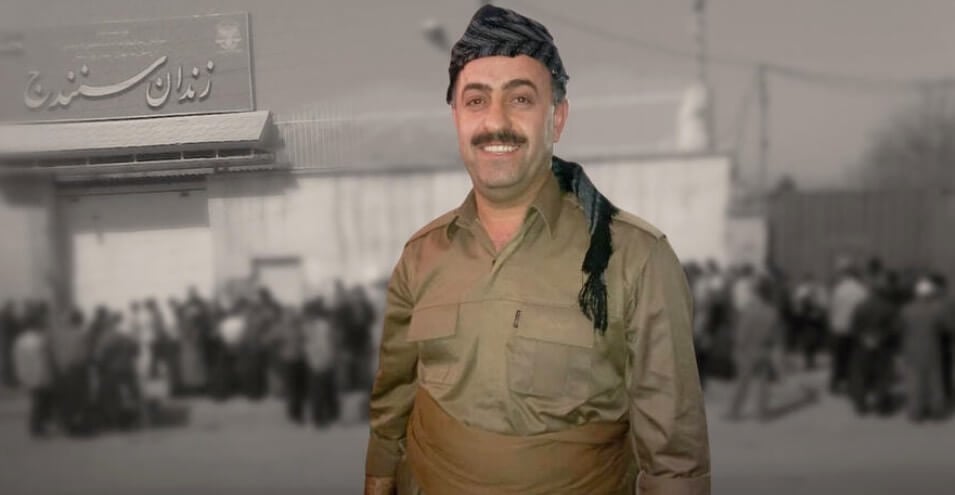
The request for retrial filed by the defense lawyer of Haidar Ghorbani, a political prisoner sentenced to death, has been rejected by Iran’s Supreme Court, leaving this political prisoner at risk of execution.
Saleh Nikbakht, the defense lawyer for this political prisoner, said on Monday, September 24, in an interview with Voice of America, while protesting the process of case follow-up in the judicial system, that the issued verdict was “illegal” and “religiously unlawful,” adding: “If the laws that we ourselves have passed are not enforced, then whom should we turn to? This ruling does not comply with the law nor with religious principles, and the death sentence against Haidar Ghorbani has no basis.”
Ghorbani’s lawyer explained: “We submitted the retrial request to the Supreme Court in late August of this year; however, unfortunately, this request was rejected on September 15 by Branch 27 of the Supreme Court, and on Sunday, September 23, the verdict was delivered to Haidar Ghorbani at Sanandaj Central Prison. This is while the judiciary has not requested the legal case from the first branch of the Revolutionary Court of Kurdistan Province.”
This lawyer states that in the issued verdict, it was mentioned that the lawyer’s request for retrial regarding the “complicity in murder” verdict was rejected; however, the subject of the retrial request was the death sentence issued by the first branch of the Islamic Revolutionary Court on the charge of “moharebeh” (enmity against God), which condemned Mr. Ghorbani to death, and the charge of complicity in murder pertains to a different case in the first branch of the criminal court of Sanandaj Province.
According to Mr. Nikbakht, the first branch of the criminal court of Sanandaj Province had previously sentenced this political prisoner as “complicity in the murder of three people, to three consecutive sentences of 30 years in prison, and currently this political prisoner is sentenced to death on the charge of moharebeh; a charge that is a religious crime.”
Mr. Nikbakht clarified: “In Islamic jurisprudence, the condition for conviction on this charge is that the person must be armed and have taken up arms. However, nowhere in all stages of the investigation into Mr. Ghorbani’s case has it been stated that he was armed.”
This lawyer also states that Haidar Ghorbani, in all his court sessions before the judges and in previous interrogations, denied before the IRGC intelligence agency any cooperation with any of the Kurdish parties. He adds: “Based on the ruling issued by the first branch of the criminal court of Sanandaj, this political prisoner neither took up arms nor was armed. Therefore, he cannot be tried and sentenced to death as a person engaged in moharebeh.”
Furthermore, this lawyer states: “On Saturday, September 22, a request to implement Article 477 was sent through Mr. Ghorbani’s family to the office of Ebrahim Raisi, the head of the judiciary. The issued verdict is contrary to religious law, and Mr. Ghorbani, even if it were proven that he was a member of a party, since he did not take up arms, cannot be sentenced to death. If the request to implement Article 477 is not accepted, the execution of the sentence would be against the law.”
Article 477 of the Islamic Republic’s Criminal Procedure Law grants the head of the judiciary the authority to prevent the execution of verdicts “contrary to religious law.”
Based on information released by some human rights media outlets, Haidar Ghorbani, along with Mahmoud Sadeqi, his brother-in-law, was arrested in October 2016 by officers of the Information Ministry. During interrogation, he was forced under severe torture to confess to “cooperation and complicity in the murder of several Revolutionary Guards members.” Mr. Ghorbani was sentenced to death in January 2020 by the first branch of the Revolutionary Court of Sanandaj, headed by Hossein Saeidi, on charges of “moharebeh” and “cooperation and membership in the Democratic Party of Iranian Kurdistan,” and this sentence was formally delivered to him in early February 2020 at Sanandaj Central Prison. This verdict was confirmed on August 7 by Branch 27 of the Supreme Court and was referred to the execution department.
What Does His Family Say
One of this political prisoner’s brothers, in an interview with Voice of America, while expressing concern about Haidar Ghorbani’s condition, told Voice of America: “All family members are in shock upon hearing the news of the rejection of the retrial request by the Supreme Court and cannot take any action. My brother does not deserve execution, and there is no one to answer us, and we do not know where to take our case.”
Mr. Ghorbani states that before his arrest, Haidar Ghorbani had no political activity and had never been imprisoned. He said: “My brother did not even confess to murder or any other charge in the forced confessions broadcast from Iranian television. He only confessed that he transported a few people by car.”
This political prisoner’s brother told Voice of America that his family was able to visit him at Kamyaran Prison at least a year and a half after Haidar Ghorbani’s arrest by Information Ministry officers in October 2016. However, according to Mr. Ghorbani, during that visit, this political prisoner was unable to communicate with his family due to the torture he had endured and the psychological pressure applied during his detention.
Forced Confessions
Forced confessions accompanied by violence by Iranian security forces have been mentioned repeatedly before. The use of this method of extracting confessions, which has been criticized many times by human rights organizations, continues to be used by the Islamic Republic’s judiciary. Some of these forced confessions by detainees such as those of Maziar Bahari, Maziar Ebrahimi, Sepideh Ghiliyan, Ibrahim Bakhshi, Saeid Malekpour, and dozens of others have been published on Iran’s official television networks.
Mr. Ghorbani, referring to the fact that this political prisoner’s father, named Ali Ghorbani, who was a member of the Democratic Party of Iranian Kurdistan, was killed in 1981 by Islamic Republic officers in villages around Kamyaran, said: “We are under the sword of the Islamic Republic. We have pursued this case many times. We have visited the Supreme Court, the Kamyaran Court, and Ebrahim Raisi’s office several times. But no one is accountable, and they do not even look at the case. There is no ear willing to even listen to the words of the case lawyer so that a fair trial can be held.”
This political prisoner’s brother concluded his interview with Voice of America by saying: “We ask all people in the world to do whatever is in their power not only for Haidar Ghorbani, but for all young people who innocently go to the gallows, so that the execution of these loved ones does not embitter the lives of their families.”
The U.S. State Department has repeatedly condemned violent actions and widespread suppression of protesters in various cases, as well as the repeated and continuous violation of the rights of Iranian citizens by the ruling regime in that country.
Source: Voice of America