Reuters: Iran Has Adopted an Approach Similar to Syria in Supporting Yemeni Houthis
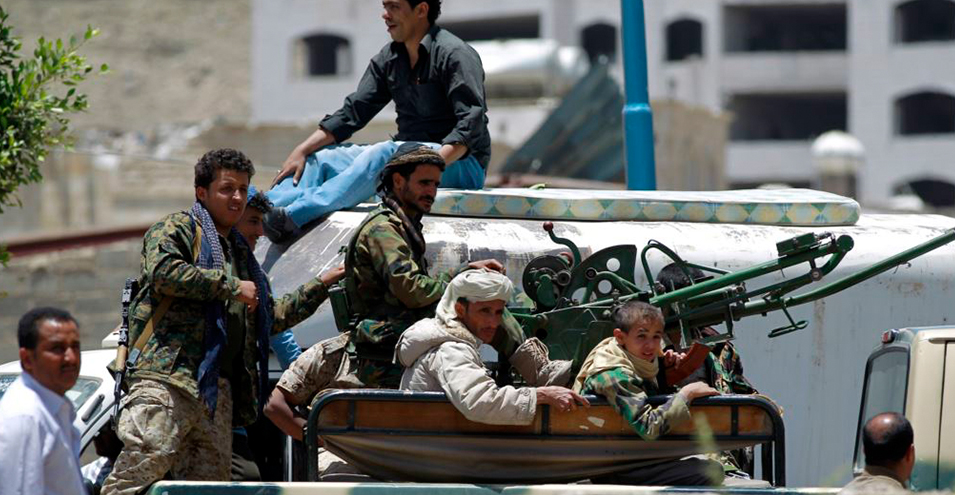
Reuters reported on Tuesday, the first day of Farvardin, citing Western and regional sources that Iran has increased support for Houthi insurgents in Yemen’s civil war and has taken steps to send advanced weapons and deploy military advisors.
Reuters states that these sources emphasized that Iran’s actions could disrupt the balance of power in the region.
These sources, who requested anonymity, clarified that in recent months Iran has taken on a greater role in Yemen’s civil war in terms of sending weapons and military training, which is similar to the approach Iran has adopted in supporting Hezbollah in Syria’s civil war.
Reuters reports that a high-ranking Iranian official said that Qasem Soleimani, commander of the Quds Force of the Revolutionary Guards, held a meeting last month with Revolutionary Guards commanders to discuss ways to “strengthen” Shiite Houthi militias.
This high-ranking Iranian official, who requested anonymity, said: “In this meeting, it was agreed that educational, military, and financial aid (to the Houthis) would be increased.”
Reuters added: Currently, a real proxy war is underway in Yemen and victory in this battle will establish a new balance of power in the Middle East.
Since the beginning of conflicts in Yemen, Iran has rejected Saudi Arabia’s and other regional Arab countries’ accusations regarding financial and military support to the Houthis, and considers Riyadh responsible for the deteriorating conditions in Yemen.
With the help of Lebanese Hezbollah militias in Syria’s civil war, Iran supports the government of Bashar al-Assad. This is while Saudi Arabia supports opponents of the Bashar al-Assad government.
Reuters states that Iran’s increased support for Shiite Houthi militias in Yemen, given the Trump administration’s coming to power in America, could be a sign of increasing influence of hardliners in Tehran.
Yemen has been experiencing civil war since the summer of 2014. Shiite Houthi militias, in cooperation with supporters of Ali Abdullah Saleh, former president of Yemen, brought Sana’a, the capital of the country, under their control.
With the seizure of Sana’a by Houthi militias, Abdrabbuh Mansur Hadi, president of Yemen, was forced to leave the capital and his government is now based in Aden.
In March 2015, a coalition of Arab countries led by Saudi Arabia entered the war in Yemen in support of Abdrabbuh Mansur Hadi to prevent the advance of Shiite Houthi militias.
According to Reuters, General Ahmed al-Assiri, spokesman for the Saudi-led coalition, also emphasized the existence of documents and evidence of smuggling weapons to Yemen through various routes.
This is while the United Nations reported in a report last week that the civil war in Yemen has resulted in 60 percent of Yemenis, approximately 16 million people, being in a “critical and emergency” situation due to the need for food supplies.
Source: Radio Farda