Reza Pahlavi's trip to Italy, demanding pressure on the Islamic Republic and exposing the human rights crisis
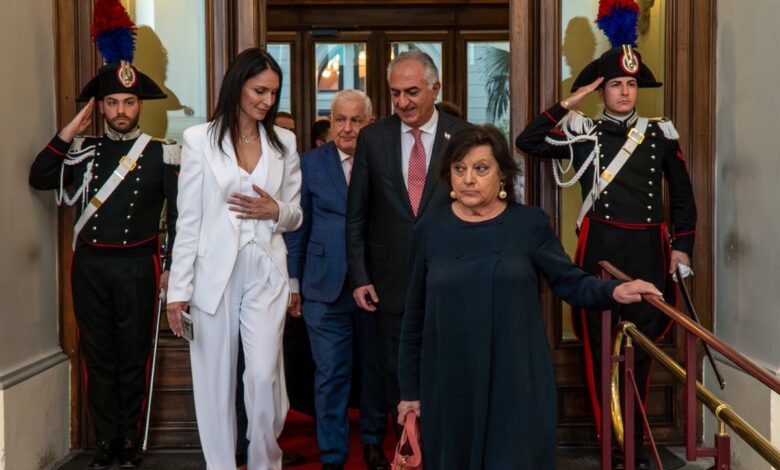
During Prince Reza Pahlavi's visit to Italy, pressure on the Islamic Republic, the release of political prisoners, and an end to Internet repression were the main focus of discussions with Italian senators.
In recent days, Prince Reza Pahlavi's visit to Italy and his meetings with a number of senators and members of parliament from various political parties have become a topic of interest in the media and political circles. According to published reports, these meetings took place in Rome and in the Italian Senate building, and the main focus of them was to review the situation in Iran, the role of the international community, and especially Europe, in the country's political developments. According to news sources, he also met with Senator Maurizio Gaspari, chairman of the Foreign Affairs and Defense Committee of the Italian Senate, during this trip.
In the atmosphere of these discussions, what has been highlighted is the emphasis on the human rights situation in Iran and the role of European countries towards the Islamic Republic. This visit took place at a time when in recent years, the issue of internal repression, the crisis of political prisoners and extensive communication restrictions in Iran have become one of the axes of criticism of human rights organizations. In the media reports related to these meetings, a special focus is seen on the political message of this visit and the attempt to attract the attention of European politicians to the situation inside Iran.
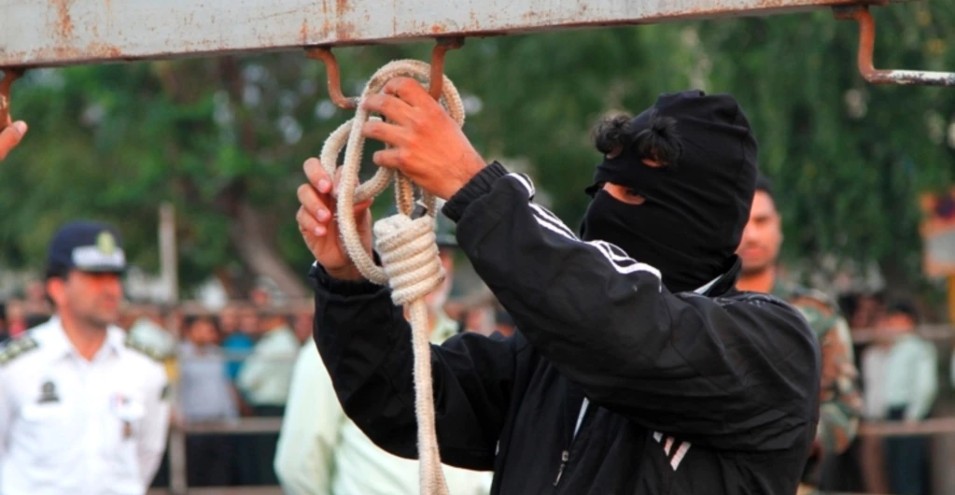
Within this framework, Reza Pahlavi, during his meetings, emphasized a series of political and human rights demands, including increased diplomatic pressure on the Islamic Republic, support for the release of political prisoners, an immediate halt to executions, and the need for free access to the Internet for Iranian citizens. These themes raised in the meetings have been described as part of an effort to garner political support at the European level against the domestic situation in Iran.
The political climate of the talks has also shifted to the issue of the moral responsibility of European countries towards the situation in Iran, where critics of the Iranian government hold the current structure responsible for the spread of human rights crises and widespread civil restrictions. In contrast, these meetings are an attempt to raise the issue at the level of European foreign policy.
In another part of this trip, it is mentioned that several meetings were held with Italian senators from different parties, in which the issue of "the Islamic Republic's war against the Iranian nation" and its consequences on Iranian society were discussed. These narratives emphasize the effort to change Europe's political view of developments in Iran and show that the issue of Iran is still on the agenda of some legislative bodies in Europe.
Prince Reza Pahlavi said about the trip in a message on his personal social network: "During my trip to Italy, I met with a number of senators and members of the country's parliament from different parties and discussed the war of the Islamic Republic against the Iranian nation and the moral responsibility of Italy and Europe to support the Iranian national revolution, with the aim of ending the Islamic Republic and achieving freedom and democracy."
"In these meetings, I emphasized the need for diplomatic pressure on the Islamic Republic to restore the internet, release political prisoners, and immediately halt executions. Among these meetings was a meeting with Senator Maurizio Gaspari, Chairman of the Foreign Affairs and Defense Committee of the Italian Senate."
Given these developments, Reza Pahlavi's trip to Italy can be considered part of his efforts in recent years to raise the situation of Iran at the level of international politics; an effort that has been pursued in the form of meetings with European lawmakers and an emphasis on the human rights crisis, political pressures, and the situation of political prisoners.
In published accounts of this trip, some media outlets and social media users have also reacted to the way he was welcomed in Italy (welcomed with military honors), interpreting this as a sign of European political circles' attention to the currents opposing the Islamic Republic. Some of these reactions in cyberspace have been accompanied by support or positive analysis, while others have addressed it with a critical or different perspective.
As one of the well-known political figures of the Islamic Republic's opposition, Reza Pahlavi has been active in the political arena abroad for many years, and during this time he has tried to raise issues related to the human rights situation and Iran's political structure in international forums. On the other hand, there are different and sometimes conflicting views among analysts and public opinion regarding the extent of his political influence and role in Iran's future.
Overall, the reflection of this trip shows that the issue of Iran continues to be of interest in the European political space and on social networks, and any meeting or stance taken at this level quickly turns into widespread discussions and interpretations in public opinion.