Reza Pahlavi’s Statements on Transition, Post-Islamic Republic Economy, and the ‘Covenant of Cyrus’
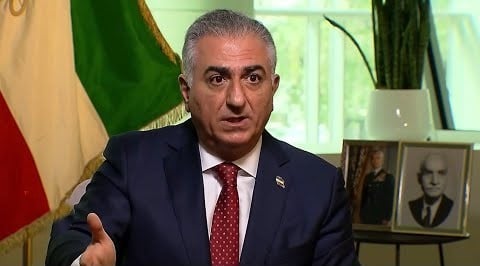
Reza Pahlavi, in an interview, discusses Iran’s current revolution, democratic transition plans, future foreign policy, and his role as a bridge for passage from the Islamic Republic.
Reza Pahlavi, the son of Iran’s last shah, has attempted in an interview to present a coherent vision of Iran’s political and economic future after the Islamic Republic; an interview published simultaneously with the continuation of nationwide protests in Iran and an escalation of violence, which has garnered widespread resonance.
In this conversation, he describes current developments not as a temporary protest but as part of a deeper process, and emphasizes that Iran’s current revolution is a direct continuation of the “Woman, Life, Freedom” movement; a movement that, in his view, has challenged the foundations of the political system’s legitimacy and will be the primary engine of future change.
Reza Pahlavi attempts in this interview to draw a clear line between himself and the traditional image of a return to monarchy. He repeatedly emphasizes that he is not seeking to seize power nor does he intend to predetermine the final form of government. At a time when slogans supporting the Pahlavi family are heard at some protest gatherings, he defines his role as follows: “Not a leader of a particular faction, but a bridge for society’s passage from the Islamic Republic toward a democratic system.”
He clarifies that focusing prematurely on whether future Iran should be a monarchy or a republic is a form of “putting the cart before the horse” and emphasizes that this decision should be made in a democratic process through the drafting of a new constitution.
One of the important axes of the interview is the prince’s effort to reassure the middle class, managers, and technocrats within Iran; a group that, according to many analysts, fears economic collapse in the event of a system change. He does not equate political change with chaos, but rather presents it as an opportunity for Iran’s return to the global economy.
Within this framework, he emphasizes the unfreezing of Iran’s blocked assets and says that in consultations with Western governments, he has prepared a plan for the direct transfer of these resources (estimated at over $100 billion) to an infrastructure modernization fund. According to him, the immediate focus of this program is to solve crises of water, electricity, and energy through cooperation with major global technology companies; a measure that he believes can restore social stability in the shortest possible time.
In another section of the conversation, Reza Pahlavi explicitly calls for an end to the influence of military institutions in Iran’s economy. He bases his solution on mandatory transparency, transferring holdings affiliated with military institutions to the genuine private sector, or placing them under the direct oversight of the Court of Audit.
He simultaneously calls on the international community to weaken the regime’s financial capacity for internal repression and regional proxy activities by blocking informal exchange networks and money laundering channels in neighboring countries.
In a key section of this interview, he emphasizes the role of women, saying: “Iran’s current revolution is rooted in the ‘Woman, Life, Freedom’ movement.” In his view, the active presence of women is not only a human rights demand but also a “prerequisite for economic development.” He considers the repeal of discriminatory laws and the establishment of legal equality to be the first step toward unleashing enormous potential in the workforce and creativity in post-Islamic Republic Iran.
For the day after the fall of the current system, Reza Pahlavi outlines a two-stage framework: “First, the formation of a transitional government to manage the country’s immediate and vital affairs; second, the formation of a Constituent Assembly to draft a new constitution, determine the system of government, and finalize the separation of religion from the state.”
To build consensus among different political factions, he introduces three principles as “pillars of unity”: “Preservation of Iran’s territorial integrity, absolute separation of religion from politics, and legal equality and individual freedoms.” In his view, these three principles are immutable prerequisites for achieving democracy in Iran’s future.
In the realm of foreign policy, Reza Pahlavi emphasizes restoring Iran to a normal status in the international system. He speaks of a program to increase oil production to 6 million barrels per day within three years and makes its realization contingent on complete de-escalation, including joining regional agreements such as the “Abraham Accords.”
He also emphasized that future Iran will elevate this agreement to the “Covenant of Cyrus” and believes this name change symbolizes Iran’s return to its historical role as a factor for peace and cooperation in the Middle East and the establishment of friendly relations with all neighbors, including Israel.
In one of the most sensitive sections of the interview, Reza Pahlavi, in response to the possibility of foreign intervention to remove Ali Khamenei, explicitly states: “Not a single American soldier should set foot on Iranian soil.” He warns that foreign military intervention will strengthen the government’s narrative and instead emphasizes “the diplomacy of boycotts”; that is, cutting the IRGC’s financial lifelines to disable the repression machine.
Reza Pahlavi says that according to reports he has received, the rate of desertion in the lower and middle ranks of the armed forces has increased. Addressing these forces, he says: “You are hostages of this system, not its pillars.”
He speaks of a “conditional general amnesty” for those whose hands are not stained with blood and emphasizes that this policy can help cause erosion within the military establishment. In response to concerns about Syria-ization of Iran, he refers to the existence of a “technical roadmap” aimed at preserving administrative and service institutions after the collapse of the political core of power.
In conclusion, emphasizing the need for a return to economic rationality, Reza Pahlavi dwells on the concept of “justice, not revenge.” He says that addressing crimes must be done in competent courts and in accordance with international standards, while simultaneously warning that “forgiveness” does not mean “oblivion.”
He considers Iran’s reconstruction dependent on the return of elites and human capital and, by addressing Iranian specialists in scientific and financial centers worldwide, promises that the independence of the judiciary and the rule of law will guarantee the security of investment in post-Islamic Republic Iran.
This interview, more than being an announcement of the return of a political family, is an effort to present a coherent narrative of “transition”; a narrative that Reza Pahlavi seeks to define on the axis of stability, economy, secularism, and avoiding violence, a narrative that is now being closely—and certainly skeptically—followed amid Iran’s rapidly unfolding developments.