Risk of Coronavirus Becoming Iran’s ‘Travel Souvenir’
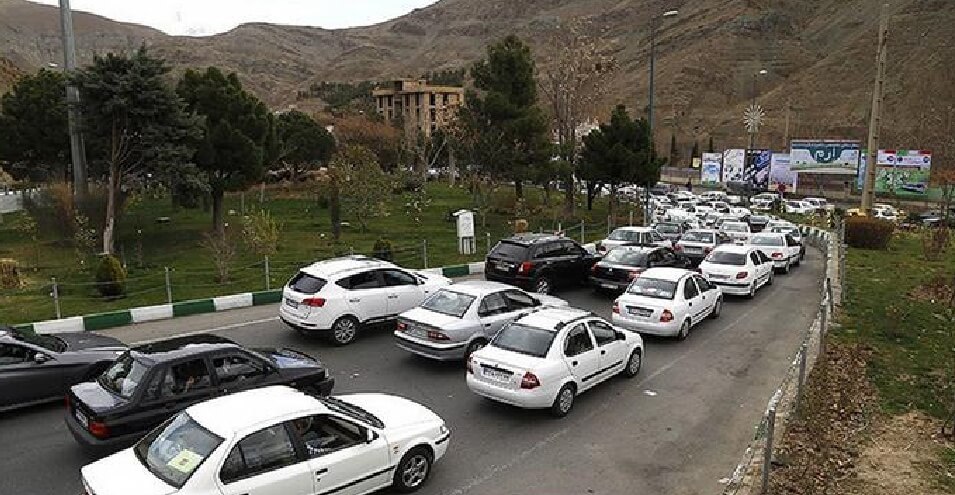
Based on field research and studies, there is “a completely significant and direct correlation” between the level of travel and the rate of coronavirus infection. Despite the announcement of travel restrictions in several Iranian provinces, experts warn of coronavirus becoming a travel souvenir.
Saeid Namaki, the Minister of Health, announced at the margins of yesterday’s government cabinet meeting (Wednesday, October 14) that the National Coronavirus Management Headquarters has approved restrictions in the centers of Tehran, Isfahan, Urmia, Karaj, and Mashhad provinces, which will be implemented during the upcoming holidays.
The commander of coronavirus disease management operations in Tehran metropolis announced on Thursday that these restrictions also include 45 cities in these five provinces that have more critical conditions compared to other cities.
Significant and Direct Correlation Between Increased Travel and Infections
Alireza Zali described these restrictions as an important part of health protocols to combat virus spread and said: “In three time periods, field research and studies in Tehran province show a completely significant and direct correlation between the level of travel and the rate of infection and hospitalization.”
Next Saturday is a holiday, and it is predicted that like the multi-day holidays in previous months, inter-provincial travel, especially travel to northern provinces, will increase sharply.
The correlation between increased travel and cases of infection and hospitalization has been observed in almost all Iranian provinces, but the record number of new cases and deaths yesterday and the upcoming holidays have increased concerns.
According to official Ministry of Health statistics, in the 24-hour period until noon on October 14, 4,830 new coronavirus cases were identified and 279 COVID-19 patients died. These are the highest figures in both cases since coronavirus was confirmed to have entered Iran.
Fifth Consecutive Day With Over 250 Casualties
The Ministry of Health spokesman announced on Thursday that in the past 24 hours, 4,616 new coronavirus cases were identified in Iran and 257 COVID-19 patients died. This is the fifth consecutive day that the number of deaths exceeded 250.
Despite a relative decline in cases and deaths compared to the previous day, what makes the situation concerning is the continuation of an upward trend that began in the final weeks of Shahrivar and continues in Mehr with greater intensity.
In the past 11 days, only two days had slightly fewer than 4,000 new cases, and on the remaining days the figure was higher. Such a trend has no precedent in Iran.
This unprecedented trend is also observable in death cases. In the past 12 days, only one day had slightly fewer than 200 casualties, and during this period, the daily death record has been broken several times.
Mohammadali Mohseni Bandpay, representative of Nowshahr in the Islamic Consultative Assembly, says that the assembly of representatives of Mazandaran province sent a letter to President Hassan Rouhani requesting that roads leading to northern provinces be closed during the upcoming holidays.
Coronavirus as a “Travel Souvenir”
He says if the government does not use “negative behaviors” to prevent unnecessary travel and force people to comply with health protocols, “unfortunate incidents” will occur.
This concern is not limited to northern provinces. Vahid Ahmadi Tabatabai, health deputy of Kerman University of Medical Sciences, described the condition of this province as “deep red” and warned that those who go on unnecessary trips only “bring coronavirus as a souvenir.”
He told ISNA news agency on Thursday: “Unfortunately, we had cases in the province where several members of one family died from coronavirus within a few days.”
The sharp increase in COVID-19 cases in recent weeks has confronted almost all Iranian provinces with the problem of bed and facility shortages and increased “fatigue and exhaustion” of medical staff.
Admission of Cover-up of the Reality of Coronavirus Outbreak Beginning
Managers of two hospitals, Modares and Sina, in Tehran announced on Tuesday that a total of 620 members of their medical staff have been infected with coronavirus, and all their coronavirus patient admission capacity is full.
Alireza Zali called Tuesday “one of the bitterest days of coronavirus in the capital” and expressed regret that “in the 253 days since the coronavirus crisis has been passing in the province” there has been no day with death toll at this level.
Zali’s remarks implicitly confirm accusations against the Islamic Republic government regarding concealment of the time when coronavirus outbreak began in Iran.
In the official narrative, the presence of a coronavirus patient in Iran was confirmed on the last day of Bahman month, but 253 days that Zali mentioned would be in mid-month.
Based on evidence that exists and some officials have emphasized in various ways, government authorities were aware of the coronavirus outbreak much earlier than the announced time, but in order to bring people to the February 11 rallies and to the ballot boxes in parliamentary elections (March 20), they concealed it as much as possible.
Source: DW