Sepideh Qolian Responds to Release of Video of Forced Confessions by Detainees from State TV: They Extract Confessions Through Medieval Torture
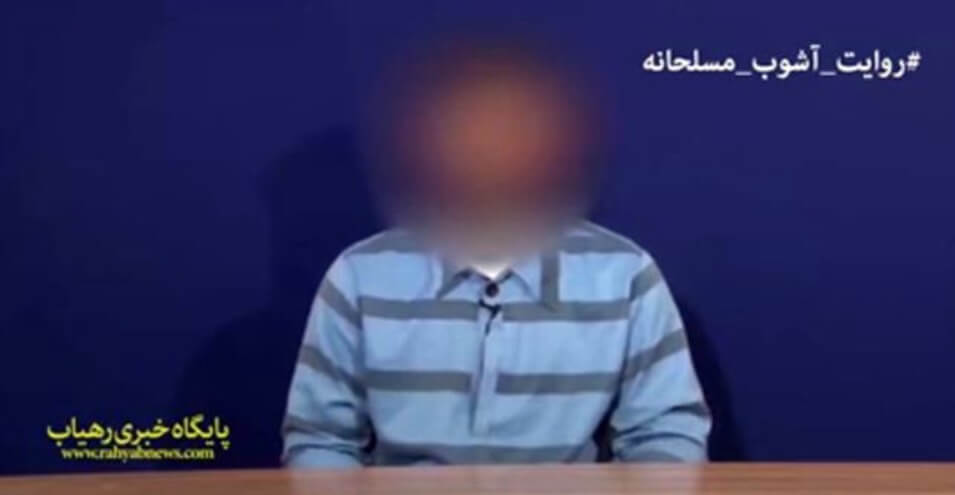
Sepideh Qolian, a civil activist who has been temporarily released on bail, exposed forced televised confessions attributed to detainees from recent popular protests in a series of tweets.
This civil activist recalled on Twitter her personal experience with televised confessions during her detention, writing that Ameneh Sadat Zibahpur, a IRIB journalist who was present during the production stages of a television program in the interrogation room, provided Sepideh Qolian with a pre-written text to read in front of the camera.
According to her, the televised confession that interrogators were dissatisfied with its production—saying they had been inexperienced and that the footage should be re-recorded in a villa—became images that served as a tool of intimidation for Sepideh Qolian and Ismaeil Bakhshi by interrogators for a long time after their first release.
During the production stages, the person Ameneh Sadat Zibahpur was present in the interrogation room so that after hours of physical and psychological torture, a pre-written text would be provided to us to read in front of the camera.
Pointing out that the publication of these forced confessions is merely a document of the injustice inflicted on political prisoners, Sepideh Qolian states that during the filming, interrogators in her case told her, “First we’ll broadcast the film and ruin your reputation, then we’ll settle accounts with you with acid.”
Based on her personal experience during detention and interrogations, this civil activist regarding the broadcast of confessions by Arab activists on Islamic Republic television says these Arab activists were definitely forced under medieval torture to repeat the interrogators’ narrative about the Mahshahr disaster, and one can infer the process of pressure and brutal torture before the filming.
Previously, Voice of America had released a video of attacks by armed military forces with machine guns and heavy weapons on protesters in Mahshahr. Islamic Republic authorities, after several days of silence, ultimately claimed that because the protesters were armed, they responded heavily.
Ms. Qolian, while announcing a complaint against Ameneh Sadat Zibahpur in Iran, called on all those who had previously been victims of storytelling by security agencies to speak out about the suffering inflicted on them during the broadcast of forced confessions, both in front of and before filming.
This civil activist, who was detained during the Haft Tappeh workers’ protests, declared after her initial detention along with Ismaeil Bakhshi that they had been subjected to torture and forced confessions. Following this exposure, Ms. Qolian and Ismaeil Bakhshi were arrested again, and after some time, on November 25 (Aban 4) she was temporarily released along with several labor activists in Iran on a 500 million toman bail.
After her release and with the onset of recent popular protests in Iran, she was arrested again at her father’s home due to participation in the Saturday night November 25 (Aban 25) protests, and after a few days was finally released on December 3 (Azar 12) on a 200 million toman bail.
The issue of forced confessions on Iranian state television has been raised repeatedly before. This method of obtaining confessions has been criticized many times by human rights organizations, though the Islamic Republic’s judiciary continues to practice it.
Previously, the issue of forced confessions from detainees related to the assassination of nuclear scientists and their broadcast on television had made headlines. Maziar Ebrahimzadeh, who was arrested in 2012 on charges of involvement in “the assassination of nuclear scientists” and was released in 2014, said some time ago during an interview with BBC Persian that the story on Iranian television was “a fabrication of the minds of harsh interrogators in the Ministry of Intelligence.”
Saeed Malekpour, an internet activist, was another prisoner who made forced confessions in front of the camera. Confessions that Saeed Malekpour later stated were made under torture.
Source: Voice of America