Shahran Oil Depot: A Potential Bomb in a Residential Area
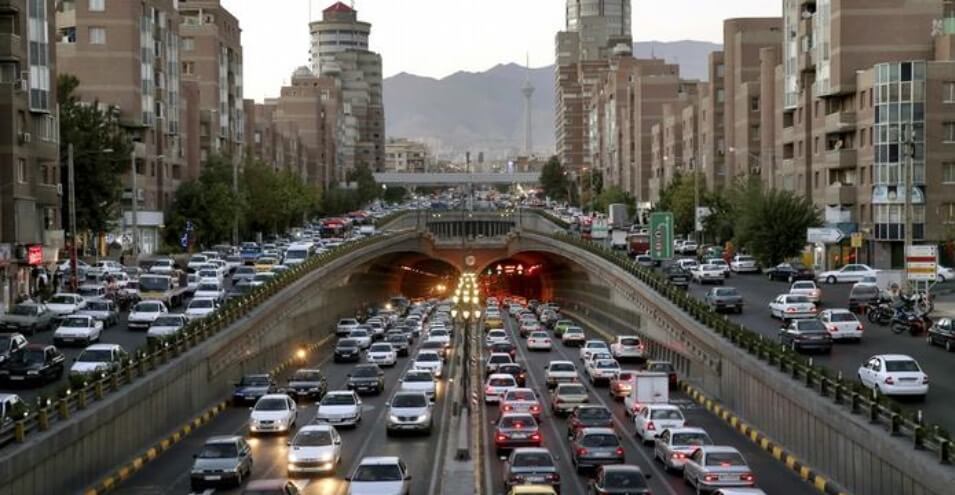
Shahran oil depot is a storage facility for millions of liters of fuel located in the heart of a neighborhood in northwest Tehran. The head of Tehran City Council’s budget committee says any accident at this depot could create a catastrophe far worse than Beirut in a residential area.
Shahran neighborhood in northwest Tehran is the location of an oil depot and accumulation of millions of liters of fuel. A residential neighborhood that, due to its pleasant climate, is experiencing increasing population density every day.
Majid Farahani, head of Tehran City Council’s budget committee, considers the oil depot of this neighborhood like a “hydrogen bomb” and has called for the removal of hazardous facilities from Tehran.
Shahran is located in District 5 of Tehran, in the northwest of the city and adjacent to Solqan and Ken. The oil depot and massive fuel storage tanks of Shahran were built in 1974 when the neighborhood was non-residential and barren land. Now, with the expansion of the neighborhood, at least 300 tankers carrying 30,000 liters each pass through Shahran’s alleys daily with all possible dangers.
Majid Farahani says: “It only takes one of the tankers or its transport vehicle to have an accident while refueling next to the storage tanks, and then with the serial explosions of fuel tanks one after another, a catastrophe greater than Beirut will befall Tehran.”
Farahani, emphasizing the need to learn from the experience of the Beirut explosion and negligence in observing chemical materials storage protocols, writes on Instagram: “Certainly, at the far reaches of official customs points or unofficial docks, in special economic zones and coastal and non-coastal ports of the country, warehouses similar to Beirut’s chemical materials storage are found, which henceforth should be regarded as a time bomb; but in addition to the aforementioned locations, the accumulation of chemical materials within and at the center of cities and residential areas is more dangerous.”
He suggests that dangerous sites in Tehran and other cities be identified and that the government and city management plan for “the possibility of catastrophe and the removal of these time bombs.”
A Warehouse on the Mosha Fault
Two years ago, Tehran City Council was supposed to follow up on a plan to create a dedicated route for tanker traffic in Shahran and hold a meeting with representatives from the Ministry of Oil, Tehran Refinery, Shahran oil depot officials and other relevant authorities, but the plan was left unresolved.
A member of Tehran City Council, explaining the dangers of Shahran oil depot, writes: “The Shahran oil depot is like a hydrogen bomb inside the city and built on the Mosha earthquake fault line in the heart of a residential area, with 300 tankers loaded from the mega-tanks every day and passing through residential areas before entering highways.”
Over the past 14 years, gasoline tankers have overturned or had accidents in Shahran streets four times. In two instances, gasoline flowed into green spaces and permanently dried trees.
The head of Tehran City Council’s budget committee also refers to the danger of Shahran oil depot being located on the “Mosha fault” and considers the casualties from a depot explosion in the event of a devastating earthquake to exceed those from the earthquake itself.
Recent earthquakes in Tehran and Damavand in April and May were caused by activation of the Mosha fault. Mahdi Zarei, an earthquake expert, previously stated that around the eastern and central section of the Mosha fault, within a distance of less than 10 kilometers, about 500,000 people live, and in case of an earthquake, considering a distance of 15 to 20 kilometers from the fault, about 7 million people would be affected.
The head of Tehran City Council’s budget committee has called the removal of the oil depot from Shahran a national demand.
Source: DW