Shiraz and Mashhad Municipalities: Major Culprits in Land Grabbing and Ground Subsidence in These Provinces
In recent years, Iran has witnessed ground subsidence in various cities, with the most significant occurrences in the capital city, Tehran. However, it should be noted that based on available evidence and documentation, most Iranian cities face this problem, and the two cities of Shiraz and Mashhad will also soon experience such crises in the near future.
In recent years, incorrect human decisions have intensified the crises of drought and land grabbing, accelerating the crisis process. In this regard, the role of governmental and non-governmental organizations cannot be ignored. Municipalities and transportation departments, through their inappropriate and unscientific performance and incorrect placement of projects, have accelerated soil erosion and profiteering by individuals.
Unfortunately, in defining urban and suburban development projects, less attention has been paid to the necessity of preserving natural resources, human psychological needs, and the environmental impacts of projects. Most of them lack scientific and geological principles before being approved and implemented. Recently, municipalities, in pursuit of their unscientific and short-term goals, have brought their projects to city boundaries and elevated areas within city limits. Heights management is a management system that has been defined and established for this purpose.
Their objective, as stated in a charter approved by the city council, is to preserve and expand green spaces, planning, supervision, and management of city boundary affairs. However, in practice, this seemingly beautiful goal has had varying results, and in the cities of Shiraz and Mashhad, this management has undertaken strange and regrettable actions.
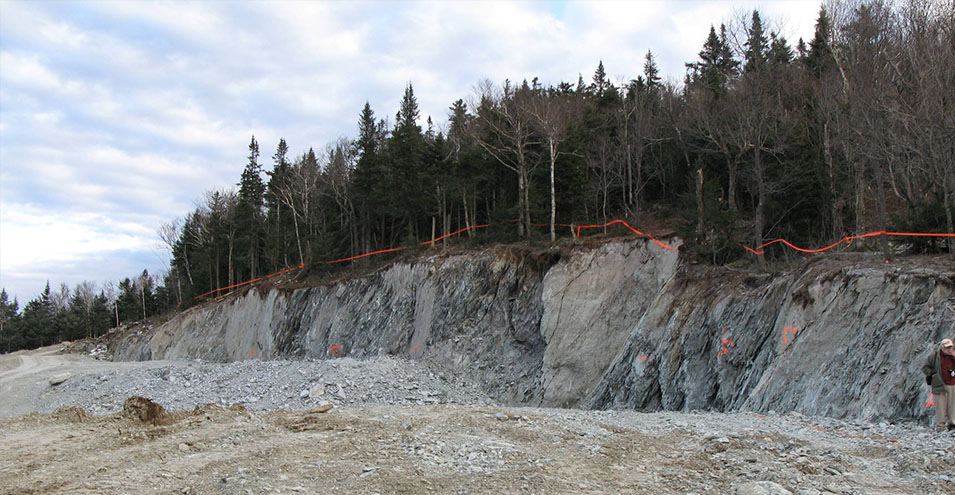
Mashhad’s heights management, by constructing the southern ring road in the elevated areas within the city boundary, in addition to its destructive environmental impact, has facilitated profiteers entering the area and created a land-grabbing crisis. According to officials of that city, this action is a catastrophe whose effects will be felt in Mashhad for another 30 years. However, geology specialists consider the main catastrophe to be subsidence of Mashhad plains and believe that given the massive explosions for project implementation and severe soil erosion, this will occur in the near future. In this regard, profiteers have also engaged in buying and selling land in these elevated areas through document forgery and infiltration of document registration offices and municipalities. Another regrettable point is that approximately 40 water streams in this route have been completely destroyed so far.
On the other hand, Shiraz Municipality, through extensive advertising, is attempting to attract investors to the pristine elevated areas and mountains surrounding and within the city boundary. In advertisements on the municipality’s website, it has been announced that if investors participate with the municipality, permits will be issued for constructing hotels, tourism complexes, and restaurants. It has been planned that these projects will be implemented in 7 percent of Babakoohi Heights covering 200 hectares, Mansourabad Heights 400 hectares, and Nur or Tanggol Akbar Heights 170 hectares, which certainly will exceed this seven percent in practice. Unfortunately, Shiraz Municipality has previously undertaken similar actions in the Middle East’s largest marginal park (Chamran Grand Park) and by issuing permits for private hospitals, hotels, and restaurants, in addition to destroying old orchards and settlements, indirectly caused the drying of surrounding rivers and irrigation channels. Interestingly, due to extensive vehicle traffic and ambulances, it has not only lost its natural value and park status but has become known as one of Shiraz’s accident-prone routes. Similar actions have also been undertaken on the margins of Darak mountains and Barfforoshan Heights (currently Hosseini Hashemi and Takastan Farhang Shahr) as well as behind-the-mall and Mansourabad Heights (Kohsar Mehdi Project), which is evident when comparing aerial photographs.
It must be known that a vast portion of pristine and untouched nature exists in mountainous regions. Spectacular waterfalls can be found in the mountains. Similarly, springs with their clear water bring freshness and vitality to the surrounding environment, all of which have interesting vistas that humans enjoy observing. And entry to these beautiful elevated areas should only occur through afforestation with useful and compatible species.
However, by implementing development projects in mountains and elevated areas, we have deprived people of seeing and enjoying God-given nature. And this deprivation can have deeper effects on the development of social problems, soil erosion, and serious ground subsidence in these two provinces.
In fact, if we take a deeper look at the matter, we will understand that their main goal is to generate revenue for the municipality and profit particular individuals and groups. Because, given the recession in the housing market, municipal revenues have fallen significantly, and they are seeking other ways to generate revenue and create a new foundation for urban expansion and building permit issuance. Unfortunately, in the vicinity of all mentioned highways, they have handed over land to government housing cooperatives, including the judiciary housing cooperative, oil, gas, and petrochemical companies, the office of the chief notary, and even the municipality’s own housing cooperative, which itself has been the main cause of land grabbing and the entry of profiteers. However, it must be known that these actions and the implementation of development projects in elevated areas are not only unprofitable but cause environmental destruction and ground subsidence, severely threatening and even eliminating the security of specific plant and animal species living in these elevated areas. What is happening in Iran’s mountainous regions now is a bitter reality that we face a concerning process of soil erosion that could seriously threaten the country’s environmental and agricultural future. Regarding soil erosion in Chaharmahal and Bakhtiari Province in the late 1980s, which led to landslides and even the disappearance of a village, or the landslide resulting from mountain cutting for road development in the Oshan area, which damaged roads and several residents’ homes, the necessary research and follow-up have not yet been conducted.
So if we love our children, we must compassionately love the Earth and pass it on to future generations diverse and beautiful, so that one spring day ten thousand years from now they can feel peace in a sea of grass, can see a bee visiting a flower, can hear a bird’s song in the sky, and can find joy in being alive.
A detailed explanation of this topic will follow in a scientific article.
Reporter: Bahar. N, FCN News Agency