Iran News

Slap by Parliamentary Representative on Duty Soldier; Controversy and Protests Escalate
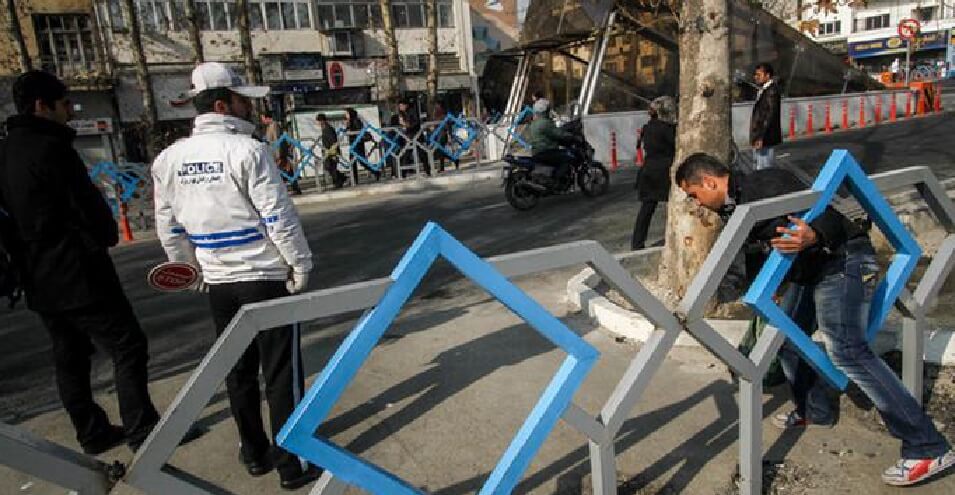
The slap delivered by the Sabzevar representative in parliament to a duty soldier has sparked widespread protests and reactions in the media and cyberspace. The representative has denied the incident, but the head of Tehran’s traffic police says there is sufficient documentation on the matter.

On Saturday, the fourth of Bahman, a video was released on social media that provoked numerous protest reactions and prompted the Oversight Committee on the Conduct of Representatives and the Speaker of the Islamic Consultative Assembly to take a stand.

In this video, a soldier who identifies himself as Hamed Akbari describes how, after blocking an unauthorized entry of a parliamentary representative’s vehicle into special lanes, the representative engaged in a verbal altercation and then slapped him.

In the video, which was filmed near the government gate, several people say they witnessed Ali Asghar Anbastani, the Sabzevar representative in parliament, slapping soldier Akbari in the face.

Mohammad Reza Deshti Ardakani, a member of the Oversight Committee on the Conduct of Representatives, says if a complaint or report is filed with the committee regarding this matter, it will be addressed at the first session after the parliamentary recess, scheduled for the 16th of Bahman.

Parliamentary Representative’s Denial Despite Eyewitnesses

He also said he spoke with Anbastani, and the Sabzevar representative claimed that the duty traffic soldier insulted him, “but I did not physically engage with him.”

This claim is made despite the fact that in the video from the scene, at least three people said they witnessed the parliamentary representative slapping the duty soldier. Hamed Akbari also says there are surveillance cameras in the vicinity of the incident location.

Mohammad Baqer Qalibaf, the Speaker of Parliament, responded on his Twitter account to the Sabzevar representative’s conduct the previous day, writing: “In the recent incident, as soon as the first reports were heard, an order was issued to examine the facts carefully; if a violation is confirmed, the Oversight Committee on Representatives will investigate and take legal action without hesitation.”

According to the Tasnim News Agency, the head of Tehran’s traffic police, while describing the duty soldier’s conduct as proper and lawful, said there is documentation of physical contact between the parliamentary representative and the traffic officer that “is completely sufficient.”

Commander Esteri, the head of the Law Enforcement Force, while emphasizing that no one is exempt from the law, said that if the incident occurred as described, “we will support our conscientious officer.”

History of Misconduct and Cover-ups

Abbas Abdi, a political activist and analyst, in a Twitter message, refers to a similar case of a duty soldier being beaten in Mazandaran, which according to him, “immediately turned everything upside down.”

Abdi’s reference is to the beating and torture of a duty soldier in Dey month, which according to reports was carried out on the order of the prosecutor of Babol court.

According to the news site “Ravayat24,” in this incident, Mohammad Hasan Karimi, a security guard at the Babol court building, when a prosecutor was visiting, was subjected to severe treatment and beating because the prosecutor did not recognize him due to his mask and requested his ID card.

According to “Ravayat24,” in the continuation of this incident, the security guard was transferred to the prosecutor’s office in handcuffs and beaten while tied to a chair on the prosecutor’s orders. The security guard, after media reactions intensified, apparently came under pressure and told the Mehr News Agency that the matter had been “resolved.”

A number of social media users have sarcastically expressed concern that the duty traffic soldier in Tehran will soon confess on television that filming him and his statements about being slapped by the parliamentary representative were a “foreign conspiracy.”

Abbas Milani, a university professor and director of Iranian Studies Program at Stanford University, wrote on his Twitter page, citing a similar example during World War II that led to the dismissal of a military commander: “In despotic guardianship, an ill-bred man slaps soldier Akbari in the ear and acts as if nothing happened.”

A Tradition of Slapping in the Parliamentary Representative’s Family

Meanwhile, associates and supporters of the Sabzevar representative in parliament have taken action and, by questioning the duty traffic officer’s actions, have claimed that all parliamentarians have the right to use special lanes known as “BRT.”

Apparently, slapping is commonplace in Ali Asghar Anbastani’s family and has been practiced since childhood. On social media, an account from Anbastani is being reshared which, according to it, his two-and-a-half-year-old daughter slaps and hits him in the ear because her father forgot to buy milk, saying “in dad’s ear.”

The Sabzevar representative in the eleventh parliament recounts this incident with pride and says his daughter performed this act “so authoritatively, so truthfully, so sincerely.”

Nonetheless, social media users yesterday and today launched a Twitter storm through two hashtags “Anbastani_Resign” and “Slap_to_Soldier,” calling for legal action against the Sabzevar representative.


Source: DW

Related Articles

Back to top button