Study of Iran’s Approach to Holding Dual Nationality Citizens Hostage in Article by ‘United Against Nuclear Iran’
The organization “United Against Nuclear Iran” has published an article on its website examining the history of hostage-taking in the Islamic Republic of Iran regime.
The article states that the Islamic Republic of Iran, since its inception, has used foreign and dual nationality citizens as bargaining chips in its negotiations with the West, and by leveling false accusations against these individuals and imprisoning them, has used them as political leverage.
In the article by the “United Against Nuclear Iran” organization, while referring to the Iranian government’s refusal to recognize the dual citizenship of Iranian citizens, it is written that the Iranian regime, using this justification, deprives dual nationality citizens of the right to receive consular services from their country of residence. According to the organization, the Iranian regime in fact targets these individuals precisely because of their dual citizenship, in order to use this pretext as a bargaining chip in negotiations with Western countries.
The article continues by stating that international reactions to Iran’s systematic use of the hostage-taking policy have varied from one country to another, and even from one political prisoner to another. Although the detention of dual nationality citizens in Iran is not new, the deliberate decision by some European governments and institutions to ignore it is both unprecedented and concerning. While some countries acted well, stood up to defend their citizens, and took proactive measures to secure their release, other countries inexplicably remained silent on the matter. In some particular cases, non-governmental organizations have taken even more decisive action than the governments of their own countries.
According to the “United Against Nuclear Iran” organization, fortunately there are signs indicating that European powers have finally exhausted their patience with Iran’s behavior. France, Germany, and Britain in September 2020 summoned Iranian ambassadors in their respective countries in a coordinated protest action against the detention of dual nationality citizens by Iran and their treatment of political prisoners. This action represented the first coordinated action by European powers against Iran’s systematic abuse of dual nationality citizens and was a very encouraging development.
The “United Against Nuclear Iran” organization further emphasizes: “Unless European countries and the European Union adopt a common approach in dealing with Iran’s hostage-taking policy, there is little hope of changing the behavior of the Iranian government. Adherence to fundamental principles of international politics and human rights should be a precondition for European engagement with Iran, not a long-term goal. The time has come for European leaders to prioritize their values and their citizens over their blind commitment to negotiating with a morally reprehensible regime.”
The “United Against Nuclear Iran” organization then provided brief descriptions of several of these dual and multi-national citizens imprisoned in Iran:
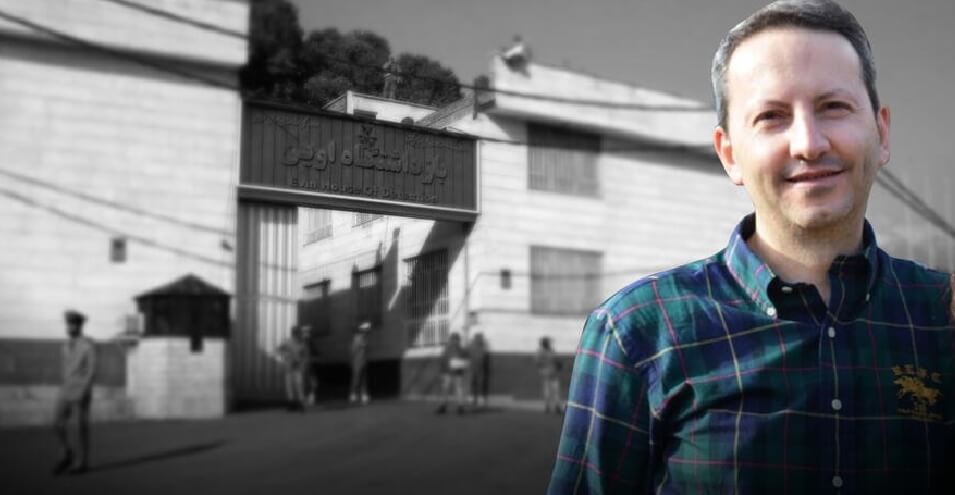
1. Dr. Ahmadreza Jalali, an Iranian-Swedish physician, sentenced to death: Dr. Jalali, who taught at universities in Belgium and Sweden, was sentenced to death in the fall of 2017 on charges of “collaboration with a hostile state” following an obviously unfair trial. After his transfer to solitary confinement in the notorious Evin prison on December 25, 2020, the regime informed him that he would be executed soon.
2. Kamran Ghaderi and Masoud Mossaheb, Austrian-Iranian citizens, were arrested and imprisoned on charges of “collaboration with a hostile state.”
Kamran Ghaderi, CEO of a technology management and consulting company based in Austria, was arrested during a business trip to Iran in the winter of 2016.
Masoud Mossaheb, an elderly dual nationality Austrian-Iranian citizen who was the founder of the Iran-Austria Friendship Association in 1991, was arrested during his trip to Iran in the winter of 2019. Mr. Mossaheb had made the trip along with a delegation from “Medastrom,” a research and radiotherapy company in Austria, with the intention of opening a center in Iran.
3. Fariba Adelkhah, a French-Iranian citizen, and Roland Marchal, a French citizen, were arrested and imprisoned on charges of “conspiracy to commit acts against national security.”
Fariba Adelkhah, a French-Iranian anthropologist employed at Sciences Po, was arrested in the summer of 2018 on the false charges of “propaganda against the system” and “conspiracy to commit acts against national security.”
Shortly after Ms. Adelkhah’s arrest, Roland Marchal, her colleague and partner, was arrested on charges of “conspiracy to commit acts against national security.”
4. Nazanin Zaghari-Ratcliffe may be one of Iran’s most prominent dual nationality prisoners. In 2016, she was sentenced to 5 years imprisonment on the false charge of “plotting to overthrow the Iranian regime” and “conducting an online journalism course for BBC Persian with the aim of recruiting and training individuals to conduct propaganda against Iran.”
Despite Ms. Zaghari-Ratcliffe’s poor health conditions and British pressure for her release, and despite less than a year remaining from her sentence, the Islamic Republic of Iran remains unwilling to release her.
Source: Voice of America