Supreme Leader’s Senior Advisor: If Government Didn’t Exist, Country Would Be Better Managed
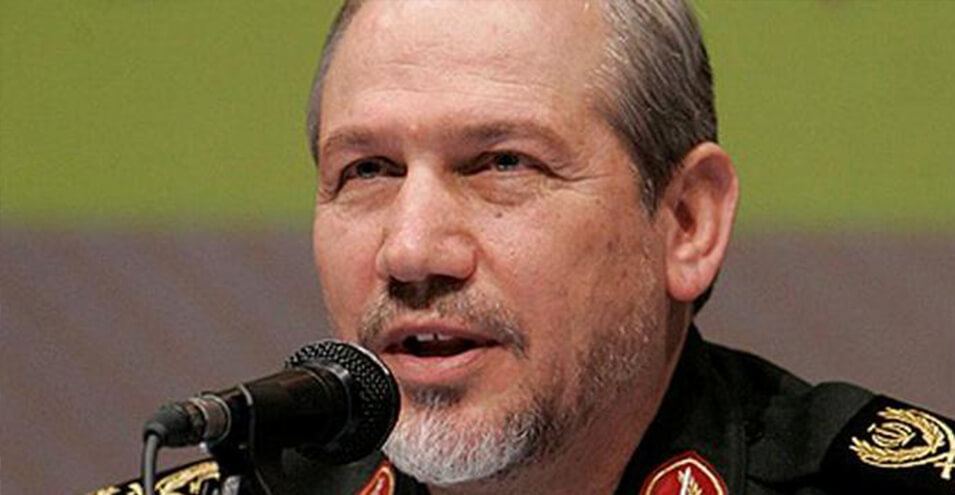
Yahya Rahim Safavi, while praising the Islamic Revolutionary Guard Corps, stated: “Sometimes it seems that if the government didn’t exist, the country would be better managed.” A hardline representative had previously said a “military president” would solve the country’s problems.
Yahya Rahim Safavi, assistant and senior advisor to the Leader of the Islamic Republic, during a speech primarily focused on Iran’s “power and influence” in the region and the IRGC’s role in it, stated: “Sometimes it seems that if the government didn’t exist, the country would be better managed.”
The senior advisor to Ali Khamenei, in his speech on Sunday (3 Tir / 24 June), first responded to a question regarding Saudi Arabia’s threat to attack Iran, saying: “Iran is a great power and if they make a mistake, on the very first day 1,000 missiles will be fired toward them and their palaces in Riyadh, which I believe is unlikely they would commit such foolishness.”
Rahim Safavi then called the Islamic Republic the “first power in the region,” whose power, according to him, has “reached the shores of the Mediterranean and without its presence, nothing will be resolved.” He also, referring to the “influence” of the founder’s and the Islamic Republic leader’s thoughts in “the farthest corners of the world,” mentioned the presence of “80,000 missiles” in the hands of Lebanon’s Hezbollah as a “permanent threat” against Israel.
This former IRGC commander then addressed “the country’s internal situation and existing problems” and, in response to a question about why the Islamic Republic leader did not have “direct involvement” in the JCPOA matter, called Ali Khamenei a “law-abiding” figure, saying: “The Supreme Leader was not optimistic about negotiations with America from the beginning and stated this position, but due to that commitment to the country’s constitution, allowed the government to enter JCPOA negotiations; now if the government went the wrong way, what is His Excellency’s fault? Well, this government was the people’s choice.”
The senior assistant and advisor to the Islamic Republic leader, then, referring to the fact that “we have problems in government-making,” added: “Sometimes it seems that if the government didn’t exist, the country would be better managed.” According to General Rahim Safavi, “People go to administrative offices, organizations, and municipalities and their problems are not solved, and these issues have created discontent, and the counter-revolution immediately takes advantage and portrays people as dissatisfied; some of this discontent is due to the incompetence of officials.”
The senior advisor’s harsh attack on the government coincided with his wholehearted defense of the Islamic Revolutionary Guard Corps as a military institution that, according to him, forced “America to the ground in Syria.” Rahim Safavi said: “Those who are hostile to the IRGC have an ailment in their souls, because if the IRGC, Basij, and Army didn’t exist, they would have been eliminated overnight.”
The Supreme Leader’s senior advisor also, referring to the “automobile industry mafia” in Iran, in response to a request from one of the audience members regarding the IRGC’s presence in this industry, called the automotive industry an “octopus” that “absolutely does not allow the IRGC to enter its body.”
Provocative Remarks
The senior advisor’s implicit reference to the government being superfluous in Iran is being raised during one of the most difficult periods in the Islamic Republic’s history; a period that, according to the Jahan Sanat newspaper, Iran’s economy has been “on the brink of collapse.”
Previous contexts of this type of attack on the government make Rahim Safavi’s remarks more provocative. Mohammad Ali Pourmokhtar, a former IRGC commander and current hardline parliament representative, had stated in the last Esfand (March 2018) that “if a military person becomes president, he can definitely save the country from problems.” At the same time as these statements, reports of rumors strengthening about a “military presidency” among hardliners were published.
Meanwhile, even Hushang Amirahadi, a political activist based in America and one of the disqualified candidates in various presidential periods in Iran, at the beginning of Farvardin this year proposed the formation of a IRGC-military government as a “show of force” against the Trump administration.
Furthermore, the possibility of an “IRGC coup” in Iran, which was mainly raised by circles outside the government and opponents of the Islamic Republic, adds to the sensitivity of the senior advisor’s remarks.
Some analysts, especially in light of the “IRGC’s involvement” in the 2009 presidential elections, view this military institution as Iran’s “shadow government;” an entity that, if one day it does not find the “election outcome” aligned with its political, economic, and ideological projects, will have the capability and will to act against the existing government. Others, however, consider the “IRGC coup” narrative the primary tool of Iranian reformists and moderates to mobilize their supporters.
Hassan Rostamdarbari, head of the National Security Research Institute of Iran’s Armed Forces General Staff, had stated in an interview in Ordibehesht 1394 (May 2015) on the occasion of the IRGC’s official founding anniversary: “Some say the IRGC wants to stage a coup, and this is not true, because the IRGC has its place in the government and does not need such discussions.”
Source: DW