Tehran Provincial Governor Opposes Two-Week Capital Closure Plan to Combat Coronavirus
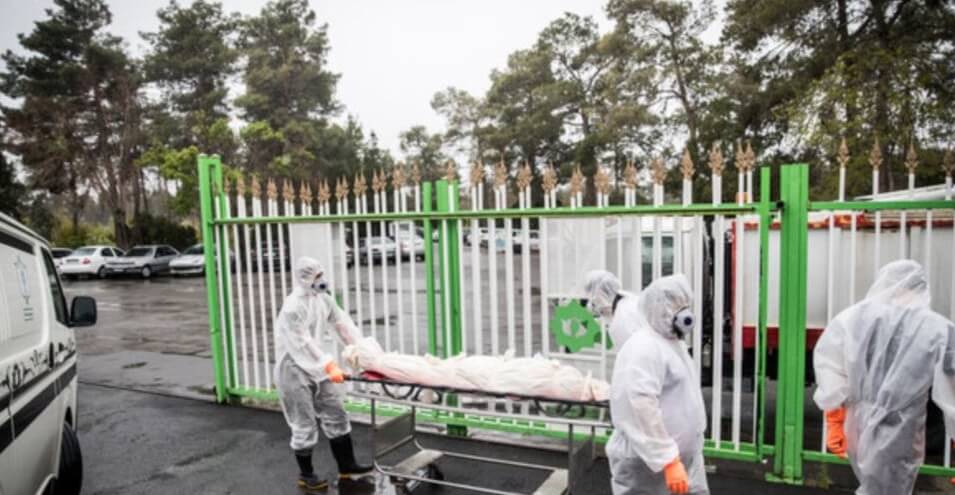
While Minu Mehraz, a member of the Scientific Committee of the National Coronavirus Headquarters, states that Iran’s president has ordered the closure of Tehran, and the city council has also called for a two-week shutdown of the capital, the governorate announced on Sunday, November 8, that Tehran’s closure is cancelled.
Anushirvan Bandpay, the governor of Tehran, in an interview with Iranian media, stated that “this plan is not very effective,” and said: “Flexible working hours is a matter that has been raised, but this plan cannot be implemented in centers that serve the public.”
He also added that such discussions have been examined before, and their achievements in controlling the spread of coronavirus are less significant compared to their consequences.
Meanwhile, the spokesman for the National Coronavirus Headquarters, rejecting rumors published about Hassan Rouhani’s approval of the capital’s closure, said: “The issue of a two-week closure of Tehran has not been raised in the headquarters at all, and we deny the rumor of the president’s opposition to this plan.”
Earlier, the spokesman for the National Coronavirus Headquarters had announced a reduction in working hours for “non-essential” businesses until 6 PM in Tehran, provincial centers, and densely populated cities from November 20 to December 20.
On the other hand, the head of the parliamentary health commission on Sunday, while emphasizing the necessity of a multi-week closure of Tehran, called the reduction of working hours in non-essential retail centers a “joke” and said: “If people want to shop, they will be present and gather in these centers before 6 PM, and no preventive measure is actually being taken in this regard.”
Based on official reports, Tehran has the highest death toll from coronavirus, and half of the coronavirus deaths in the country are from Tehran.
Alirezza Zali, commander of the coronavirus response headquarters in Tehran, emphasized in recent days that the coronavirus death rate in the capital will not decrease for the next three weeks.
Currently, 65 active hospitals in Tehran are operating in the field of receiving and assisting patients with coronavirus.
The coronavirus crisis in Iran has involved so many different organizations and institutions that it prompted a response from Saeed Khal, the head of the “Behesht-e Zahra” organization in Tehran. He said that in the “50-year history of Behesht-e Zahra,” such a crisis has been “unprecedented.”
Based on the latest official coronavirus statistics in Iran, the number of deaths in the past 24 hours reached approximately 460 people, and the total number of victims exceeded 38,000 people.
Official statistics from the Ministry of Health have always been a matter of doubt and ambiguity, with actual death figures estimated to be up to four times higher than official figures.
MohammadReza Zafarqandi, head of Iran’s Medical Organization, recently also stated that the death toll is “at least three times” the figures announced by the Ministry of Health.
Source: Radio Farda