“Kamran Hakimthi,” Jewish Prisoner Detained in Evin, Victim of a Case the U.S. Deems “Wrongful Detention”
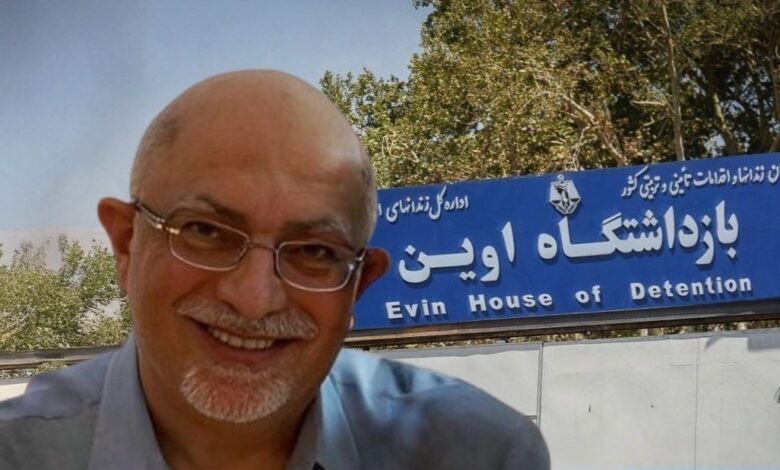
“Kamran Hakimthi,” a 71-year-old dual Iranian-American Jewish citizen and prisoner in Evin, is battling bladder cancer while reports indicate he has been returned to prison before completing treatment, raising serious concerns about his access to medical care; the United States has designated him as “wrongfully detained.”
The case of Kamran Hakimthi, an Iranian-American Jewish citizen residing in New York, has transformed from a legal matter in Iran into an issue with humanitarian and diplomatic dimensions in recent months. Hakimthi, who traveled to Iran to visit his family, now finds himself in Evin Prison, and as he faces bladder cancer, his family and supporters have expressed serious concerns about his health condition.
According to reports published in international media, Hakimthi entered Iran in May 2025. He had traveled to Iran on previous occasions and had not encountered similar problems during those visits. However, on his latest trip, while attempting to leave the country, his passport and some electronic devices were confiscated, and he was subsequently banned from leaving.
Hakimthi’s family states that after weeks of interrogation and being prevented from leaving, he was arrested in summer 2025 and transferred to Evin Prison. His case was heard in Tehran’s Revolutionary Court based on a law prohibiting Iranian nationals from traveling to Israel; a charge related to a trip Hakimthi made approximately 13 years earlier to attend his son’s bar mitzvah ceremony in Israel.
Initially, Hakimthi was sentenced to four years in prison, but the sentence was later reduced to two years. His family also stated that the legal proceedings were extremely brief and he did not have effective representation by a lawyer or witnesses in court. The James Foley Foundation likewise described his trial as lasting approximately ten minutes without the presence of a lawyer or witness; however, one of the most significant aspects of the case is his medical condition.
Prior to his trip to Iran, Hakimthi was undergoing treatment for aggressive bladder cancer. Reports published in 2025 indicated that he had undergone surgery and chemotherapy and required ongoing medical care to continue treatment. His family stated that his detention has caused serious disruption to his treatment plan.
Subsequently, concerns about his health became one of the main focal points of demands for his release. The James Foley Foundation emphasized that Hakimthi requires medical care and regular check-ups to monitor for possible cancer recurrence, and according to the foundation’s information, he is not receiving these care services in Evin Prison.
In June 2026, Hakimthi’s family directly appealed to Donald Trump to make his release a priority in any potential negotiations with Tehran. “Shahreh Noufer,” his cousin and family spokesperson, wrote in a letter to the U.S. President about his condition: “Kamran is not just an American citizen; he is a devoted father, a beloved husband, a caring brother, and a member of our family. Today, he is also a cancer patient. He is fighting bladder cancer while lacking access to the urgent medical care he needs. Every day matters.”
This appeal was made at a time when the U.S. government had previously formally designated Hakimthi’s detention as “wrongful”; an action that places his case within the framework of special mechanisms the U.S. government employs for American citizens who are wrongfully detained abroad.
In March 2026, after reviewing the case, the U.S. State Department declared Hakimthi “wrongfully detained.” According to his family, this decision means that Washington considers his detention to be based on incorrect charges and motivated by considerations beyond those of an ordinary criminal case. Reuters also reported that this status places the case under the responsibility of the office of the Special Presidential Envoy for Hostage Affairs and Wrongful Detention.
In recent months, Hakimthi’s case has repeatedly been raised in American media alongside that of another Iranian-American citizen, Abdolreza “Reza” Valifadeh. CBS News reported in March 2026 that both were being held in Evin Prison, and concerns about the security of American detainees in Iran had grown amid escalating military conflicts.
Around the same time, “Siamak Namazi,” an Iranian-American citizen and former Iranian prisoner, also spoke about Hakimthi’s case and called for greater attention from the U.S. government to his situation. “Neda Sharghi,” an activist tracking the cases of American prisoners in Iran, emphasized on CBS’s “Face the Nation” program that Hakimthi’s family wants his case to be publicly highlighted and the U.S. government to take action for his release.
In June, as U.S.-Iran negotiations resulted in an agreement between the two sides, Iranian officials announced that the issue of American prisoners had not been discussed in the negotiations. CBS News also reported that at least four American citizens were detained in Iran, and Hakimthi was one of two whose identities had been publicly disclosed.
This situation creates a serious contradiction in the case: on one hand, Hakimthi, as someone whose detention the U.S. government designates as wrongful, has become the focus of diplomatic efforts, and on the other hand, the issue of treating his cancer remains the primary concern of his family.
Recent reports about him being granted medical leave and being returned to prison before the next phase of treatment begins would, if independently confirmed, intensify this concern; because interruptions in medical care for serious illness, especially in the case of a disease requiring continuous monitoring and treatment, can have serious consequences.
Furthermore, the legal basis of the case remains disputed. Hakimthi’s family states that his trip to Israel took place 13 years before his detention and therefore falls outside the timeframe specified in the law cited by Iranian authorities. International news sources have also reflected this claim in their reports on the case.
For Hakimthi’s family, the issue is not merely a legal or political dispute; the health of an elderly man is at stake, someone who was fighting cancer before his detention and now spends his illness in one of Iran’s most notorious prisons.
For Washington, too, Hakimthi’s case has become “a test of the stated U.S. policy” regarding citizens detained in Iran. The U.S. government formally designates him as “wrongfully detained,” and his family demands that this designation not remain merely an administrative label but translate into concrete action to bring him home.
Ultimately, the main question in Kamran Hakimthi’s case is no longer simply why a dual citizen has been imprisoned for an old trip to Israel; the more urgent question is whether a cancer-stricken prisoner will be denied access to necessary treatment while political and diplomatic differences persist.