The Igniting of Iranians’ Honor: The January 18 Uprising Transforms Iran into a Field of National Resistance
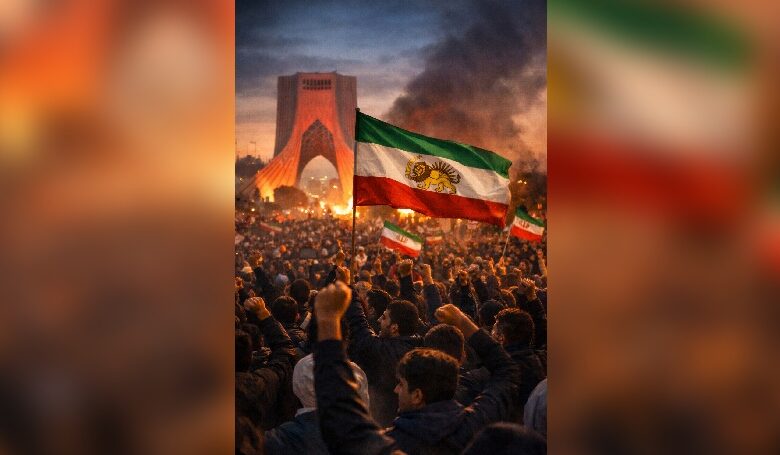
The honor of Iranians flared up once again on the twelfth day of protests, and the January 18 uprising, with the presence of massive crowds in dozens of cities, transformed the country of Iran into a field of national resistance.
On the current day, Thursday, January 8, corresponding to January 18, 1404 in the Islamic calendar, Iran once again witnessed a nationwide and powerful uprising; an uprising that encompassed from major metropolises to small cities and, through street protests, widespread strikes, and explicit anti-government slogans, displayed a clear picture of the honor, steadfastness, and national solidarity of the Iranian people.
Based on field reports and social networks, with the announcement of a call by Prince Reza Pahlavi that all of Iran said yes to, today’s protests continued in dozens of cities and over 30 provinces. The presence of people was not limited to demonstrations alone; bazaar merchants’ strikes, business closures, and professional protests also imparted doubled power to this mighty uprising.
Among the cities that were scenes of protest or strike today, the following can be mentioned:
- Tehran: Massive and scattered gatherings in various areas with direct slogans against the regime’s leadership
- Tabriz: Market strike and widespread closure of shops with people present in the streets
- Isfahan: Bazaar merchants’ support and scattered street protests
- Shiraz: Very extensive presence of protesters in central points of the city, with reports stating that Shiraz fell into the hands of the people and security forces joined the people
- Rasht: Gathering in main squares and busy streets
- Bojnord: Street protests with large attendance of people
- Sanandaj and Kermanshah: Simultaneous strike and protest with armed clashes between Sepah Nabi Akram forces in the Dareh-Dezir neighborhood of Kermanshah
- Babol: Nighttime gatherings with political slogans
- Qom, Qazvin, Neyshabur, Sabzevar, Shahrekord, Bandar Abbas: Market closures and professional protests
Reports indicate that the scope of protests was not limited to provincial centers, and smaller cities and towns have also joined the wave of the uprising.
Today’s slogans demonstrated the protesters’ transition from purely economic demands to explicit political desires. Among the most repeated and notable slogans were: “Death to the Dictator,” “Death to Khamenei,” “Don’t be afraid, don’t be afraid, we are all together,” “This is the final message, the whole system is the target,” “This is not the final battle, Pahlavi will return,” “Long live the Shah, long live the Shah,” “The Pahlavi dynasty, long may it live and endure,” and in some cities, symbolic slogans in support of fundamental change to the structure of governance were raised. These slogans reflect accumulated anger, demands for change, and the breaking of fear among protesters.
Concurrent with the expansion of protests, reports have been published of increased presence of security forces, arrests of protesters, and widespread internet disruptions. Nevertheless, field evidence shows that the intensity of suppression has failed to prevent the continuation of protests and in some areas has even led to increased public anger.
The January 18, 1404 uprising is not merely a momentary protest, but rather a clear display of the honor, solidarity, and national will of the Iranian people. The simultaneous presence of people in streets, bazaars, and small and large cities demonstrates that the protests have entered a phase that transcends geographical, professional, and generational boundaries and has transformed Iran into a field of civil resistance by an entire nation.