Trump Signs $716 Billion U.S. Military Budget
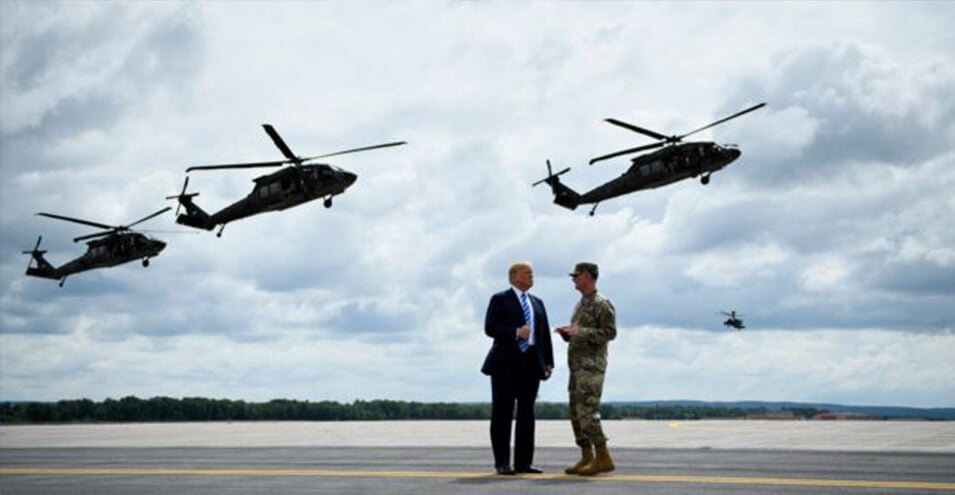
Donald Trump signed the $716 billion U.S. military budget. The budget increases the salaries of armed forces personnel and supports the modernization of the U.S. Air Force, Navy, and missile defense fleet.
On August 22, while signing this budget at a military facility in New York, Donald Trump said “Fortunately, we become so powerful that we will never need to use it. But if we do, no one will have a chance.”
The official name of this budget is “John S. McCain National Defense Authorization.”
The budget announced by the U.S. President had previously been approved by the Senate of that country. This measure increases the defense expenditures of the United States and, as the Associated Press reported, allocates billions of dollars for military construction and development, including military complexes and residential facilities for members of the armed forces and their families.
According to Reuters, the budget allocates $10 billion for the development of air defense capabilities by the U.S. “Missile Defense Agency,” emphasizing the need to counter attacks from Iran and North Korea.
The “Defense Authorization” allocates nearly $70 billion for what is termed “potential overseas operations.” In this measure, the salaries of armed forces members increase by 2.6 percent, and $7.6 billion is allocated for the purchase of 77 advanced F-35 fighter jets.
According to Reuters, the budget requires the U.S. Secretary of Defense to investigate whether the use of Russian S-400 air defense systems by the Turkish government compromises the security of certain American-made weapons, such as the F-35.
The U.S. Senate approved a bill at the end of June stipulating that the sale of F-35 jets to Turkey would be prohibited, unless Ankara refrains from purchasing the S-400 missile defense system from Russia.
According to reports from the Associated Press and Reuters, while some American lawmakers sought to use the budget to impose stricter sanctions on Chinese telecommunications company ZTE for circumventing sanctions against Iran and North Korea, the final measure included less stringent measures.
ZTE faced sanctions and a $1 billion fine due to violations of Iran and North Korea sanctions, and came close to being shut down. However, with Mr. Trump’s intervention, the sanctions against the company were lifted.
The U.S. Intelligence Community has expressed concern about “sabotage activities” by Chinese state-affiliated telecommunications companies. Trump warned that sanctions would put many people in China out of work.
On the other hand, Reuters reported that the new budget enhances the powers of the “Committee on Foreign Investment in the United States,” which investigates foreign investments and potential threats to U.S. national security; it appears this section has specifically targeted China.
Source: Radio Farda