U.S. Intelligence Community Report on Global Threats References Iran in 4 Sections (Full Version)
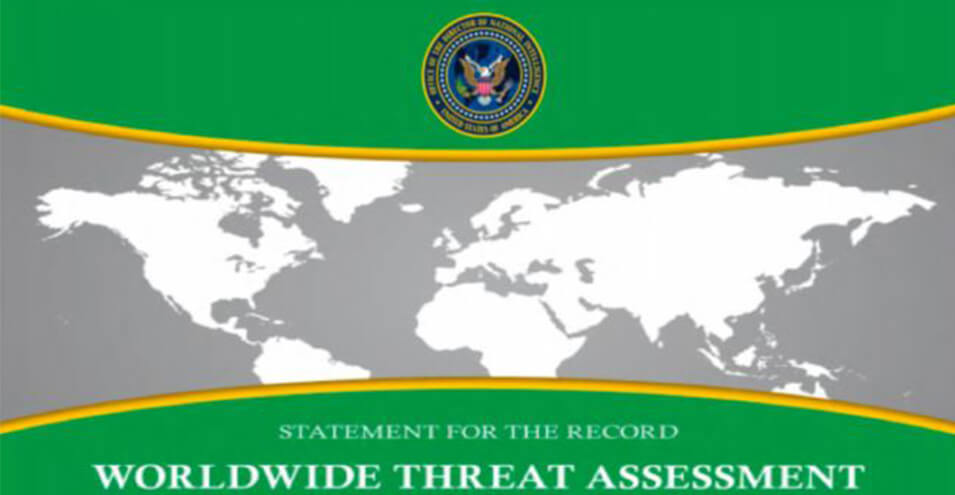
Dan Coats, Director of U.S. National Intelligence, presented the annual intelligence community report to the United States Senate Intelligence Committee on Tuesday, January 29, 2019.
The United States intelligence community consists of 16 separate intelligence organizations and agencies, headed by the Director of National Intelligence.
The head of the intelligence community is responsible for collecting intelligence from various agencies and presenting it to the President of the United States.
At the congressional hearing, in addition to Dan Coats, Gina Haspel, Director of the CIA, Christopher Wray, Director of the FBI, General Paul Nakasone, Director of the National Security Agency, Robert Cardillo, Director of the National Geospatial-Intelligence Agency, and General Robert Ashley, Director of the Defense Intelligence Agency, were present and answered senators’ questions.
The Director of U.S. National Intelligence states that threats to American national security in the coming year will expand and diversify. This is partly due to China and Russia, which will intensify their competition with the United States and its traditional allies and partners.
This 42-page report was prepared in two main sections:
“Global Threats” which includes 10 subsections: Cyber, Online Influence Operations and Election Interference, Proliferation of Weapons of Mass Destruction, Terrorism, Counterintelligence, Emerging and Disruptive Technologies and Threats to Economic Competitiveness, Space and Counter-Space, Transnational Organized Crime, Economics and Energy, and Human Security.
“Regional Threats” which includes 8 subsections: China and Russia, East Asia, Middle East and North Africa, South Asia, Russia and Eurasia, Europe, Africa, and Western Hemisphere.
In the report’s introduction, it states: “Diverse issues such as hostile Iranian behavior, deepening turmoil in Afghanistan, and the emergence of nationalism in Europe will fuel tensions.”
Section One: Cybersecurity
China, Russia, Iran, and North Korea are increasingly using cyber operations across a wide range of methods to threaten both minds and systems: stealing information, influencing citizens, or disrupting critical infrastructure.
Iran continues to pose espionage and cyber attack threats. Iran employs increasingly sophisticated cyber techniques for espionage. Iran is also seeking to develop cyber attack capabilities to enable attacks against critical U.S. infrastructure and allied countries. Tehran leverages social media to target American and allied audiences.
Iranian cyber actors target U.S. government officials, government organizations, and companies to obtain intelligence and position themselves for future cyber operations.
Iran has prepared itself for cyber attacks against the United States and our allies. Iran has the capability to cause temporary local disruptions. These operations could include disrupting workflow in a large company’s network for days and weeks, similar to data-wiping attacks against multiple government and private sector networks in Saudi Arabia in late 2016 and early 2017.
Online Influence Operations and Election Interference
Iran, which has used social media campaigns to target audiences in the United States and allied countries with messages aligned with its interests, will continue to employ online influence operations to advance its interests.
This report was compiled based on information gathered through January 17, 2019.
Section Two: Weapons of Mass Destruction, Terrorism, Counterintelligence, and Energy
The Director of U.S. National Intelligence states that our assessment remains that “Iran is currently not pursuing the key nuclear weapons development activities we judge necessary to produce a nuclear weapon.” Dan Coats clarifies that “however, Iranian officials have publicly threatened that if Iran does not receive the tangible commercial and investment benefits expected from the nuclear agreement, some of their commitments under the JCPOA will be reversed and they will resume nuclear activities that the JCPOA limited.”
Dan Coats, Director of U.S. National Intelligence, presented the annual intelligence community report to the United States Senate Intelligence Committee on Tuesday, January 29, 2019.
Proliferation of Weapons of Mass Destruction
Iranian officials in June 2018 began preparations to develop the capability to produce advanced centrifuges, which are permitted under the JCPOA.
The Atomic Energy Organization of Iran announced in June 2018 that it intended to resume the production of natural uranium hexafluoride (UF6) and prepare the necessary infrastructure to develop enrichment capacity within the framework of the JCPOA.
Iran continues to work with other JCPOA signatories—China, the European Union, France, Germany, Russia, and Britain—to find ways to receive its economic benefits. Continued implementation of the JCPOA by Iran has extended the time needed to produce fuel for a nuclear weapon from several months to about a year.
Iran’s ballistic missile program, which includes the region’s largest ballistic missile arsenal, continues to pose a threat to countries throughout the Middle East. Iran’s activities on a space launch vehicle, including “Simorgh,” shorten the timeline for achieving an intercontinental ballistic missile, since space launch vehicles and ICBMs use similar technology.
In 2018, the United States concluded that Iran has violated its obligations under the Chemical Weapons Convention, and we remain concerned that Iran produces chemicals for offensive purposes and did not declare all of its previous chemical weapons production capabilities when it ratified the Chemical Weapons Convention.
Terrorism
Iran will very likely continue to build and maintain terrorist capabilities as a deterrent option or for retaliation against its intended adversaries.
Belgium and Germany thwarted a likely plot by Iran’s intelligence ministry to detonate a bomb at an opposition group gathering in Paris in mid-2018. Prominent European and American figures were present at this gathering.
Counterintelligence
Our assessment is that Iran’s and Cuba’s intelligence services will continue to target the United States, which they view as their primary threat. Iran continues to unlawfully detain American citizens and has not been truthful about the case of Robert Levinson, a former FBI officer.
Economics and Energy
Energy production challenges in some oil-exporting countries—specifically Libya, Nigeria, and Venezuela—as well as declining Iranian oil exports limit the benefits of rising oil prices for those countries. Saudi Arabia, other oil-exporting countries in the Persian Gulf, and Russia can benefit from increased oil revenues, but may also backtrack from economic reforms that began during the period of lower oil prices.
Section Three: Iran’s Objectives in Iraq, Syria, and Yemen
The Director of U.S. National Intelligence states that “political turmoil, economic fragility, and internal and proxy wars will likely be defining features of the Middle East and North Africa in the coming year.” Dan Coats emphasizes that “the region is in the midst of a realignment over the regional balance of power, wealth, resource management, and relations between state and non-state political actors and populations.”
Dan Coats, Director of U.S. National Intelligence, presented the annual intelligence community report to the United States Senate Intelligence Committee on Tuesday, January 29, 2019.
In this report, in the “Regional Threats” section under “Middle East and North Africa,” Iran is addressed in detail: “Iran’s regional ambitions and improvements in its military capabilities will very likely threaten U.S. interests in the coming year. This is driven by Tehran’s perception of increasing U.S., Saudi, and Israeli hostility, as well as continued border insecurity and extremist infiltration.”
Iran’s Objectives in Iraq, Syria, and Yemen
Our assessment is that Iran will seek to translate its military battlefield gains in Iraq and Syria into long-term political, security, social, and economic influence, while simultaneously pressuring Saudi Arabia and the United Arab Emirates by supporting the Houthis in Yemen.
In Iraq, Shia militias known as “Popular Mobilization Forces” (PMF), which are supported by Iran, remain the primary threat to U.S. forces. As the threat from ISIS diminishes, these militias, the formation of a fully functioning Iraqi government, calls by some Iran-backed groups for U.S. withdrawal, and escalating U.S.-Iran tensions are expected to increase the PMF threat to America. We continue to monitor any signs that the regime might order its proxy groups and partners in Iraq to attack U.S. interests.
Iran’s efforts to consolidate its influence in Syria and equip Hezbollah have prompted Israeli airstrikes against Iranian positions on Syrian soil, with the most recent occurring in January 2019. This reflects our growing concerns about the long-term prospects of Iranian influence in the region and the risks of conflict it creates.
The purpose of Iran’s retaliatory missile and drone attacks against ISIS targets in Syria, following the attack on an Iranian military parade in Ahvaz in September, was likely to send a message to potential adversaries, demonstrate Tehran’s resolve to retaliate if attacked, and display Iran’s improved military capabilities and power projection. Iran continues efforts to establish permanent military bases and economic contracts in Syria, and despite Israeli strikes against Iranian positions in Syria, likely seeks to maintain a network of Shia foreign fighters there. Our assessment is that Iran seeks to avoid a major military conflict with Israel. Nevertheless, Israeli strikes that have resulted in Iranian casualties increase the likelihood of conventional Iranian retaliation against Israel. Following an earlier Israeli strike on Iranian forces at “T-4 Air Base” in Syria in May 2018, Iran fired missiles from its bases in Syria at the Golan Heights.
Iran’s support for the Houthis in Yemen, including provision of ballistic missiles, risks escalating the conflict and poses a serious threat to U.S. partners and interests in the region. Iran continues to provide assistance that enables Houthi attacks with ballistic missiles and drones against ships near the “Bab al-Mandab Strait,” military targets deep within Saudi Arabia and the UAE.
Section Four: Domestic Politics, Military Modernization
The Director of U.S. National Intelligence states that “regime hardliners will show more boldness in challenging moderate rivals, doing so by undermining their efforts at domestic reform and pressure to adopt a more hostile stance toward the United States and its allies.” Dan Coats believes that “moderate President Hassan Rouhani has earned hardliners’ praise by adopting a more hostile stance toward Washington, but he will continue to struggle to address ongoing public dissatisfaction.”
Dan Coats, Director of U.S. National Intelligence, presented the annual intelligence community report to the United States Senate Intelligence Committee on Tuesday, January 29, 2019.
Domestic Politics
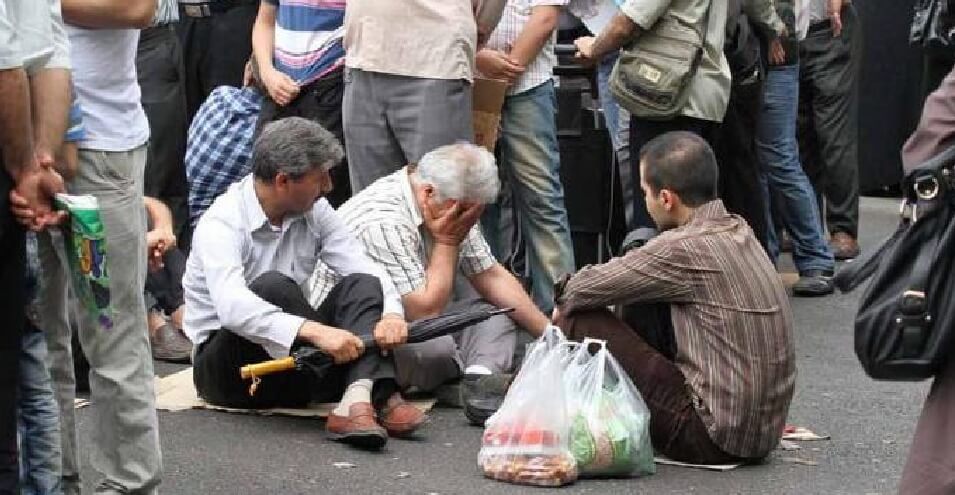
Countrywide protests, which have primarily focused on economic grievances, have continued to draw attention to the need for major economic reforms and unfulfilled expectations of many Iranians. We expect more unrest in the coming months, although protests will likely remain uncoordinated and without central leadership or significant support from major ethnic and political groups. Our assessment is that Tehran is prepared to implement harsher security measures in response to renewed protests, though it prefers the use of non-lethal force.
Given widespread corruption, a weak banking sector, and business conditions that do not encourage foreign investment and trade, Rouhani’s capacity for economic reform remains limited.
Military Modernization and Behavior
Iran continues to develop military capabilities that threaten U.S. forces and American allies in the region. Iran may also cause increased disruption to the U.S. Navy and allies’ naval vessels and commercial shipping in the Persian Gulf, Strait of Hormuz, and Gulf of Oman.
Iran continues to build, develop, and deploy a range of military capabilities that enable it to target U.S. and allied military positions in the region and disrupt traffic through the Strait of Hormuz. These systems include ballistic missiles, suicide boats, naval mines, submarines, fast-attack craft, armed drones, anti-ship cruise and ground-to-ground missiles, anti-ship ballistic missiles, and air defense systems. Iran possesses the largest missile arsenal in the Middle East and can target objectives up to 2,000 kilometers from Iran’s border. The “S-20 SAM” system that Russia delivered to Iran in 2016 is the most advanced long-range air defense system. Iran also domestically produces intermediate-range “Sam” missiles and is producing intermediate-range missiles.
In September 2018, Iran targeted Kurdish groups in Iraq and ISIS in Syria with ballistic missiles in response to attacks within Iran. These attacks demonstrated increasing Iranian missile accuracy and Iran’s capability to employ drones in coordination with ballistic missiles.
Our assessment is that unprofessional interactions between the Islamic Revolutionary Guard Corps Navy and U.S. ships in the Persian Gulf, which had decreased over the past year, may resume if Iran seeks to display power in response to U.S. pressure. Most IRGC Navy interactions with the U.S. fleet are professional, but in recent years the IRGC Navy has challenged the U.S. fleet in the Persian Gulf and has flown drones close to American aircraft carriers. Furthermore, Iranian leaders have threatened since July to close the Strait of Hormuz in response to U.S. sanctions on Iranian oil exports.
This report was compiled based on information gathered through January 17, 2019.
Source: Voice of America