UN Third Committee Condemns Human Rights Violations in Iran
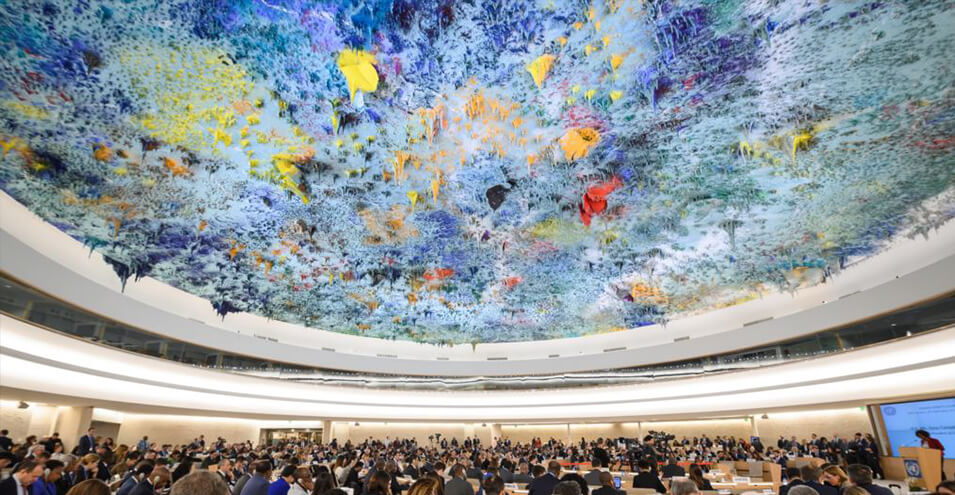
The Third Committee of the United Nations General Assembly on Thursday, November 14, passed a resolution condemning “human rights violations in Iran” and expressed deep concern over arbitrary detention, prison conditions, discrimination against women, and the continuation of systematic harassment of religious minorities in the country.
The resolution, which was drafted by Canada, was approved with 84 votes in favor against 30 votes against. Additionally, 66 countries abstained from voting.
The United States, Britain, Spain, Sweden, Switzerland, the Netherlands, Slovakia, Ukraine, Finland, France, Denmark, and Germany were among Western countries that voted in favor of the resolution.
Among Arab and Middle Eastern countries, Saudi Arabia, the United Arab Emirates, and Bahrain stood out among the supporters of the resolution.
The six-page resolution expresses concern about “severe restrictions on freedom of thought, religion and belief” as well as “increasing pressure” on religious minorities including members of the Bahai community, Gonabadi Dervishes, and Sufis.
The resolution was prepared based on two reports from Javaid Rehman, the United Nations Special Rapporteur on human rights in Iran, which states that Bahais in Iran, as followers of a religion that the government does not officially recognize, have been subjected to the most severe forms of suppression.
The resolution calls on Iran to end all forms of discrimination against ethnic and religious minorities in the country. The release of women’s rights activists imprisoned in prison, the repeal of discriminatory laws against women, improvement of prison conditions, provision of medical facilities for prisoners, and the release of all citizens imprisoned for exercising freedom of speech are among other matters emphasized in the resolution.
At the same time, the resolution commends Iran for some measures such as hosting one million Afghan refugees and their access to the education system and medical services.
The notable reduction in executions in Iran, which occurred through changes in drug-related laws, is another matter mentioned in the resolution.
Iran’s neighboring countries generally voted against the resolution, including Armenia, Afghanistan, Iraq, Turkmenistan, and Pakistan. Other countries opposed to the resolution include China, Cuba, Lebanon, Kyrgyzstan, Serbia, Oman, Uzbekistan, Venezuela, Vietnam, India, Russia, the Philippines, and Syria.
Source: Radio Farda