Untold Stories of Two ‘Australian Hostages’ from Detention in Iran
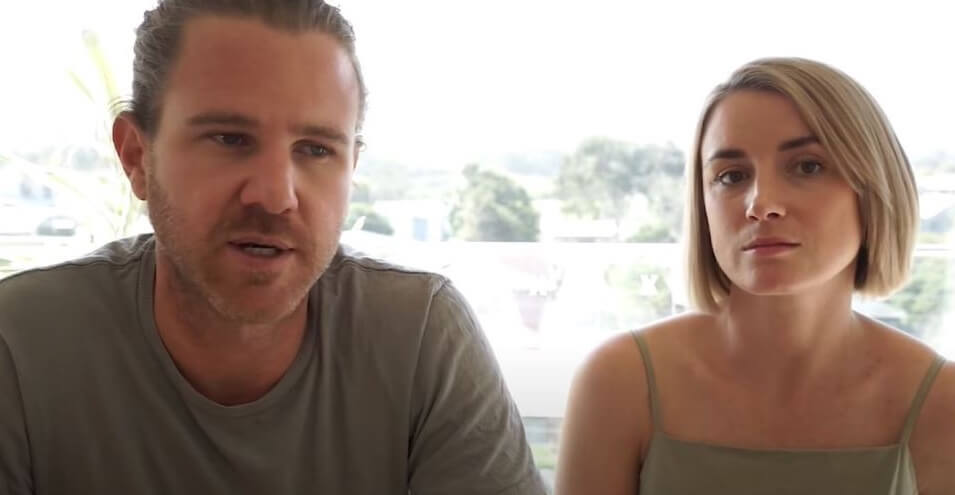
A year after Mark Firkin and Julie King were released from prison in Iran and returned to Australia, the two tourists sat in front of cameras and explained details of what they experienced in Iran.
These two Australian tourists began their overland journey from Australia and planned to drive their van to Britain, documenting travel stories and nature across various countries.
Their latest videos were recorded in India and Pakistan, where they had visited diverse regions of these countries, eaten with local people, and documented visual narratives of the natural beauty of these nations.
In late spring, these two Australian citizens entered Iran. According to their own account in a video published on YouTube on October 10th, they spent four days in Iran. Mark Firkin and Julie King say it is time, after one year, to tell their story about what happened to them in Iran, close this chapter, and resume their lives, as they say there is much “speculation” about them and this trip to Iran.
They narrate their story as follows: When they were camping on the night of June 30, 1398 (Farsi calendar) in an area where another tourist had also pitched a tent, suddenly a large number of security officers in plain clothes came to them.
When news of their arrest was released, Jajarod was mentioned as the place of their detention, but they themselves did not name the location.
Mark and Julie describe how in their travels, encounters with police forces had been routine, and they thought that by explaining they were tourists from Australia, the matter would end; but this was the beginning of their troubles.
The security officers order the two tourists to gather their belongings, then handcuff and blindfold them and take them to their place of detention.
The account of these two Australian citizens about detention in Iran is a story that many others have told before: a cell with only a blanket on the floor, officers who do not speak English, and uncertainty that lasts for months and for some years.
Mark and Julie, in explaining the first days of detention, say it took two days before “it was decided to keep them,” and then they were taken to another location and before a judge who accused these two of espionage; an accusation they deny in the video one year after their release.
Ten days after this charge, which in Iran can carry a death sentence or ten years imprisonment, they are separated from each other and placed in solitary cells. After some interrogation, for about four weeks no one visits them, and they are only taken for fifteen minutes daily for fresh air in a small courtyard. Not only was there no interrogation during this period, but they also remained deprived of access to a lawyer, family, or the Australian embassy.
After two months pass, they are told that it has been determined they are not spies, but this is not the end of the matter. These two young Australian tourists are brought before the judge again, and this time they are charged with a different accusation, which they also call fabricated; photographing nuclear facilities.
Julie King says that in this process, her case’s interrogator played the role of their translator, and after this meeting told them they should thank the judge that instead of execution or ten years imprisonment, he might sentence them to three years in prison.
She says: “It may seem foolish, but in the situation we were in, we thought we were genuinely being helped, and we were grateful to them.”
After the new charge is presented to these two tourists, they are transferred to the general ward of Evin Prison to await the verdict.
Mark Firkin says this change was very good because they were able to contact the embassy, found out that their families had been looking for a lawyer, and this news was heartening for them, who had been without contact with the outside world for so long.
Julie King also talks about the women’s general ward: “Coming to the general ward allowed us to see other prisoners; many political prisoners and people who had a fate similar to ours. It showed us that we were not alone.” Ms. King says this experience was enlightening for her.
About six weeks also passes in the general ward until after three months of detention, finally a representative of the Australian government manages to see them. They say: “About a week later, it was seven o’clock in the evening on a Wednesday when we were told to gather our things. We didn’t know where we were going. That was the moment we saw each other and said this means we’re going home.”
According to them, except for cameras, mobile phones, and a few memory cards, other belongings are returned to them, and their assessment is that those belongings were “probably also kept to build the case.”
Mark Firkin and Julie King say their story has other details, but perhaps they will discuss it at another time. They say they did not tell their story to create more tension or have a negative impact, and they emphasize that going to Iran is routine for many people traveling from east to west, and they took this step with this approach.
However, at the end of their video, they acknowledge that after going through their ordeal, they realized they were not the first to get into trouble this way and that other foreigners are in similar situations.
Hours after Australia publicly announced the release of these two citizens in the month of October 1398 (Farsi calendar), media in Iran also reported that an Iranian accused of violating sanctions in Australia had been released.
Reza Dehbashi was a doctoral student at Queensland University in Australia who spent approximately 13 months in detention in that country.
Still, an Australian citizen who also holds British citizenship is imprisoned in Iran. Her name is Kylie Morgilbert, who was detained in autumn 1397 (Farsi calendar) and convicted of espionage to a ten-year prison sentence. Ms. Morgilbert was a lecturer of Islamic Studies at the University of Melbourne, Australia at the time of her detention.