US: If Iran Does Not Accept Proposed Deal to Revive JCPOA, Pressure Will Increase
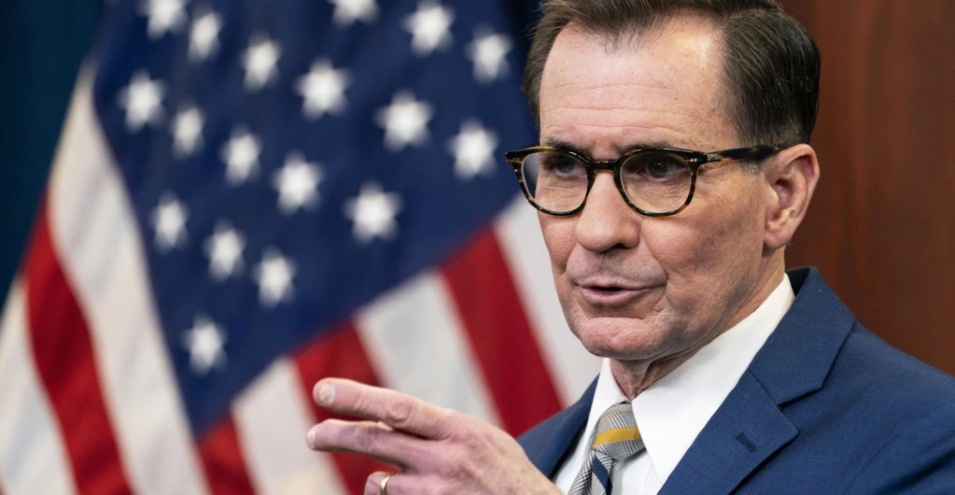
John Kirby, coordinator of strategic communications for the National Security Council at the White House, warned on Monday, July 17, that if Iran does not accept the proposed agreement in negotiations to revive the nuclear agreement known as JCPOA, pressure on the Islamic Republic will intensify.
John Kirby, in an interview with “CBC News” regarding the achievements of Joe Biden’s trip to the Middle East and shared interests between the US and Saudi Arabia regarding Iran’s nuclear program dispute, said there are many common points. Saudi Arabia also does not want to witness an Iran armed with an atomic bomb. They absolutely do not want such an outcome to materialize.
This White House official clarified: “The two countries acknowledged that ‘no problem in the Middle East will be easily solvable with the existence of a nuclear Iran. President Biden believes that the best path to prevent (Iran’s acquisition of nuclear weapons) is diplomacy and an agreement based on negotiation.'”
He added: “There is currently an agreement on the table, and it is up to Iran to accept this agreement and proceed in the direction of such an outcome. If they want sanctions relief, there is now an agreement before them. The only thing they need to do is implement this agreement on the table.”
John Kirby further warned: “If Iran does not accept, as President Biden has clearly and explicitly stated, with the cooperation of allies and partners in the region and in Europe, pressure on Iran will increase, and at the same time we will ensure that we have sufficient military capacity to defend our allies in the region and our national security interests.”
When asked by the interviewer about the details of such pressures, John Kirby said these pressures could come through doubled sanctions. There are different ways to implement them. But certainly we are not taking new sanctions off the table, although they have been reinforced.
Negotiations to revive the JCPOA resumed after Ebrahim Raisi’s government took office following a pause of several months, starting from November 29 of last year.
Ali Bagheri Kani was Iran’s senior negotiator in this new round of negotiations, which continued with the participation of JCPOA member countries and the indirect presence of the United States in Vienna. In this regard, it was said that the draft agreement for reviving the JCPOA was nearly complete.
Following reports about the emergence of such a draft, American officials said that Iran was seeking to remove the Islamic Revolutionary Guard Corps from the list of terrorist groups. On the other hand, in early April of this year, an informed source close to the JCPOA revival negotiations in Vienna told Radio Farda that the commitment of the Islamic Republic government to stop pursuing the case of Qasem Soleimani’s killing was one of the main conditions for removing the Islamic Revolutionary Guard Corps from the US government’s terrorism list.
After the JCPOA revival negotiations in Vienna halted in March of last year, Iran and the United States have blamed each other for stopping these negotiations.
On July 8 of this year, Iran and the United States held indirect negotiations mediated by the European Union’s foreign policy chief in Doha, Qatar, but these negotiations also yielded no results.
Amirabdollahian: US Should Abandon Use of Pressure Levers and Sanctions
IRNA also reported on Monday that Hossein Amirabdollahian, Iran’s Foreign Minister, spoke by phone with Josep Borrell, the European Union’s foreign policy chief, about the necessity of achieving a “good agreement.”
According to this report, Hossein Amirabdollahian emphasized that “there is no doubt in Iran’s will” to reach a “good, strong and sustainable” agreement.
Iran’s Foreign Minister further asked the United States to put aside “excessive expectations and doubts” and to “move realistically toward achieving solutions and reaching an agreement” and to “abandon repeating the ineffective approaches of the past and unconstructive behavior and resorting to pressure levers and sanctions.”
This comes as Iran’s Foreign Minister was speaking with the European Union’s foreign policy chief, while France’s Foreign Minister said last week that more than a few weeks of opportunity remain before the window for reviving the JCPOA closes.
Catherine Colonna, while calling the “situation” unbearable, accused Iran of using delaying tactics, returning to positions before the agreed-upon Vienna positions in the Doha negotiations, while continuing to advance its uranium enrichment program.
France’s Foreign Minister had stated that there is still “a window of opportunity for Iran to decide to accept an agreement that worked, but time is running out.”
Ms. Colonna warned that if Iran sticks to its current position, it will be on the verge of becoming a country with nuclear weapons.
Source: Radio Farda