Verbal Clash Among Islamic Republic Officials Over Corona’s “Killing Field”
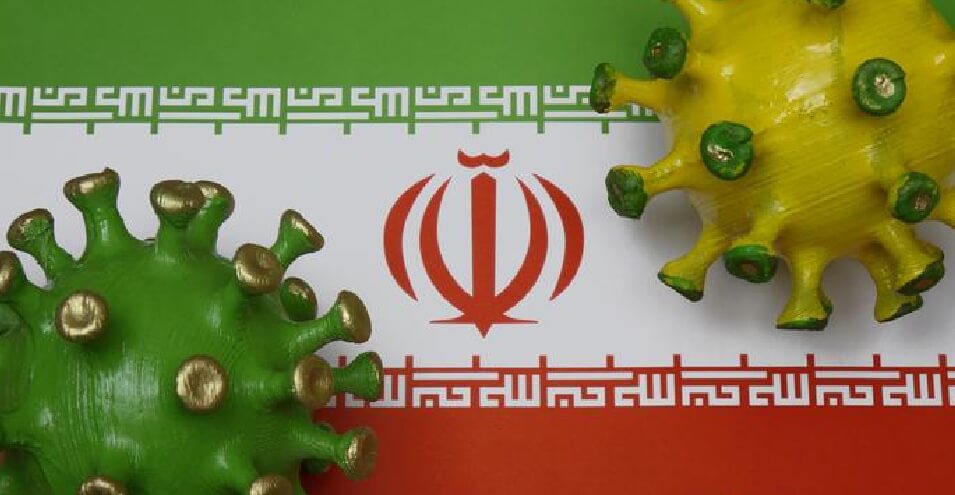
The Health Ministry spokesperson has described Iran’s coronavirus situation as “dark red and black,” while Saeed Namaki speaks of corona’s “killing field.” However, the dispute and mutual accusations among officials who each bear responsibility in this field continue.
In the fifth wave of the coronavirus pandemic in Iran, consecutive records of cases and deaths continue, almost no hospital bed is available, equipment shortages have reached rationing of serums and distilled water, but officials are mostly occupied with justifying their own performance, covering up shortages, and blaming others.
The health minister of the twelfth government, in a speech in Mashhad that the Tasnim news agency published on Thursday, August 21 (August 12), claimed while praising this ministry’s measures: “If we had not launched outpatient clinics and temporary hospitalization centers, make no mistake, we would have lacked approximately 200,000 hospital beds.”
Saeed Namaki, who once said other countries were astonished at corona control in Iran, now speaks of “healthcare defenders being crushed under the wheels.”
Vaccine Shortage and Corona’s Killing Field
The health minister of the Islamic Republic had promised that Iran would become one of the major exporters of coronavirus vaccine by Ordibehesht. He later promised vaccinating 14 million people by Tir month. Namaki, in his speech in Mashhad, justifying delays in vaccine procurement, says: “Those who claimed friendship with us abandoned us in the middle of the killing field.”
Vaccination to prevent COVID-19 infection in Iran began on February 11 with a limited number of Russian “Sputnik V” vaccine and continued with the Chinese Sinovac vaccine.
Official and officials of the Islamic Republic blame “betrayal by friends”—referring to China and Russia—and cite American sanctions as among the main reasons for failure to fulfill promises in providing necessary vaccines to citizens.
One of the other main reasons for the slow vaccination process in Iran, which continued until early Mordad, could be statements made on January 10 by the Islamic Republic’s leader, Ali Khamenei, about the prohibition of entry of “American and British vaccines.”
Khamenei’s Order Prohibiting Entry of Some Vaccines
Kianush Jahanpour, spokesperson for the Food and Drug Organization of the Health Ministry, in a Twitter message denied this prohibition and claims the ban covers vaccines produced in Britain and America.
Contrary to this claim, Khamenei in his speech, whose video was also published on Jahanpour’s Twitter page, explicitly questioned the effectiveness of vaccines produced by American and British companies and declared their import prohibited.
Khamenei, apparently realizing the catastrophic consequences of his order, recently said corona is the “first problem” of the country and the vaccine needed by people must be obtained “by any possible means.”
Dispute Between Health Officials and Foreign Ministry
Regarding delays in providing necessary vaccines to citizens, a fierce dispute has recently erupted between health officials and authorities of the foreign ministry.
Alirez Zali, head of the Corona Combat Headquarters in Tehran metropolis, accused Islamic Republic ambassadors in various countries of not pursuing vaccine procurement and said: “The cost of coronavirus medicines has been several times the vaccine imports, but they did not allow buying vaccines because they thought it was expensive.”
The IRIB news agency on August 20 (August 11) wrote, quoting Zali, regarding the slow vaccination process in Iran: “We only have vaccine reserves for five days and cannot increase the pace; if we had more vaccine, we would have doubled our centers.”
Zali’s statements met with sharp reaction from Mohammad Javad Zarif and some other senior Foreign Ministry officials. Zarif, without naming any particular organization, asked: “Which organization rejected the pro-forma entry of 20 million vaccines from Europe?”
Zarif’s Response to Zali’s Remarks
The foreign minister of the twelfth government described vaccine entry to Iran as the result of this ministry’s efforts and wrote on his Instagram page: “Which organization has arranged the purchase and donation of more than 24 million foreign vaccine doses so far and negotiated and finalized bulk and continuous imports in coming weeks?”
Since the beginning of Mordad month with the arrival of millions of doses of donated Japanese vaccine and some purchased vaccines, the vaccination process in Iran has accelerated compared to previous months.
Based on the latest statistics from the Health Ministry, by Thursday, a total of slightly more than 17 million and 760 thousand vaccine doses have been injected in Iran, but the number of citizens who have been fully vaccinated is not more than approximately three and a half million.
If Alirez Zali’s recent statements about sufficient vaccines for five days are true and no new vaccine enters, there is a possibility that the vaccination process will slow down again.
Dark Red and Black Coronavirus Situation
Saeed Namaki expressed optimism in his speech in Mashhad that the vaccine import process has been “expedited and facilitated” and 120 million vaccine doses will enter Iran by Aban month. He made no reference to the source of these vaccines.
The Health Ministry’s Information Center announced on Thursday that slightly more than 39,000 new cases of coronavirus were identified in the past 24 hours and 568 people with COVID-19 disease have died.
According to official statistics, the number of COVID-19 victims in Iran so far has been 96,124. Experts and even some members of the Scientific Committee of the Corona Combat Headquarters say the actual rate of coronavirus deaths is at least two and a half times the official statistics.
The Health Ministry says that currently 336 cities in the country are in red situation, 84 cities in orange situation, and 28 cities in yellow situation.
Sima Sadat Lari, spokesperson for this ministry, said on Tuesday: “Hospitalization indicators are such that we can say the situation is dark red or black.”
In the past 24 hours, nearly 500 patients with coronavirus have been hospitalized, and the number of patients in intensive care units has exceeded seven thousand.
Hospitalizations, which have increased unprecedentedly in recent days, have faced medical centers and hospitals with serious challenges. The highest number of hospitalizations at the peak of the fourth pandemic wave was on the 30th of Farvardin with 3,901 cases.
Source: DW