Warning Over Food Security Following Complete Ban on Rice Imports to Iran
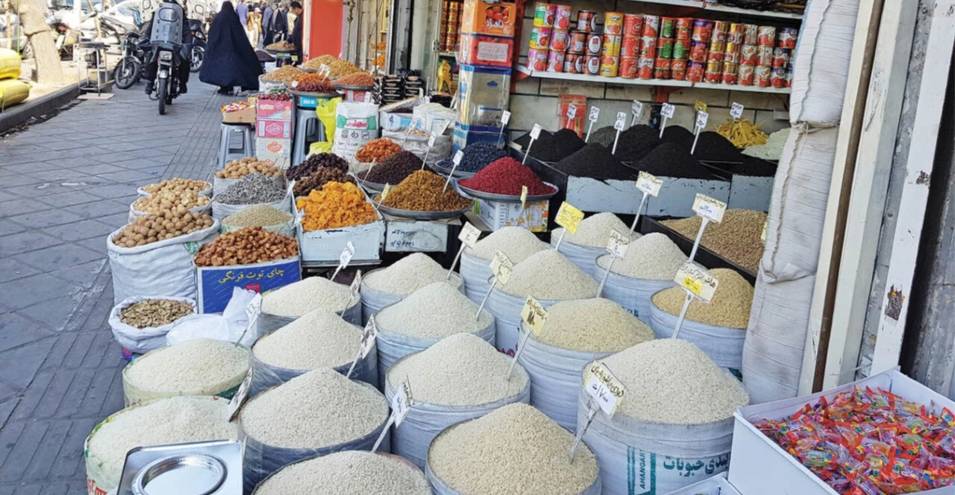
Both the head of Iran’s rice importers association and the secretary of the country’s rice suppliers commission on Tuesday, December 3rd, described the Ministry of Agriculture’s decision to completely ban rice imports to Iran as “sudden and unprofessional,” stating that this decision endangers the food security of the population.
Ekhvan Akbari, head of the rice importers association, said in an interview with ISNA news agency that this “sudden and previously unannounced” decision by the Ministry of Agriculture harms the country’s economy, the table of vulnerable populations, and the country’s food security; exposes the market to a major shock; will lead to increased rice prices; damages Iran’s credibility with rice sellers; and eliminates “special channels” for circumventing sanctions.
He continued that “the table of at least the first six deciles of the country, equivalent to half of rice consumers, depends on imported rice which costs far less than domestic production,” and this decision “will result in emptying the consumption basket of disadvantaged populations of rice and reducing their meals.”
According to Ekhvan Akbari, the Ministry of Agriculture’s reason for this decision under the Raisi government is stated as the imbalance in Iran’s trade balance with rice-exporting countries, namely India and Pakistan.
On the same day, Masih Kashavarzi, secretary of the country’s rice suppliers commission, also told Hamshahri Online about the reason for the ban on foreign rice imports to Iran: “About a month ago, the trade balance between Iran and India fell apart, and apparently items that had been sent from Iran to India were not accepted by India, and in response Iran decided to ban rice imports from India.”
The secretary of the rice importers association, criticizing the Agriculture Ministry’s statistics on rice imports, said: “Apart from disrupting the trade balance between Iran and India, another factor in banning rice imports from India was the provision of unrealistic rice import data by the Agriculture Ministry. It’s not even clear where the Agriculture Ministry gets these figures from because their statistics are unrealistic.”
Masih Kashavarzi continued: “The private sector has not imported more than approximately one million tons of rice to date, while the Agriculture Ministry reported total imports at one million 400 thousand tons and above, and from their perspective sufficient rice has been imported this year. That’s why they’ve suspended order registrations, but we’ve warned that by year-end at least another 300 thousand tons of rice must be imported to ensure market stability from this side of the year to the other.”
The secretary of the rice importers association, stating that “unfortunately the government doesn’t listen to us at the right time,” said: “If order registrations are suspended, its adverse effects could be like last year, meaning we face both shortages and high prices of foreign rice, with the six deciles of vulnerable populations as the target market, and again it could lead to price increases for Iranian rice on the eve of the New Year, and these are among the serious harms we have predicted.”
Mr. Kashavarzi reported a 10 percent increase in Indian rice prices due to this new decision, this at a time when at minimum over the past year the increase in inflation rates in Iran, whose index has constantly been reported around 40 percent, has placed considerable economic pressure on citizens.
According to reports, coinciding with increasing economic pressures in Iran, people’s tendency to exchange personal and household items for foodstuffs, as well as buying fruit by the piece, has increased.
Source: Radio Farda