When Rain Creates a ‘River of Blood’ and Reminds the World of the End Times in Revelation
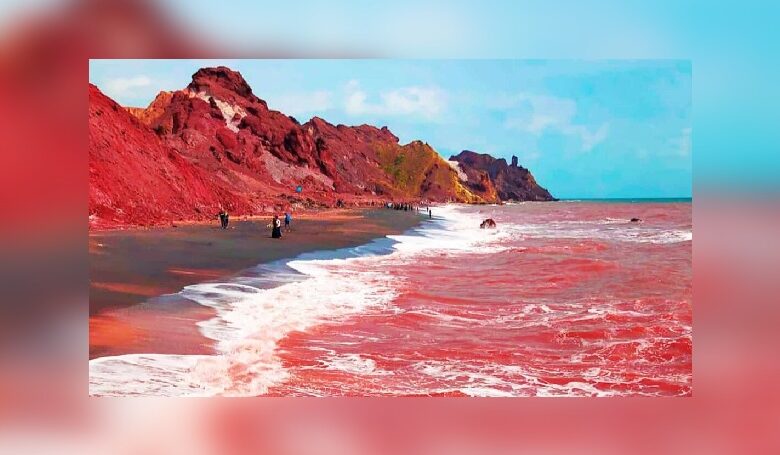
Rainfall and the coloring of Hormuz Island’s shoreline blood-red has created a space between science and biblical signs, from the ‘river of blood’ to dreamlike imagery.
The publication of images and videos showing rainfall and the flow of red-colored water on the shores of Hormuz Island has triggered widespread reactions across global social media networks. Scenes in which rainwater flows from the heart of the island’s rocks and red soil toward the sea have been evocative and mysterious for many; as though ‘streams of blood’ were flowing toward the ocean.
These images were released precisely when Iran, after experiencing the driest autumn in over 50 years, faced a wave of rainfall beginning Wednesday, December 10. In Hormuz, this rain not only quenched the thirsty earth but also displayed a shoreline that was previously known for its distinctive colors in a notably crimson and blood-like manner.
On social networks, dozens of videos of this phenomenon were published; though it is unclear whether all of them belong to the recent rainfall or if some refer to similar images that were also witnessed in Hormuz in March of last year. Nevertheless, the simultaneous occurrence of rain, drought, and blood-red water sparked the imagination and reflection of users.
Some users connected this scene to biblical prophecies. One user on X (Twitter) wrote: “Blood in water is an end-times sign that comes primarily from the Book of Revelation (chapters 8 and 16), which describes angels pouring out bowls of God’s wrath, turning the sea, rivers, and springs into blood as divine judgment in the end times.”
Another user wrote in a questioning tone: “It looks biblical. Is this a common scene?”
For Christian readers, these reactions recall clear verses from the Book of Revelation: “And the second angel poured out his bowl upon the sea: and it became as the blood of a dead man: and every living soul died in the sea. Revelation 16:3.”
And also: “And the third angel poured out his bowl upon the rivers and fountains of waters; and they became blood. Revelation 16:4.” These prophecies also appear in Revelation chapter 8, verses that have been interpreted for centuries in Christian theology as signs of divine judgment and the end of days.
Alongside these faith-based interpretations, earth science experts have provided clear and documented explanations. Hormuz Island contains soil and rocks very rich in iron oxide, particularly a mineral called hematite, which is the primary cause of the island’s red color. When it rains, particles of these mineral substances combine with water, creating a red-colored runoff that flows toward the shore and sea.
According to geologists, this phenomenon is completely natural, harmless, and well-known, occurring repeatedly during different periods, especially after heavy rainfall. Similar historical images have been recorded in previous years, showing no signs of pollution or environmental hazard.
Hormuz Island has long been a destination for tens of thousands of domestic and international tourists due to these unique geological characteristics. However, the re-publication of images of the ‘bloody shoreline’ demonstrated how natural phenomena can simultaneously guide the human mind toward science, faith, and profound theological questions.
Whether we view this scene as merely a wondrous display of creation or as a thought-provoking sign that turns our gaze toward Scripture, one thing is clear: “When the sea turns red, man once again contemplates the limits of his understanding and the magnificence of God’s creation.”