Where Will the Protests Lead?
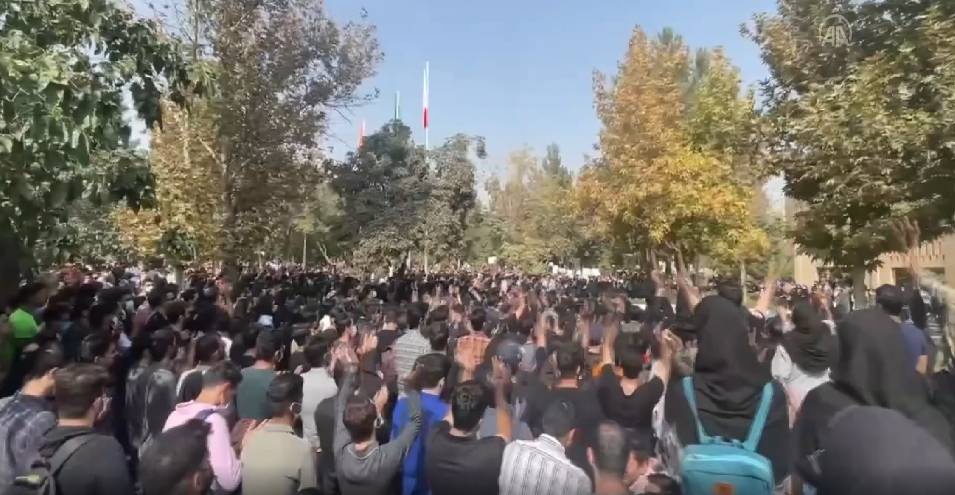
The path that today’s protests are taking is the same path our forefathers traveled four decades ago. The revolution of four decades ago veered off course precisely along the path of the three-fold slogan of woman, life, and freedom. Women were confined—their perspective and their world were imprisoned, life was sacrificed to ideology, and freedom was stripped from the people. Persisting to create change in these three principles came at great cost, which unfortunately did not succeed until we reached today.
The question is: how long will these protests last, when will they reach a result, or when will they end?
These questions arise when there are specific, limited symbols or particular, definite faces. In 2009, the Islamic Republic thought that if it placed the leader of the movement under house arrest and imprisoned the faces of the movement, and if some time passed since the elections, the protests would end. Back then, Seyyed Hossein Mousavi declared that the problem was not about the elections, but the system did not believe this and continued with its actions.
Today, the system has reached this situation. The question is: whom does the system want to arrest and imprison now so that the matter will end? In these protests, the number of arrests has become very large, and there is even shooting at wandering individuals. The reason is that the system has become confused and does not know whom to shoot or whom to arrest so that the protests will end.
Most importantly, the issue of women and mandatory hijab has become entrenched and cannot be ended. Every day that a woman removes her headscarf, that day is a continuation of this movement, and one can say with certainty that these protests will not end until they reach their goal.
But what is the responsibility of some citizens who are inside and outside the country but have remained silent? What responsibility do they bear toward the violence and methods of governance that have affected a large part of people’s lives?
Fulfilling responsibility toward the current situation, even taking one small step, means this movement continues. The continuation of the movement is not measured by the number of people in the streets or the slogans; rather, it is measured by each small step taken inside and outside the country.
Everyone has a role in this path, and we are witnessing a wave of sense of responsibility both inside and outside the country.
Solidarity and mutual aid in Iran has increased much more than before. People’s attention to one another to stay safe and protect each other from the brutality of this government has also increased. Universities have united, and schools have also taken on new identity.
On the other hand, foreign media outlets have fulfilled their duty by bringing the voice of the people to the whole world. What matters is that the general public has defined this struggle and resistance in their lives. Life should not be suspended; the more intertwined this resistance becomes with people’s lives, the more sustainable it will be.
Quoting Kiyan Samimi, who is serving time in prison: everyone should take a step from wherever they are; and this is what is happening these days.