Why Does Suppression of Lesser-Known Political Activists in Non-Central Cities Intensify Simultaneously with the Regime’s Admission of ‘Subsurface Explosion in Society’?
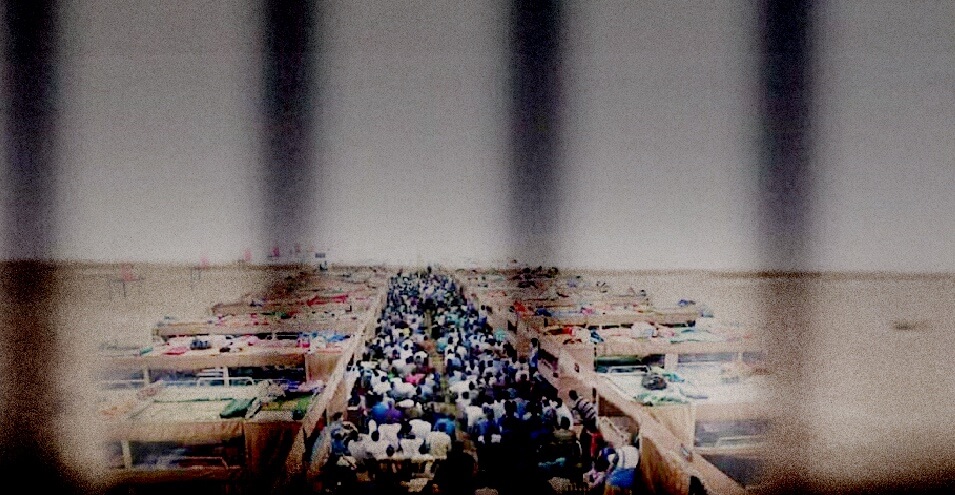
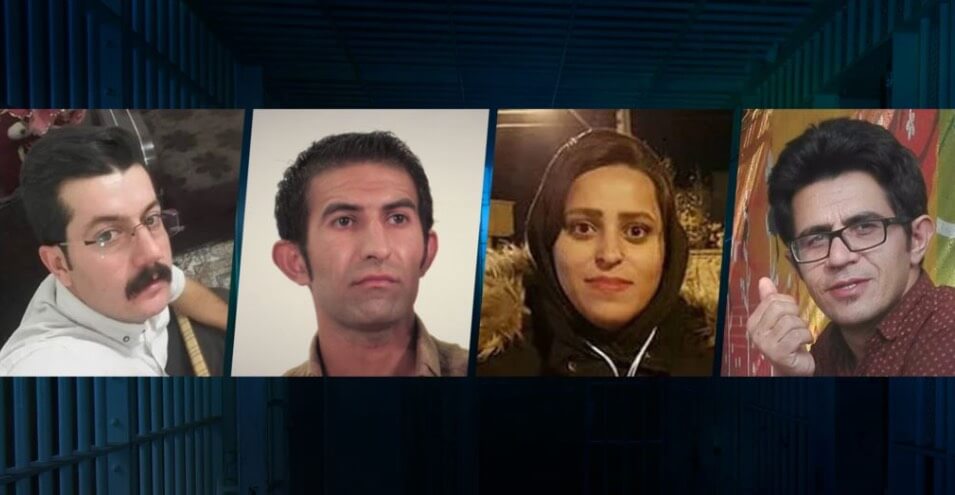
How do Iran’s security and judicial apparatus exploit the obscurity of political and ideological prisoners in lesser-known cities to intensify pressure on these individuals?
How does news silence regarding these people pave the way for unjust trials? What do the problems and sufferings of lesser-known political and civil activists in smaller cities represent for fair trials? What is the relationship between the expansion of protests in small Iranian cities and harsh and violent treatment of civil and political activists by security forces? The number of civil and political activists arrested or imprisoned in recent months in various Iranian cities has increased. Nevertheless, reports of security and judicial pressures on these lesser-known activists are far less reflected compared to detainees in Tehran prisons and major cities, thereby increasing opportunities for judicial and security pressures on these individuals. It appears that the Islamic Republic’s regime, by insisting on continuing such treatment of civil activists and political critics in small and peripheral cities, intends to suppress and silence society’s protesters and critics by creating fear and terror among citizens and demonstrators.
From Unjust Trials to Unsafe Prisons Without Adequate Facilities
One characteristic of popular protests in December 2017 and later the November 2019 protests was the successive participation of people from small towns in the demonstrations. This feature continued in subsequent protests. For example, the ongoing protests by teachers and retirees in recent months share this characteristic. As protests expanded and scattered among different social classes in small cities, the treatment and suppression by security, military, and judicial forces against demonstrators in these lesser-known and peripheral cities intensified, and under the shadow of news silence, imposed significant costs on protesting citizens and their families. The anonymity of detainees and opacity of trial procedures, and certainly some detainees’ ignorance of the judicial process, led Iran’s security and judicial apparatus to employ the most heinous and unjust forms of treatment against these detainees.
Following the bloody suppression of the Iranian people in December 2017 and November 2019, numerous reports emerged about illegal detention procedures, torture, and unjust trial processes of citizens arrested in Iran’s small cities. What was most observed in reviewing and trying these cases was first “detainees’ lack of access to lawyers” and then “preventing lawyers and defendants from accessing case files.” In most of these cases, based on Note 48 of the Criminal Procedure Code, requiring “selection of one or more lawyers during preliminary investigations from among court-appointed lawyers approved by the head of the judiciary,” some defendants accepted this condition and thus apparently had lawyers, but since the prosecutor could issue an order for “denial of file access” based on Article 191 of the Criminal Procedure Code, these lawyers effectively had no access to files or knowledge of their details. This process, combined with forcing defendants into forced confessions through torture and threats—behaviors extensively documented in reports of such illegal and rights-violating conduct—resulted in severe sentences including execution or lengthy prison terms in prisons with catastrophic health and safety conditions. Although arrests and convictions of activists and demonstrators in small cities after mid-1990s protests (solar calendar) prompted some public reaction to rampant discrimination in small cities against lesser-known activists and demonstrators, the reality remains that pressure and discrimination against prisoners and defendants in small cities continues through the regime and judicial apparatus; the continued detention of activists in Kurdish-inhabited cities and towns, as well as severe judicial treatments such as issuance and execution of death sentences in deprived cities of Sistan and Baluchestan province in recent months, exemplify this inhumane process. Moreover, reports about conditions in prisons in small cities and lack of attention to medical and health issues have increased concerns about the lives and health of many prisoners; in recent days, reports emerged about Hamzeh Darvish, a Sunni prisoner in Lakan Prison in Rasht, who despite ear infections, headaches and persistent dizziness, has been deprived of proper medical care. This prisoner recently wrote to Javaid Rahman, the UN special rapporteur on human rights in Iran, stating that there is no personal security in Lakan Prison and in the past two months, with “the green light and support of prison officials,” he has been beaten three times by inmates committing violent crimes. Reports also emerged about Ali Halafi, a political prisoner held in Masjed Soleiman Prison, who despite suffering from gastrointestinal and lung diseases has been deprived of medical care or release on medical leave. This political prisoner is spending his sixteenth year of imprisonment without a single day of furlough. Earlier, Amnesty International, in a letter to Iran’s head of judiciary, warned about the physical condition of Kamal Sharifi, a political prisoner, and the danger to his life, demanding his immediate release from Minab Prison in Hormozgan Province. Mr. Sharifi has been denied furlough throughout his detention.
On Wednesday, the 13th of Bahman, reports indicated that female prisoners held in the women’s section of Kermanshah Correctional and Rehabilitation Center refused to accept their food ration in protest of its poor quality. During this protest movement, Soheila Hejab was beaten by the prison’s security chief and security personnel threatened her with “file creation and exile” to another prison.
The Regime’s Inverted Narrative of Discrimination Reality
Some time ago, Brigadier General Naqdi, the coordinating deputy of the Revolutionary Guards, who has a dark record in suppressing public protests at various stages and consistently speaks harshly about activists, critics, and political and ideological opponents, while implicitly alluding to intensified protests in Iran’s small cities and claiming that “enemies make mountains out of small incidents in remote cities in Iran and broadcast them like news bombs in media,” stated: “Sometimes ruffians and hooligans who have killed and wronged many people are presented as political fighters, and sometimes people claim someone was killed when no one was actually killed, and then the media reports it as news.”
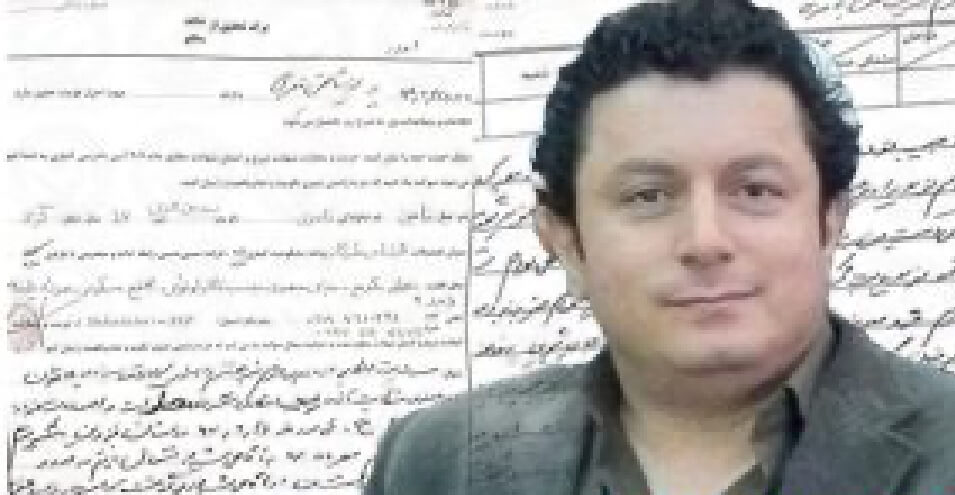
In fact, this commentary by the Revolutionary Guards brigadier reflects the regime’s mentality about civil, political, and protest activities in peripheral cities and in a way imposes and inculcates a narrative that citizens’ protest and opposition in peripheral areas is fundamentally baseless, using terminology that calls “protest” “unrest” and defines “protesters” as “hooligans.” Nevertheless, the process of protests in Iran has become so widespread that imposing such a narrative appears difficult and impossible. The exposure of a classified document from the “Tharallah Revolutionary Guards headquarters” about the expansion of popular protests and the rising number of demonstrators in recent months is evidence of this claim; on Wednesday, the 13th of Bahman, the hacker group “Adalet Ali” exposed the confidential minutes of the Tharallah headquarters from the 21st of November 2021. A meeting of the “Working Group for Prevention of Security and Livelihood Crises” chaired by Brigadier General Hossein Nejat, deputy commander of the Revolutionary Guards, in which representatives from Tehran’s prosecutor’s office, Tehran’s intelligence organization, police intelligence and public security of IRGN, Basij economic intelligence, Imam Ali Revolutionary Guards Corps, Rasoul Revolutionary Guards Corps, bazaar merchants’ Basij across the country, and Revolutionary Guards intelligence organization were present. The Tharallah headquarters of the Revolutionary Guards is one of the primary institutions responsible for suppressing protests in the country. In this meeting, Colonel Kaviani, representing police intelligence and public security of IRGN, presented a report on predictions about protests in the final four months of 2021, stating that “gatherings in 2021 increased 48 percent compared to 2020, and the number of gatherers increased 98 percent.” Also, the representative of the social affairs deputy of the Revolutionary Guards intelligence organization in this meeting stated: “A survey was conducted in society showing that society’s condition is in a state of subsurface explosion.”
In this document, the increase in gatherings and popular protests is described as an alarm bell for the Islamic Republic system.
The exposure of this document demonstrates how aware one of Iran’s most important suppression institutions is of the depth of discrimination and consequently protest, and it is evident that to justify its open and hidden suppressions, it must in every possible way neutralize and invalidate this truth-based narrative that becomes clear behind closed doors among suppressors.
A look at protests by teachers, retirees, and workers, who actually constitute a large population of Iranian society, clarifies that today’s protests by the Iranian people, contrary to the regime’s inverted narrative aimed at discrediting and trivializing them, are protests in line with violation of human dignity. The spread of poverty among a group like retirees who in Iranian society and family’s perspective were symbols of stability, peace, and forgiveness, is a precise example of breaking the dignity of an important segment of society that has now resorted to protest across all small and large cities of Iran for justice-seeking. Teachers’ protests can be examined with exactly this perspective. That is, teachers’ deprivation of the minimum standards of a normal life, while they should teach human dignity to the nation’s children. It is quite clear that younger groups in society, witnessing the breaking of teachers’ or family members’ dignity, join the ranks of demonstrators. In this sense, the protesting society of teachers, retirees, and workers does not protest only within its own boundaries, and we actually see that these groups’ justice-seeking has expanded among other members of society.
Source: Iran Human Rights Campaign