Wife of Mohammad Sharifi Moghaddam Speaks of Alarming Conditions of Imprisoned Dervishes and Coronavirus Threat
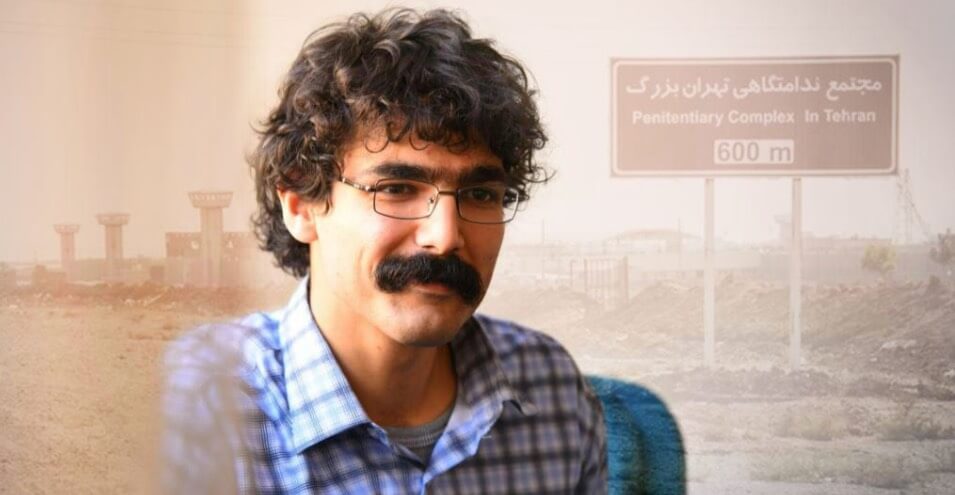
Despite the spread of coronavirus and its expansion in Iran’s prisons, Islamic Republic officials continue to refrain from granting short-term furloughs to some political and religious prisoners or approving conditional release, thereby endangering the lives of these prisoners.
Faezeh Abdi Pour, the wife of Mohammad Sharifi Moghaddam, one of the imprisoned Gonabadi dervishes held in Tehran’s Great Prison (Fashafuyeh), spoke to Voice of America on Wednesday, May 14, regarding the condition of her husband. She stated that despite a circular from the judiciary ordering short-term furloughs for prisoners, which was implemented in early March of last year, Mohammad Sharifi Moghaddam and several other imprisoned dervishes have still not been granted furloughs.
Mrs. Abdi Pour attributed the authorities’ objection to granting Mohammad Sharifi Moghaddam furlough to his sentence of over 5 years imprisonment as a Gonabadi dervish, and said: “We have followed up several times for temporary release, sent numerous letters—we even went to the enforcement division and spoke with the official overseeing the prisons, but all these requests were rejected; as if it doesn’t matter that prisoners’ lives are put at risk and [it seems] if they have over 5 years of sentencing, they won’t get sick.”
According to one of the provisions of the judiciary’s circular issued in March of last year, political prisoners convicted under the charge of “action against national security” to sentences exceeding 5 years are “exempted from furlough.” This has provoked reactions not only from prisoners and their families, but also from human rights activists and officials of several countries.
Mike Pompeo, U.S. Secretary of State, recently said at a press conference: “We have asked not only Syria, but also the Islamic Republic of Iran to release not only American citizens, but all those who have been unjustly imprisoned in these circumstances. This is a humanitarian act and beyond the fact that these individuals have been unlawfully imprisoned, in these conditions humanitarian principles dictate that they be released from prison.”
Faezeh Abdi Pour, the wife of this imprisoned dervish, also told Voice of America regarding conditions in Tehran’s Great Prison: “When a prison like Tehran’s Great Prison is considered completely below zero in terms of hygiene, treatment in it has no meaning. With the spread of this disease in the prison and the infection of some prisoners with this virus and the death of a number of prisoners, the conditions are very alarming. Concern for the health and safety of our loved ones is our first concern, and every moment we are afraid that our dear ones may be infected with this disease.”
The sentence of 12 years imprisonment, social deprivations, and two years of exile to Borazjan issued to Mohammad Sharifi Moghaddam on August 19, 2018, was issued in absentia by Judge Selavatian. This imprisoned dervish, who has already served two years and three months of his sentence, called the Revolutionary Courts’ notification optional at the time of notification and refused to submit a request for reconsideration.
The United States Commission on International Religious Freedom recently expressed concern again regarding the state of religious and sectarian freedoms in Iran in its annual report. In the section regarding Iran in this annual report, released Tuesday, May 30, it announced that the Islamic Republic has increasingly targeted Muslim minorities, particularly Sunnis and dervishes, as well as followers of other religions and sects, including Bahá’ís and Christians.
Source: Voice of America