Islamic Republic Clerics Beating the Drums of War
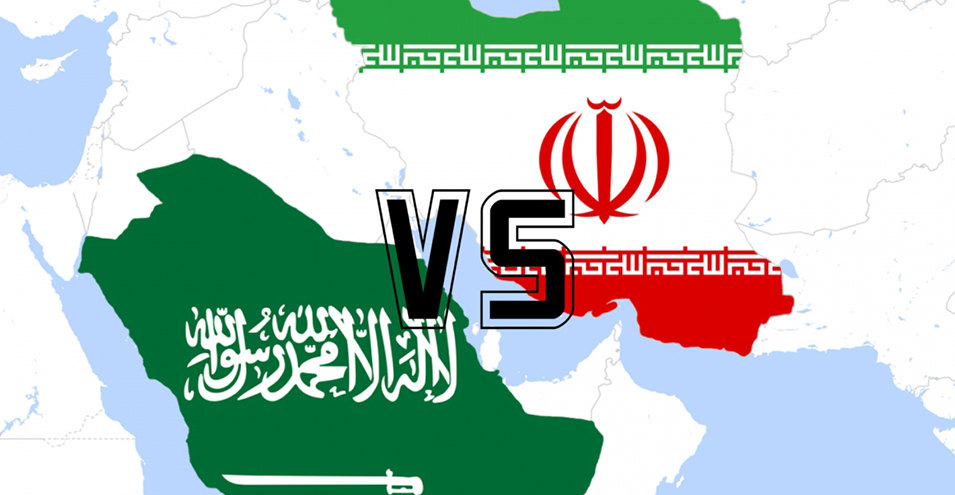
Sohila.sh. FCN News Agency: These days, a flood of accusations are increasingly being directed at Iran, and there are fears that hardline clerics allied with Hezbollah in the Islamic Republic are beating the drums of war. Because the memory of the eight-year Iran-Iraq war and massacre is still alive in the minds of the Iranian people. Memories that recall deliberate tensions similar to these days, after which war began.
In recent months, leveling terrorism support accusations against the Islamic Republic was one thing, but now the arrow of warmongering has also been directed at this regime. Under these circumstances, the silence of Islamic Republic officials, led by Khamenei, in the face of these accusations is surprising. Of course, every so often a spokesman for one of the officials speaks up and utters slogans.
But starting from around 8:20 PM Saturday night local time, coinciding with the 13th of Aban when Yemeni Houthis fired their ballistic missile toward Riyadh Airport in Saudi Arabia, the intensity and clarity of these accusations strengthened. To the point that the Saudi-led coalition, while accusing Iran of playing a role in the missile attack on Riyadh International Airport, said this attack could be considered an act of war and it may respond to it.
Against this reaction and attack, the silence of the regime officials has become more meaningful.
In the latest reactions to these accusations on Monday evening, the 15th of Aban, Bahram Qasemi, spokesman for Iran’s Foreign Ministry, while denying his country’s involvement in the missile attack by Yemeni Houthis on Riyadh Airport, called the statement by the Saudi-led coalition “destructive and provocative.”
According to reports from Iranian news agencies in recent days, Amir Hatami, our country’s Defense Minister, in response to those accusing Iran of exporting weapons and missiles to Yemen, said: “Does anyone ask America what you are providing to Saudi Arabia.” General Mohammad Ali Jafari, Commander-in-Chief of Iran’s Islamic Revolutionary Guards, also reminded: “Mr. Trump has made many unfounded, false and lying statements, and this is also one of those accusations.”
The seasoning of these ambiguous reactions and meaningful silence by Islamic Republic officials was the front-page headline of Kayhan newspaper on Monday, the 15th of Aban. This headline read: “Ansarallah’s missile firing at Riyadh, Dubai the next target”
The announcement of this headline by a newspaper that in recent decades has been aligned with the extremism and hardline positions of the regime and especially the principalist faction can in a way express the indirect reaction of the power pyramid in the regime and their position toward the missile attack on Saudi Arabia by Yemen. The stances taken by Hossein Shariatmadari, the editor-in-chief of this newspaper at various times, are another example of this alignment and coordination.
Especially since Kayhan’s media ethics code also emphasizes: “This is a place for publishing news and analyses centered on creating awareness, knowledge and defending pure Muhammadan Islam and the system of the Islamic Republic of Iran, the thoughts and ideals of Imam Khomeini (R.A.) and the Supreme Leader.”
The announcement of Dubai as the next target of ballistic missiles comes at a time when in the past two days, in addition to Saudi Arabia, the American president has also emphasized Iran’s role in this missile attack and accused the Islamic Republic.
In recent days we have witnessed another meaningful action by the Islamic Republic clerics. Coinciding with the 13th of Aban, the night the Houthis’ missile was fired at Riyadh, a ceremony commemorating the anniversary of the attack on the American Embassy in Iran was held with the presence of Basij members and regime supporters. At this ceremony, in an unprecedented move, a ballistic missile was publicly displayed in front of the former American embassy. Such an act might be a kind of provocative measure for those who consider Iran a serious threat to the region.
The missile displayed on Student Day in Tehran was a Ghadr-F ballistic missile, which is a long-range missile with a range of 2,000 kilometers. This missile is actually one of Iran’s three 2,000-kilometer missiles. The Khramshahr and Sejil missiles are Iran’s other 2,000-kilometer missiles.
These efforts and deliberate thrashing by Islamic Republic extremists have previously inflicted heavy blows on Iranians.
It is not without reason that we return to the year 1359 (1980) and five months before the start of the Iran-Iraq War. In the final days of Farvardin of the year 1359, about a year and a half after the Islamic Republic government came to power in Iran, Khomeini, the leader of the Iranian Islamic Revolution, incited the Iraqi army and people against Saddam. In an audio message, he declared his regime’s commitment to cooperation in support of the destruction of Saddam Hussein and the establishment of an Islamic government in Iraq.
Part of this message stated: “Based on religious law, Saddam Hussein is an infidel and supporter of infidels. The Iraqi people should know that this man is dangerous for the Iraqi people, otherwise he cannot harm our people. And the Iraqi people must strive with all their might to eliminate this corrupt person. And this group that is acting contrary to Islam and Islamic interests, eliminate them. You do what the Iranian army did against the former Shah. Just as they abandoned him and joined the people and soldiers fled from barracks and joined the people, you too try to eliminate this germ of corruption. God will support you if you rise up and eliminate this person and put someone from among yourselves in his place. We will also help you so that one of you and of the Iraqi people can govern this country. The Iraqi people are not in agreement with Saddam Hussein for even one day. The Iraqi people are in agreement with Islam.”
At that time, five months before Saddam’s attack on Iran on the 30th of Farvardin of the year 1359, the Kayhan newspaper set the fire and the large headline that was the main title of that day’s newspaper was: “The Imam called the Iraqi army to rise up”
What were the consequences of this fire-setting? The Revolutionary Guards, which is a symbol of people’s repression, gained power. Rent-seeking and the sprouting of economic mafia became operative. Clerics and the privileged elite at the top of the power pyramid accumulated ill-gotten wealth. People became busy satisfying hungry stomachs and being content with subsidized goods.
In a report that online news published, citing the Voice of Economy two years ago, the damage of the war to Iran was 10 times the total oil revenues of the country in eight years of war. Damages that still weigh heavily on Iran’s economy and people.
Besides, the people bear the deep pain of losing their loved ones and serious wounds.
According to FCN reports, during the eight-year Iran-Iraq War, 233,591 Iranians were killed, of whom 155,000 were young people aged 16 to 25 who had no experience of combat and confrontation with the enemy.
Of course, the number of more than 5,000 missing persons and families waiting by the window should not be forgotten. The legacies of the Iran-Iraq War are also disabled veterans who struggle with various disabilities and illnesses. The number of these wounded is more than 520,000 people. Their families suffer alongside them and bear the burden of war.
Of course, mourning still remains. There are still eyes waiting for the missing of the war, and families waiting to see a sign of their loved ones and bury them.
There is no doubt that the consequences of war with Saudi Arabia would be far more terrible and destructive than war with Iraq. But it seems that some, regardless of these consequences, have their eyes on dragging Iran into war again. These people, who are seeking an opportunity to establish full military rule and people’s repression in the country, have well realized that their only hope for survival is to ignite another fire. Therefore, we see that those in power in Iran, out of pride and ignorance or knowingly and deliberately, are pursuing the intention of forcing Saudi Arabia to start a war.
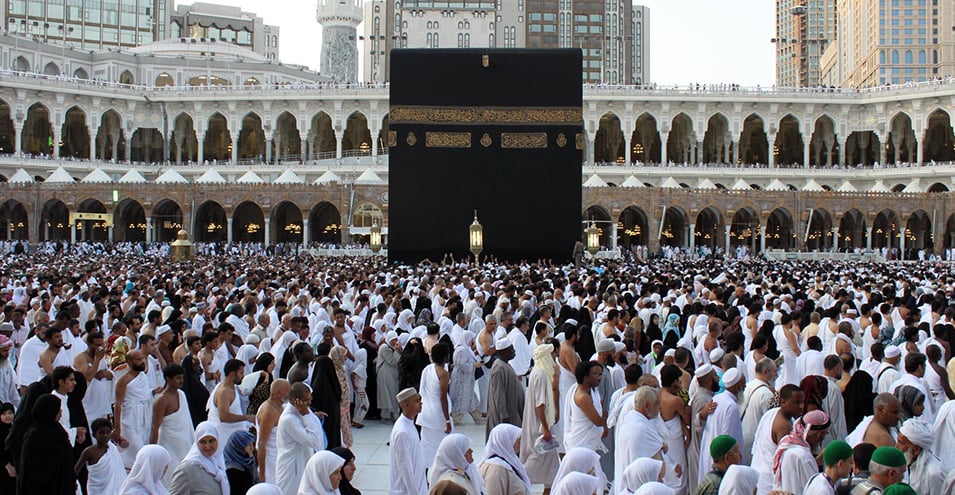
The powerful figures of the Islamic Republic and led by Khamenei, through this war, will also achieve other objectives. Access to key markets lost as a result of sanctions and taking control of the administration of affairs in Mecca and Medina are among other objectives that, from the perspective of regime officials, will be accessible through war. Especially since they have long harbored the dream of seizing Mecca and Medina under the pretext of leading the Muslim Ummah and have repeatedly explicitly referred to it. One of the incidents that gave Khamenei an excuse to implement this dream was the Mina incident in 2015. In this incident, due to the closure of one of the passages for Muslims, more than seven thousand people were killed and wounded under each other’s feet and weight.
Khamenei, one year after this incident, in the gathering of families of the killed, insulted Al Saud and their worthiness with different expressions. In part of his remarks, he said: “This incident proved that this cursed evil tree does not deserve to manage the sacred realm of the Muslims.”
He called Al Saud shameless and continued: “The incompetence of the Saudis and the insecurity imposed by them on the pilgrims of the House of God is a reality that should be promoted and established in the Islamic world. Because it is considered a crime.”
On the other hand, one cannot ignore the possibility that if Saudi refineries are destroyed and this country’s export capacity is reduced, Iran could gain a larger share of the oil market.
Current conditions in the oil market are such that Saudi Arabia, as the world’s largest oil exporter, to balance the market and according to OPEC agreement, has significantly reduced its production and export levels. Iran, which in recent decades under the impact of sanctions has lost its customers in the oil market, is now trying to gain a share of this market. Meanwhile, Iraq, which for years has been busy financing the cost of war with Iran, has sided with Iran.
Shipping data compiled by Bloomberg shows that Iraq in September of this year exported 98.3 million barrels of oil per day, the highest since December. Iran’s oil exports also increased to 28.2 million barrels per day, the highest since February, but Saudi Arabia’s oil exports were 68.6 million barrels per day, which is the second-lowest export figure for this country in the current year.
Meanwhile, the statistics show that Iran has still not reached its ceiling production allowance in OPEC, even though it has given an unprecedented increase in oil exports to China.
In the event that the OPEC production reduction agreement ends in March, Saudi Arabia will be able to increase its production and probably return to the July 2016 production record, which is equivalent to 10.7 million barrels per day. These are glimpses of realities that could strengthen potential warmongering motivations among the leaders of the Islamic Republic.
Thus, it is not unreasonable that people are concerned today, fearing that the hardline clerics of the regime, to maintain the power of the system, may once again involve Iran in an unjust battle in which the loser would be the grief-stricken Iranian people in any circumstance.
We beseech God Almighty to extend His eternal mercy to the Iranian people and other nations of the region so they can overcome this crisis and not allow the opportunists and warmongers to achieve their sinister objectives.