Hajji Sold Iran’s Child to a Stone House in Saudi Arabia
Sohila.Sh, FCC News Agency: These days there is market chaos in Iran that leaves one perplexed, and it seems people are intertwined with concerns and pleasures that are alien to each other. We are on the eve of schools reopening and simultaneously the program to bring pilgrims back from Saudi Arabia to the country is being executed. In this way, families on both sides of this chaotic market experience different circumstances.
On one side there are parents with monthly salaries of less than 900,000 tomans and a minimum cost of 700,000 tomans for each of their children to enter school, and on the other side there are families eager for hajj pilgrims returning from their journey who have poured more than 1,400 billion tomans into the pockets of Saudi Arabs and their agents in Iran to fulfill a religious and divine obligation.
This chaotic market reflects the confrontation between two demographic classes in Iran’s current conditions. One that cannot satisfy its hungry stomach and is deprived of basic human rights such as education, and another that turns to Saudi Arabia to please God.
To better understand the conditions of the first class, it is worthwhile to review the recent statements of one of the officials of the Islamic Republic. Last week, Parviz Fattah, head of the Relief Committee, announced that about 12 million people covered by the Relief Committee and Welfare are living in absolute poverty. This is while, according to him, in our country even providing a precise definition of absolute poverty is accompanied by political burden.
Perhaps this official wanted to remind us that talking about the existence of poverty in the country also entails political consequences and the possibility of being labeled as opposition to the power hierarchy.
According to Mehr News Agency and Fattah’s statements, even for families covered by the Relief Committee, school entry is not free and many costs are imposed on them.
Of course, this institution activated after the revolution, like many other parallel institutions, has a large body and, given the lack of legal oversight of its performance, financial corruption and large-scale embezzlement run rampant in it. This is exactly the condition that keeps mouths and wide pockets in the Hajj and Pilgrimage Organization satisfied.
In this way, among a population of approximately 4.5 million Iranian needy covered by the Relief Committee, each aid recipient is given 53,000 tomans per month. If a family is 2 members, 60,000 tomans, if 3 members, 71,000 tomans, and if 4 members, 82,000 tomans per month. If the number of family members is 5, they will receive 100,000 tomans per month.
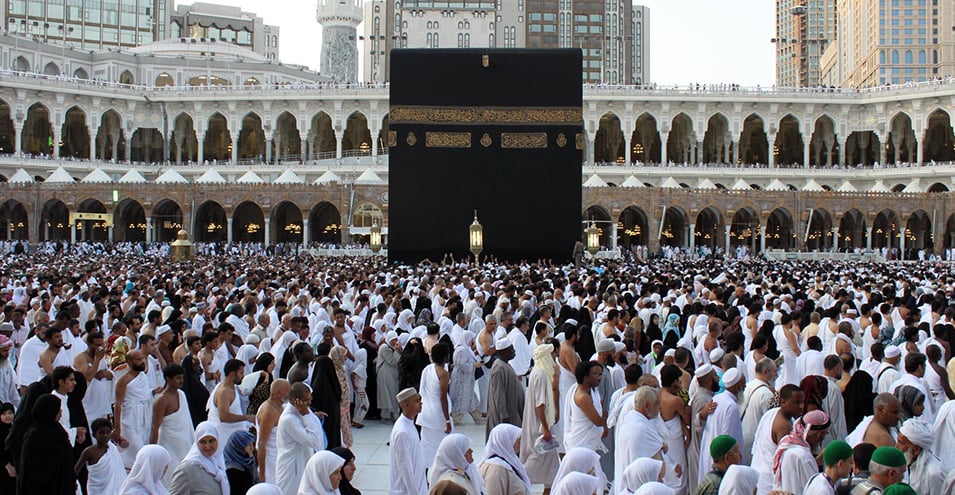
This is while every qualified Muslim for pilgrimage and to please God whose house is only in the city of Mecca and is constantly accommodated in that house has spent at least 15 million tomans in the current year.
This even in conditions where the experience of past years and disrespect for the lives and honor of Iranians in Saudi Arabia has been such that the head of Iranian pilgrims proudly announced that this year Iranian pilgrims were able to perform their hajj with dignity, honor, and as desired. As if this official even expected insulting Shiite beliefs on this journey. Without considering the money they present in the name of the stone house of their God and closing their eyes to the basic needs of their poor compatriots.
This year 86,300 people participated in Hajj Tamattu and more than 2,000 of them were over 80 years old, which shows that these people after eight decades of life still have not been able to find God in their hearts and their needy compatriots.
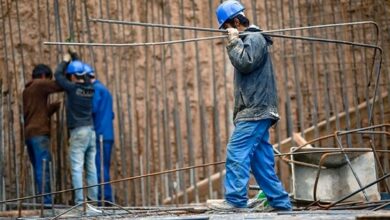
This is while in a major part of the country’s provinces, school dropout due to financial poverty and the presence of students in unsafe and non-standard classrooms is rampant.
The current situation in provinces like Sistan and Baluchestan is a handful as an example of a thousandfold.
The Director General of Education in Sistan and Baluchestan, on the eve of school reopening, has reported the existence of 70,000 children deprived of education in this province. What place and what activity these segments of the country’s future generation choose instead of school and studying is easily predictable.
According to this official, now a large portion of the classes in this province are unsafe and students in more than 700 schools in Sistan and Baluchestan study in brick and mud classrooms that cannot withstand even the weakest earthquakes or other unexpected natural disasters.
In general statistics, it has also been announced that in the new academic year, students in 68,000 classrooms in the country are forced to study in unsafe classes. This figure accounts for more than 30 percent of the country’s schools, putting the lives of more than 3 million Iranian students at risk.
But those eager to find God in his stone house in Mecca turn a blind eye to all these realities and continue to travel on the pilgrimage journey.
We wish blessings for our compatriots so that they come to believe that God dwells in the hearts of the oppressed and believing poor, not in a stone house in Saudi Arabia.