Testimony of Dabrina Bet Tamraz at the U.S. State Department Office
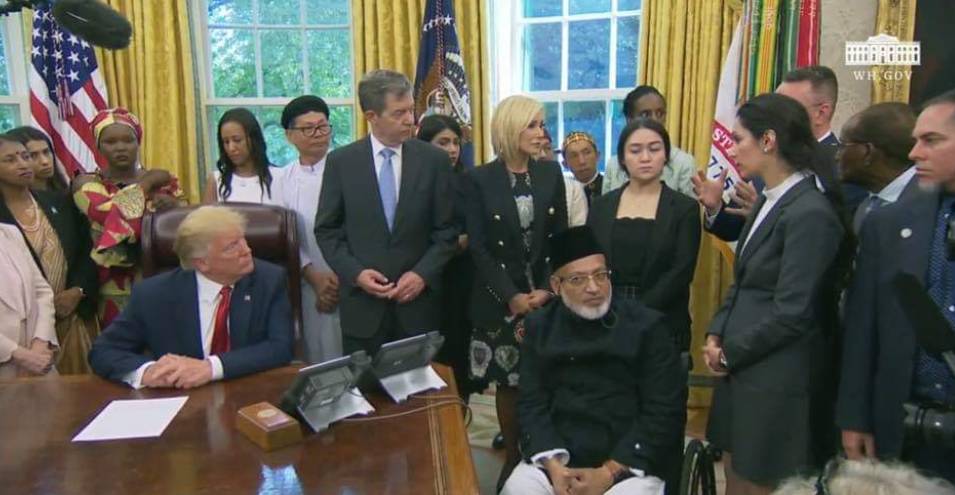
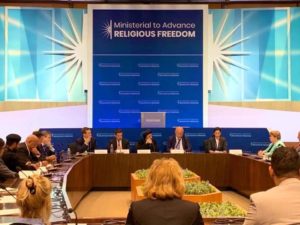
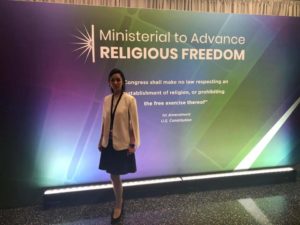
Assyrian priest and human rights activist Dabrina Bet Tamraz participated in a roundtable discussion titled “Challenges to Religious Freedom in the Middle East” at the second annual gathering hosted by the U.S. State Department to advance religious freedoms in Washington, D.C. on July 17, 2019. She spoke about the challenges that Christian minorities face in Iran.
She made the following remarks:
“I sincerely thank the U.S. State Department, particularly Secretary of State Mr. Pompeo, Ambassador Brownback, and Special Advisor Knox Thames, for organizing such an important event and for giving me the opportunity to share my story with you.
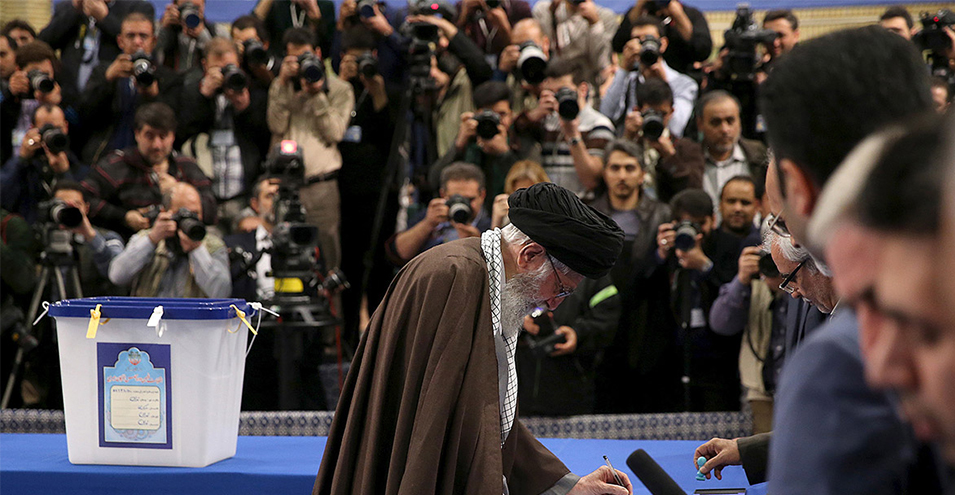
Terrorists, Zionists, and spies are a threat to national security: In the country where I have lived, Iran, evangelical Christians are labeled in this way. Many Christians have been sentenced to long prison terms because of these false convictions related to their religious practices, and their sentences have been upheld by appellate courts. Most of these cases involve Muslim converts to Christianity, but there are many other instances where members of Armenian and Assyrian Christian minorities have been imprisoned or sentenced to prison for their religious activities. My parents and my only brother, as well as myself, have been subject to such verdicts.
My father, Father Victor Bet Tamraz, was an officially recognized priest by the Iranian government. He led the Assyrian Pentecostal Church for over 40 years, holding services in Farsi and Assyrian. Our church was closed by the Iranian Ministry of Interior in March 2009. As far as I can remember, my family has been the target of repeated threats from Iranian officials. On December 26, 2014, everything changed when uniformed security officials raided our home while we were gathered for a Christmas celebration and arrested all those present. These officials separated men and women, began conducting body searches, confiscated all our Bibles, and seized personal items such as mobile phones, laptops, and identification documents. All those present at the celebration were interrogated using cameras and were forced to sign forms pledging never to gather together again.
My father was taken directly to prison. They beat him. They shaved his head to humiliate and ridicule him. He was treated like a criminal and terrorist. He was held in solitary confinement for 65 days and sometimes spent 10 days alone in these cells. He was convicted of “organizing proselytizing meetings” and “illegal activities of home churches” along with other convictions classified as “activity against national security.” Currently, my father, Father Victor Bet Tamraz, is serving his ten-year prison sentence.
Following my father’s arrest, my brother Ramiel and four other Christians were arrested during a picnic they were holding in Tehran. We essentially had no information about where they were being held. The next day, we received a brief phone call from my brother telling us he was being held in Evin Prison in Tehran. We had no information about him for a month. They were interrogated and throughout their detention were denied access to their defense lawyers. They also faced the same charges of “action against national security” and “planning and organizing home churches.” The problem did not end there. Shortly after their arrest, the wives of two of the detainees were fired from their jobs by order of Iranian officials.
In 2017, my mother, Shamiran Issawi, was summoned to meet with intelligence and national security officials. She was interrogated for long hours and was forced to provide information about our church members and religious activities. My mother was subsequently sentenced to 5 years in prison for “membership in a group that endangers national security” and another 5 years for “gathering and conspiracy to commit crimes against national security.” She was to appear in appellate court this coming September.
I too experienced a similar ordeal before leaving Iran. I was held in a men’s detention facility without any female officer present. Ultimately, I was forced to cooperate with officials and provide them with the names of our church leaders and information about their activities. After that, I was forced to sign documents confessing to the crimes of my family and other priests.
The Iranian Christian community, along with other religious minorities, is deprived of the right to religious freedom and belief. This violation of human rights threatens the security of these communities. The continuous persecution of Christians by officials is often accompanied by threats that take various forms.
The end of 2018 witnessed a continuous wave of raids on personal home gatherings that resulted in the arrest of many people. In 2018 alone, 171 evangelical converts were arrested and convicted of similar baseless charges. They are now either awaiting trial or serving long prison sentences.
This year, at least 37 evangelical converts have been arrested. These innocent people are not religious leaders or priests. They are neither politicians nor political activists. They are simply believers who participate in gatherings, prayer meetings, and worship services. But in the eyes of Iranian officials, every non-Islamic religious gathering is considered a threat to the regime.
Today, recognized church facilities for native Persian-speaking Christians and evangelical Armenian and Assyrian minorities are closed. In some cases, church properties have been seized by state officials. A few months ago, in May, Iranian officials stormed the historic Assyrian evangelical church in the city of Tabriz. They ordered the church guardian to leave the premises, then changed the locks, pulled down the cross from the church tower, and installed surveillance equipment there.
I myself am a native Assyrian Christian. My people are the descendants of our ancestors who lived in this land for thousands of years, but unfortunately, many of them have left our homeland in recent years.
Based on 1976 statistics, 200,000 Assyrian Christians lived in Iran. Now, fewer than a quarter of that number remain. I ask myself why?
Religious persecution was the only reason I left Iran. I was able to escape, but I cannot forget those I left behind—my family and all the innocent people who carry harsh convictions solely because of their peaceful religious activities. Everyone has the right to live in security, peace, respect, and dignity. The Iranian government is obligated under international law to respect, protect, and implement the right to religious freedom and belief of its people.
I call upon the esteemed officials of the Iranian government to:
- Immediately and unconditionally release Christians who have been arrested under false charges related to their religious activities and practice of their faith; and
- Recognize the right to religious freedom and belief for every citizen, regardless of ethnic group or origin, which includes all forms of religious conversion.
I call upon the United States and the international community to hold Iran accountable for its mistreatment of religious minorities and to compel Iranian officials to fulfill their obligations in granting religious freedom and belief to all their citizens, and to raise these issues in their negotiations with Iran and regarding Iran.
Finally, I turn to those gathered in this room and humbly ask that you help us raise awareness and awaken public opinion about the continued persecution of Christians and religious minorities in Iran. I thank you for your time and for giving me the right to share my family’s story with you.