Deliberate Efforts by the Revolutionary Guards to Draw Iran into War
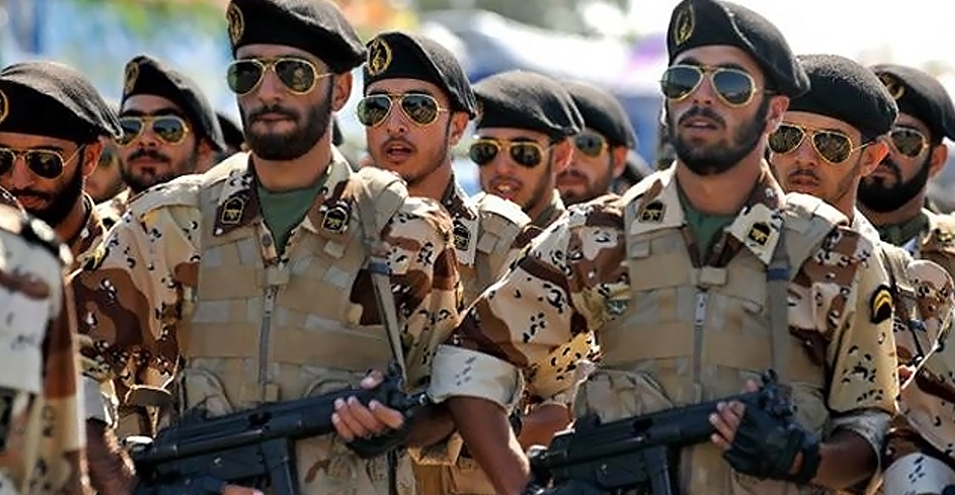
Sohila. Sh. FCN News Agency: Iraq these days is engaged in a pre-planned war. Kurdish Peshmerga forces have entered into conflict with government forces, and due to the proximity of the Kurdistan region, there are concerns that Iran may not remain unscathed. Especially since evidence suggests the direct involvement of the Revolutionary Guards and Basij forces in Iraqi conflicts.
Iran’s situation is sensitive. For years, the Iranian people have been paying the price for the stubbornness of the leaders of the Islamic Republic government in equipping the country with nuclear energy. This regime has faced accusations due to the extensive presence of Revolutionary Guard forces in Syria, Lebanon, Yemen, and other theaters of conflict between Shiites, Arabs, Israelis, and others, and some world leaders have called Iran a supporter of terrorism. In this context, the Revolutionary Guards are at the forefront of attacks.
An institution that, according to evidence, has deliberately created the conditions for Iran to be accused of supporting terrorism and Middle Eastern instability in recent decades. Of course, the leaders of the three branches and the leadership of the Islamic Republic have at different times supported the Revolutionary Guards.
A Handful Represents the Whole
Last week, Mohammad Baqeri, Chief of Staff of Iran’s Armed Forces, said during his recent visit to Damascus: “It is unacceptable for the Zionist regime to violate Syrian land and airspace whenever it wishes through air and ground routes.”
Exactly one day after that, Israel targeted objectives in the Golan Heights, in Syrian territory.
According to BBC reports, the Israeli army says this attack was in response to mortar fire from Syria.
In another BBC report, it was emphasized that in the heavy fighting between Iraqi government forces and Kurdish Peshmerga of the Kurdistan region, counter-terrorism forces, federal police, and Popular Mobilization forces are present. The report further states that members of counter-terrorism units have been trained by the United States, and some of the Popular Mobilization forces are supported by Iran.
These are examples of the aforementioned evidence that substantiates the accusation of Iran’s support for terrorism.
The Scars of the Eight-Year War Still Remain
In these circumstances, it is logical for the Iranian people to be concerned about the country’s security. The scars of the eight-year Iran-Iraq War still burn the forehead and heart of the people. A war whose benefits went into the pockets of the Revolutionary Guards and their agents at the helm of power, while the smoke went into the people’s eyes.
In a report that online news published, citing the Voice of Economy two years ago, the damage from the war to Iran was 10 times the total oil revenues of the country during eight years of conflict. Damages that still weigh heavily on Iran’s economy and people.
Moreover, the people still carry the pain of losing their loved ones and severe wounds.
According to FCN News Agency, during the eight years of the Iran-Iraq War, 233,591 Iranians were martyred, of which 155,000 were young people aged 16 to 25 who had no experience of combat and confrontation with the enemy.
Of course, the number of more than 5,000 missing persons and families waiting by the window should not be overlooked. The legacies of the Iran-Iraq War are also disabled veterans who struggle with various amputations and illnesses. The number of these wounded is over 520,000, and their families suffer alongside them and bear the burden of war.
The Revolutionary Guards’ Response in the 88 Suppression
The experience after the 2009 elections and the suppression of popular protests was another bitter experience of various sectors of our country’s people confronting the interests of the Revolutionary Guards in Iran.
An experience that led to the killing and extensive arrests of many young people and protesters opposed to the Revolutionary Guards’ performance and the Islamic Republic regime. The Kahrizak killings are still fresh in people’s minds, and the shooting by plainclothes members affiliated with the Revolutionary Guards and Basij on the 13th, 14th, and 15th of June against people who only wanted their right to vote.
Furthermore, the Revolutionary Guards’ response to these heinous crimes, arrests, and prolonged detentions are still not forgotten by the people.
Mohammad Ali Jafari was the Commander-in-Chief of the Revolutionary Guards at that time, and after these atrocities, a video of him was released that was shared thousands of times on internet social networks in less than 24 hours.
In this film, Jafari, referring to the Friday prayer on June 19, 2009, which was held by Ayatollah Khamenei, says: “After that, it was natural that we should not allow even peaceful demonstrations to take place.”
Mohammad Ali Jafari emphasizes that “non-interference” by the Revolutionary Guards and Basij in those elections would have enabled forces opposed to the Islamic Revolution to carry out their work.”
The Commander-in-Chief of the Revolutionary Guards of the Islamic Revolution concludes this film by saying that widespread arrests caused concern in Mir-Hossein Mousavi’s election headquarters, and the continuation of these arrests, along with the confrontation and firm stance of the people and security, military, and police institutions, caused them to back down.”
The Revolutionary Guards Commander Boasting About Warmongering
But all these scars seem not to have satisfied the eyes of the leaders of the Revolutionary Guards and they have felt no pain.
Hossein Salami, Deputy Commander-in-Chief of the Revolutionary Guards, said proudly last Friday: “If there had been no war, we would now be as a Revolutionary Guards force with guns in small bases.”
Iranian media also published these statements with identical writing and headlines, indicating that it has the complete stamp of approval from the Revolutionary Guards and regime leaders.
The Beginning of the Revolutionary Guards’ Grip on Iran’s Economy
The Revolutionary Guards’ grip during the Iran-Iraq War and the decades after is no secret to anyone. Today we see that this institution has become a major economic giant in Iran, and according to previous statements by Hassan Rouhani, no one has the ability and courage to confront it.
Rouhani, during his tenure in the eleventh government, said about this: “Our economic activists were afraid of a government that didn’t have a gun, let alone giving the economy to a government that has both a gun and controls the media and has everything, and no one dares compete with them.”
Hassan Rouhani also said in 2014 that the concentration of information, guns, and media in the hands of one institution brings corruption. However, today there is no precise data on the actual value of the Revolutionary Guards’ assets and economic activities, but Financial Times, citing several economists in its report, estimated the value of the Revolutionary Guards’ economic network at approximately one hundred billion dollars.
Exposure of Massive Corruption in the Revolutionary Guards
In this regard, it is not inappropriate to recall the news announced by Ali Motahari, Vice Speaker of the Islamic Consultative Assembly in recent weeks.
He confirmed in an interview with the French newspaper Le Monde the news of the arrest of several senior Revolutionary Guards commanders on charges of financial and economic corruption.
While in December of last year, Hossein Nejat, Deputy Head of the Revolutionary Guards Intelligence Organization, denied financial corruption among Revolutionary Guards leaders and called it an effort by enemy-affiliated media. Meanwhile, it is clear that the Revolutionary Guards’ influence over the three branches has increased. Because Hassan Rouhani, who in his previous government was among the main critics of the Revolutionary Guards and considered this institution a government with a gun, is now a staunch defender of the Revolutionary Guards in response to statements by Trump, the US President.
All of this indicates that there are hands at work to draw Iran into conflicts so that the lost or weakened power of the Islamic Republic regime and its chief, the Revolutionary Guards, can be renewed.
The Revolutionary Guards’ Explicit Confession of Warmongering
In these circumstances and with the history the Iranian people have with the Revolutionary Guards, last Friday the Deputy Commander-in-Chief of this institution called on people to be calm. People whose main concern is the deliberate movements of the Revolutionary Guards to draw Iran into regional wars.
According to identical news published in our country’s media, the Deputy Commander-in-Chief of the Revolutionary Guards, addressing the Iranian nation, emphasized: “People should not worry; we have enough power to confidently stand against enemies. Today we have so much power that we can confidently stand and present a globally acceptable model that both fights, is besieged, but progresses. If the enemy had not destroyed the space in Syria and Iraq, would we have been able to play such a clear role and push enemies to the margins of regional policies?”
Today it is fitting to reconsider this question in our minds. Who is Iran’s and Iranians’ main enemy, and over the past four decades, what enemy has inflicted the most damage and blows on the Iranian people.
There is a group in Iran that holds an important part of power who are wolves in sheep’s clothing. But according to Chapter 7, Verse 16 of the Gospel of Matthew, every tree must be known by its fruit. Do you pick grapes from thorn bushes or figs from weeds?
Now we ask for blessings for our land, our people, and even the leaders of the Islamic Republic government, for our covenant is the Holy Scripture, and according to God’s word we ask for God’s kingdom and justice for Iran. There is no doubt that after that all blessings will be upon Iran and Iranians, and the dust of darkness will be swept from our land. Amen