From the Voice of Modernization to Silence After the Revolution; The 86-Year Narrative of Radio in Iran
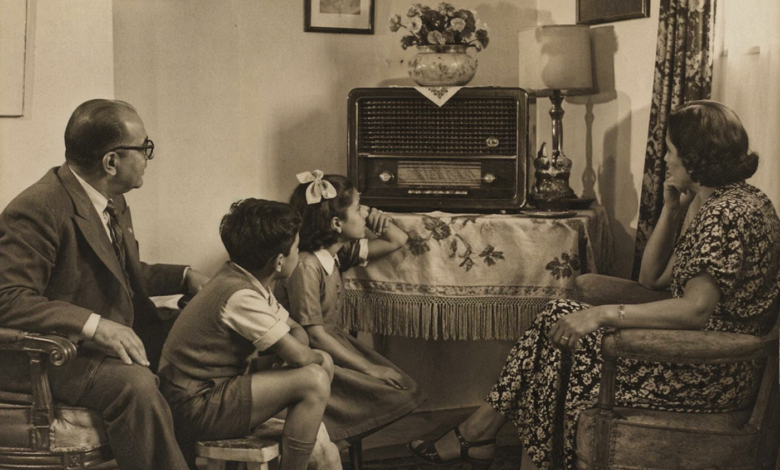
A look at the beginning of radio on April 24, 1940 and the path that took shape under Reza Shah and Mohammad Reza Shah Pahlavi; a media that became a symbol of modernization but found a different path after 1978.
April 24 (Farvardin 4) in Iran’s media calendar is not just an ordinary day; it marks the official birth of radio as the country’s first widespread audio medium. On such a day in 1940, the first public broadcaster named “Radio Tehran” was inaugurated in Tehran and a new voice entered the lives of the people; a voice that was meant to bring Iran closer to the modern world of communications.
But this starting point had deeper roots in the years before. During Reza Shah Pahlavi’s reign, the country’s communication infrastructure entered a new phase. On April 6, 1926, with the launch of the first wireless telegraph transmitter, the foundations of Iran’s new telecommunications network were laid; an initiative that, at the time, placed Iran on the path of keeping pace with global technology. Before that, long-wave equipment had been ordered for major cities such as Tabriz, Mashhad, Kerman, and Kermanshah, and even the first communication towers were installed in Tehran.
This process continued with technical and educational decisions. In December 1925, the government moved toward using short-wave technology and groups were sent abroad for specialized training; an initiative that paved the way for radio to take shape as a public medium in the following years.
Finally, on April 24, 1940, with the presence of Mohammad Reza Pahlavi (in his capacity as Crown Prince at the time), Iran’s first public radio broadcaster was inaugurated at the wireless station on the old Shemiran Road, and from the next day, regular program broadcasts began. Initially, radio had only about eight hours of programming per day; a mixture of news, music, cultural, historical, and religious content that gradually expanded.
In those same years, Iran’s first radio experiments coincided with global developments and the beginning of World War II. Even the first international programs went on air from that same year in 1940, and later various languages such as French, German, Russian, Turkish, and Arabic were added to the network; a sign of the effort to transform radio into an international medium.
In the following decades, radio became one of the country’s most important cultural and artistic tools. Programs such as “Golha” not only established Iranian music but also brought it to a professional and lasting level. Many of Iran’s great figures in music and literature played a role in this path, and radio, in a sense, became the sound memory of Iranian culture.
However, the history of radio in Iran is not merely a narrative of technical and cultural progress. After 1978, with the change in the country’s political structure, Iranian National Radio and Television became “Islamic Republic of Iran Broadcasting.” Many cultural analysts believe that this change restricted the path of free and multi-voiced media development, and radio withdrew from its pioneering position.
At the same time, radio itself has played a decisive role at historical turning points. Among the moments recorded in Iranians’ collective memory, we can point to the famous statement regarding the liberation of Khorramshahr: “Dear listeners! Please note; Khorramshahr has been liberated.”
Similarly, important news such as the fall of governments, developments in the war, and even the announcement of the deaths of political and religious figures of the country, have all reached the ears of the people through this same medium; a medium that, despite extensive changes, continues to be present in the daily lives of Iranians.
More than 86 years after radio began operating in Iran, this medium still exists, although its historical path has had many ups and downs. For some, radio is a reminder of the era of modern institutions taking shape in Iran during the age of Reza Shah and Mohammad Reza Shah Pahlavi; a period when the country’s communication infrastructure was founded. For others, this medium has found different meaning in the years after the 1978 Revolution and has been redefined within a new framework.
Nevertheless, radio remains one of the most enduring communication tools in Iran; a medium that has passed through the crucible of history and still, within its waves, is a narrator of part of people’s social life.
Author: M.R