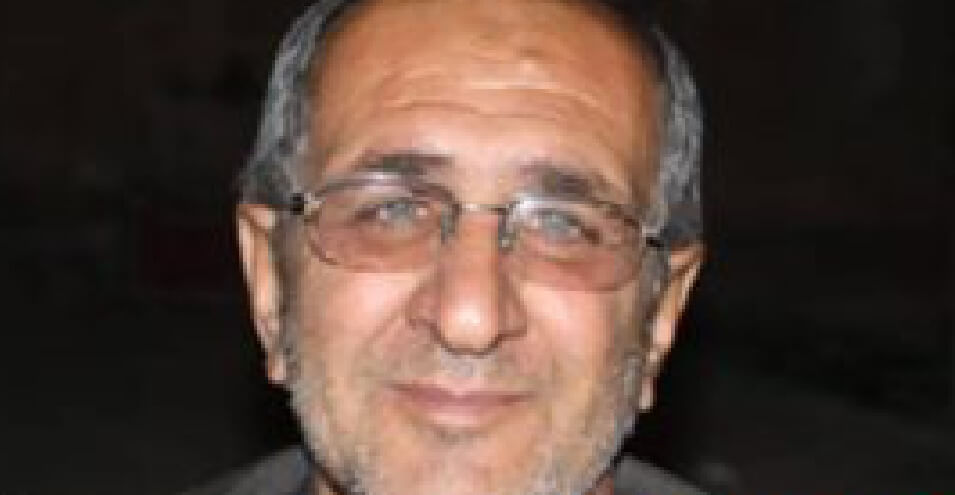
Temporary release and continued wandering of "Alireza Barmarzpournak", the defendant in the "Ekbatan" case

With the temporary release of "Alireza Barmarzpournak", the case known as "Ekbatan" has been revived, but does "justice" have any meaning in this path?
Published reports indicate the temporary release of Alireza Bermarzpournak on the evening of Wednesday, December 12, 1404. The news of his temporary release after posting a bail of 50 billion tomans once again focused attention on the controversial "Ekbatan Town" case.
The Ekbatan case arose when, during the 1401 (Women, Life, Freedom) protests in the Ekbatan neighborhood of Tehran, a 21-year-old Basij member named Arman Alivardi was injured and died two days later. More than 50 residents of the neighborhood were arrested, but 14 were ultimately indicted, and then 8 were charged with charges such as "premeditated murder," "moharebeh," or "disturbing public order."
In November 1403, six of the defendants, including Bermerzpournak, were sentenced to "self-retribution" by Branch 13 of Tehran's First Criminal Court; but in the summer of 1404, the Supreme Court (the highest judicial authority in Iran) overturned the death sentences of all defendants in this case, and the case was returned to Criminal Court 1 to "remove deficiencies and ambiguities."
The temporary release of Merzpournak is a response to the violation of the death sentence and the request for bail of 50 billion Tomans, but this release (even if it is partial and conditional) raises serious questions about the justice in this case. Whether: "There is essentially evidence to prove 'participation in murder'?" The defendants' legal representatives have previously emphasized that they have found no credible and independent evidence to prove this charge.
"Was the trial process 'fair' according to international standards? Reports indicate that torture and pressure were used in the interrogation and detention of some defendants to extract 'forced confessions.'"
What guarantee does provisional release have when the final verdict is not issued fairly and transparently? This is not the end of the case, but rather “legal uncertainty” continues. Despite more than two years having passed since the initial arrest and one year since the first death sentence was issued, the status of the eight defendants in the Ekbatan case remains shrouded in uncertainty.
Human rights reports say that neither lawyers are fully allowed to defend themselves, nor are families able to regularly monitor the situation of their loved ones. In such an environment, the temporary release of Bermerzpurnak may be only part of the equation, but it is by no means a guarantee of achieving “real justice.”
The Ekbatan case represents the fate of thousands of young protesters who were arrested after the 1401 protests. The death sentence and then its reversal, and the uncertainty in the court process, are examples of the abuse of judicial and security power to suppress protesters. Also, temporary release without judicial transparency not only creates a hasty calm, but can also lead to the “silent suppression” of continued protests by critics.
The Ekbatan case is not only a symbol of the suppression of popular protests, but also a wake-up call for “judicial justice” in Iran. The temporary release of Bermerzpournak, on a high bail, may be media-friendly and temporarily reassuring, but until transparent documents are published, an independent trial is held without security pressure, and the rights of the defendants and their families are respected, the case cannot be said to be over.
Now, "justice" depends on the judiciary (if it truly wants justice, not just showy verdicts) issuing verdicts based on credible evidence, transparency, and respect for basic civil rights. Otherwise, temporary freedom, even if it is temporary, becomes a cover for continuing silent repression.