Professor of Copernicus University of Poland imprisoned in Iran; Warsaw reacts
A spokesperson for Copernicus University in Poland confirmed in an exclusive interview with Radio Farda on Thursday, July 6, that one of the university's professors has been imprisoned in Iran for almost a year.
“Unfortunately, I can confirm this information,” Martin Czyżniewski, a spokesman for the Nicolaus Copernicus University in Poland, told Radio Farda on Thursday. “But this information is not new. Three professors from our university were arrested in September 2021. Two of them were released, but one of our professors is still imprisoned in Iran. We are in constant contact with the Polish Foreign Ministry, as well as the professor’s family.”
The state-run IRNA news agency, the Fars news agency, which is close to the Revolutionary Guard, and Iranian state television on Wednesday released a video produced by IRGC intelligence that showed the British deputy ambassador to Tehran and several others accused of "espionage" and taking soil samples from military areas.
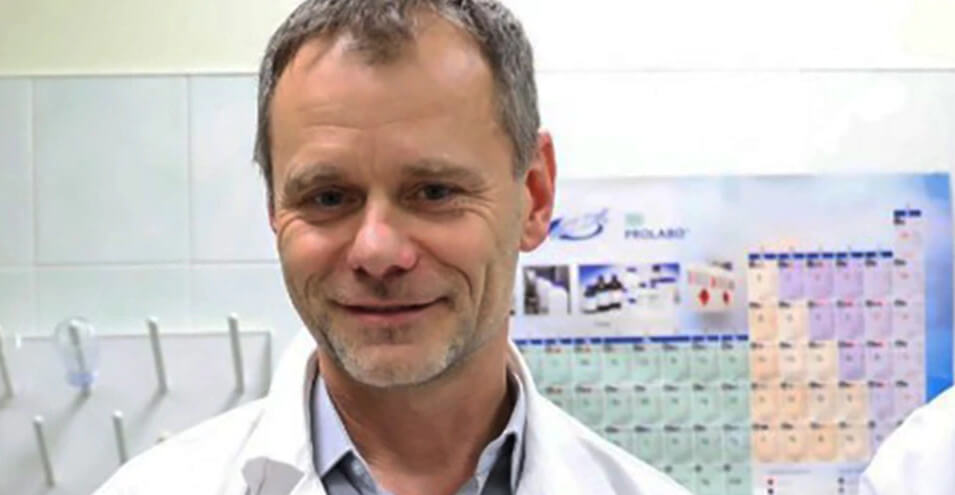
According to the claim in the film, another foreigner named Maciej Walczak, a university professor in Poland who had traveled to Iran as a tourist, was also among these people.
Mr. Walchak and three of his colleagues are accused in the state television news footage of taking soil samples from a desert area in Iran during a scientific exchange program. Iranian state television says their action coincided with a missile test by the IRGC in Kerman province.
Now, Copernicus University in Poland has confirmed that Mr. Walczak has not left the country since he was arrested in Iran last summer, but has been sentenced to three years in prison in court and is currently serving his sentence.
According to a university spokesperson, the decision to keep this incident secret was made by the university and the Polish Foreign Ministry: "We wanted to help our Foreign Ministry and also our university professor in this regard."
In a brief statement on Thursday, the Polish Foreign Ministry described Mr. Walczak as a “highly reputable scholar” and said he had access to consular and legal services in Iran. The ministry said it would not release any further information about the case.
A spokesperson for Copernicus University told Radio Farda about access to Mr. Walczak: "We are not in direct contact with him, we are talking to Polish diplomats in Tehran. And they have managed to meet with him twice."
The IRGC intelligence film stated that "diplomats," including a senior British diplomat and the wife of an Austrian cultural counselor, were observed and identified by IRGC drones while "taking soil samples from the restricted area" in the central Iranian desert.
However, the accusation of sampling the soil in the region has been raised against the Polish university professor and these individuals, even though, according to Jeffrey Lewis, an expert at the James Martin Center in Monterey, California, very little information can be obtained from the chemical composition of the soil sample after some time has passed since the military maneuvers.
"So I don't really see any significant value in taking soil samples (in Iran) and I think it's probably the work of a 'scammed' security service rather than the British deputy ambassador doing some kind of clever intelligence work," Mr Lewis clarified.
Simon Shercliffe, the British ambassador to Tehran, also tweeted on Thursday: “These reports that our country’s deputy ambassador is currently under arrest are very interesting… …. He left Iran last December [over six months ago] at the end of his post.”
In recent years, the Islamic Republic government has arrested several foreign citizens or dual nationals on various charges, including "espionage, collaboration with foreign security institutions, or acts against the regime," and exchanged a number of them with prisoners affiliated with the Islamic Republic abroad.
Due to similar actions, the Iranian government has been repeatedly accused of implementing a policy known as "hostage diplomacy" in recent years.
Matsi Walczak's name is added to the long list of foreigners imprisoned in Iran as the Belgian Parliament's Foreign Policy Committee on Wednesday, July 5, gave the green light to an "agreement" with Iran for a prisoner exchange between the two countries, an agreement that has sparked strong protests from activists and human rights organizations.
Source: Radio Farda