Executions in the Shadow of Blackout: Increased Executions of Protesters Amid Widespread Internet Blackout
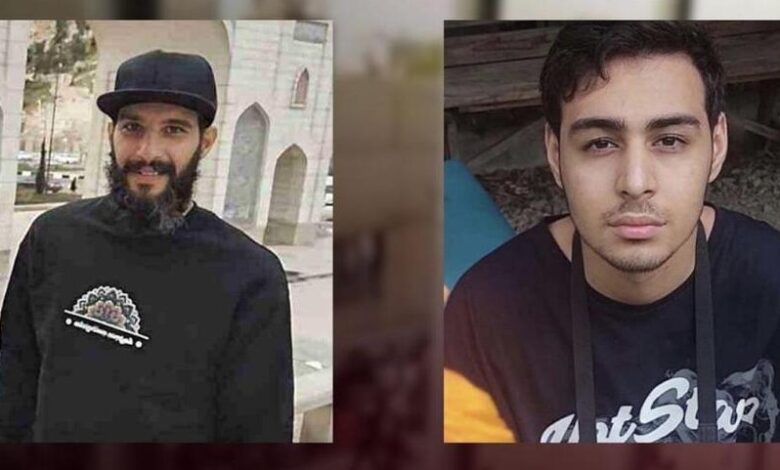
The increase in executions in the shadow of the internet shutdown is a hidden process of eliminating protesters through hasty verdicts, dubious confessions, and repression that is kept away from the world's eyes.
While the world's attention is focused on military tensions between Iran, the United States, and Israel, numerous human rights reports reveal a disturbing picture from inside Iran: "Secret and hasty executions of death sentences for protesters, all while internet access is restricted and the country's communication with the outside world is tightly controlled."
According to these reports, in recent days, several detainees from the January protests have been executed in Qezl-e-Hesar Prison in Karaj, without transparent information or respect for the most basic legal rights. Among these individuals is "Ali Fahim", a 23-year-old young man who was hanged in secret at dawn on Monday, April 17, 1405, without the right to a final visit from his family members.
Just one day earlier, two other people, 19-year-old student Mohammad Amin Biglari and Shahin Vaheparast-Klor, were executed under similar circumstances and without prior notification to their families. A process that shows that the execution of these sentences is not only not transparent, but is also systematically hidden from public view.
What these cases have in common is the unusual speed of judicial proceedings and sentencing. Just a few weeks after their arrest, these individuals were tried and sentenced to death by the Revolutionary Court on serious charges including “war on terror, corruption on earth, arson of public facilities and gatherings, and conspiracy to commit crimes against internal and external security.”
While international standards require such cases to be thoroughly investigated, have full access to a lawyer, and have sufficient time to defend themselves, reports indicate that even assigned lawyers have been denied access to the case file and the opportunity to defend themselves.
In one of these cases, the lawyer for one of the defendants stated: "We were not given permission to study the case file and the opportunity to defend ourselves."
There are also serious ambiguities regarding the defendants' confessions, including the fact that the confession presented in the case is neither transparent nor clear under what circumstances it was obtained.
Human rights groups stress that this process is not simply enforcing the law, but rather a targeted use of the death penalty to instill fear in society. According to these groups, carrying out death sentences just months after arrest, and in cases with widespread ambiguities, is a “gross violation of the right to a fair trial.”
In this context, it has been emphasized: "This haste in a case that was not transparent indicates the use of the death penalty as a tool to advance the policy of political revenge."
Such measures, especially in a situation where the country is engaged in external crises, could be seen as an attempt to control the internal space and prevent the formation of new protests.
A key point is the timing of these executions, coupled with widespread internet restrictions. The severe reduction in access to information and disruption of communications have effectively eliminated the possibility of independent reporting and created the conditions for these sentences to be carried out without immediate global response.
This pattern has been observed before during critical periods: cutting off contact with the world and then implementing repressive policies in a news silence.
In addition to the executions, other reports have also been published of the deaths of detainees under torture, including "Hossein Ghavi," a 28-year-old from Ahvaz who, after being arrested by security forces, lost his life in detention and under torture by the forces.
The charges against him included “filming bombed areas” and “communication with foreign countries,” charges that have been repeatedly used as a tool to suppress citizens, despite the fact that he was a disabled person and the sole breadwinner of his family.
The sum of these events paints a clear picture of a disturbing pattern: "mass arrests, opaque trials, dubious confessions, and ultimately executions carried out in silence and ignorance."
In such circumstances, the fundamental question arises: "Is this process nothing more than the systematic elimination of protesters and the creation of fear in society?"
What is happening in Iran today goes beyond the execution of judicial rulings; it is a cycle of repression that continues in the darkness and shadow of communication restrictions.
Secret executions, denial of the right to defense, and deaths in detention centers all show that human lives are determined in this process not on the basis of justice, but within the framework of political considerations.
And perhaps the most important truth is this: “When voices are silenced, truth is easily sacrificed.”