Christmas celebration increasing in popularity among non-Christians in Iran
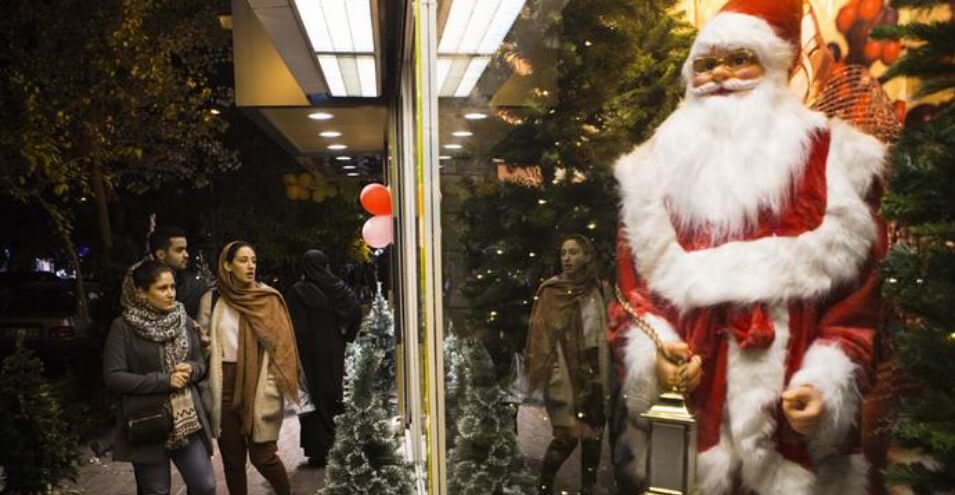
Observers have been saying for years that the Christian celebration of Christmas is growing in popularity among non-Christian Iranians. A conservative Iranian media outlet has also concluded, “based on a study,” that the popularity of the pine tree among non-Christians is on the rise.
On Wednesday, December 25, Fars News Agency reported on the popularity of Christmas celebrations in Iran in an illustrated report.
The report states: "According to a study, 90 percent of Christmas pine tree buyers are not Christians, and it is said that about six billion tomans worth of pine trees have been sold in Tehran in recent days."
The report by this news agency, which is close to the Islamic Revolutionary Guard Corps, does not specify who or what institution conducted this research.
"A lucrative business"
The same "research" by Fars News Agency also found out the reason for the popularity of the biggest Christian celebration in the Islamic Republic, writing: "Memorial photos of celebrities with Christmas trees and New Year's greetings have caused the culture of the beginning of the New Year to come to life in recent years to the extent that selling Christmas trees has become a new and profitable business."
Christmas trees are sold by online sellers for an average of between 100,000 and 500,000 Tomans. Some reports indicate that pine trees are being sold for between 1 and 5 million Tomans.
The semi-official Iranian news agency continued its report, focusing only on Armenians in Iran, writing: "The Armenian population of Iran is between 80,000 and 120,000, and it does not appear that this multi-billion dollar turnover from the sale of Christmas pine trees in Iran is limited to the Armenian population and other Christian sects that have a smaller population than the Armenians."
The international Christian organization Open Doors estimates the Christian population in Iran at 475,000.
Rooted in Mithraism?
In Germany, the birthday of Jesus Christ, the Christian prophet, is set on December 24th.
According to Fars News Agency, "Some Iranian Christians celebrate Christmas on December 25 and New Year on January 1, but Armenians celebrate Christmas simultaneously with the Feast of the Epiphany on January 6."
Some researchers have identified the origins of Christmas with the Mithraic cult in ancient Iran and believe that the ancestors took Christmas from Yalda. However, this cult was popular in the pre-Christian period in the ancient Roman Empire. The temples of Mithra in Rome are evidence of their active presence in the distant past.
In its report, Fars called Yalda Night a celebration that is "full of cultural potential for the expansion of Iranian-Islamic culture."
Source: DW