Iran to produce advanced centrifuges in Isfahan instead of Karaj
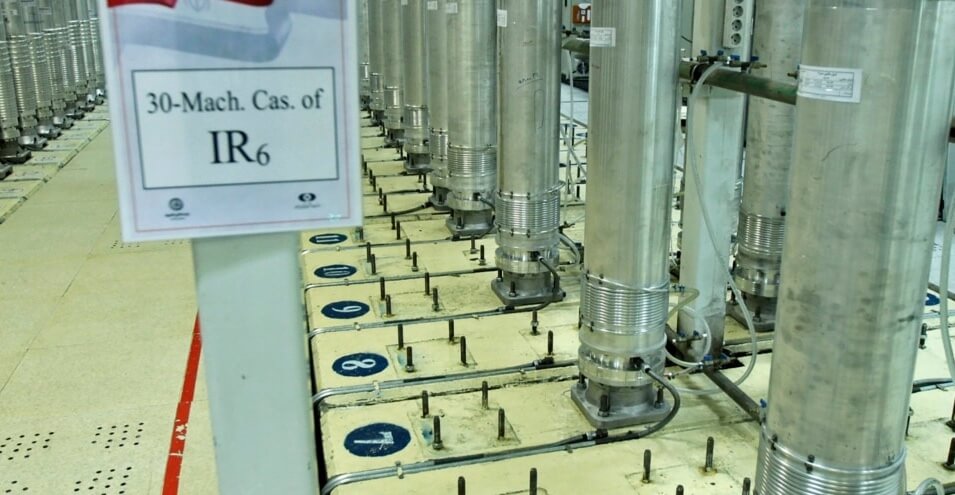
The Iranian government has informed the International Atomic Energy Agency that it intends to start producing centrifuge machines at a new complex in Isfahan, replacing the Karaj Tsai facility.
The Iranian Centrifuge Technology Company (TESA) in Karaj was attacked by a drone in early July of this year, which Iran attributed to Israel. Iran, which said that the IAEA cameras were also damaged during the attack, refused to allow new cameras to be installed at the facility for a long time, and finally agreed on December 14 to install a new IAEA camera at the facility.
According to Reuters, the agency's surveillance cameras were moved from the Karaj complex to the Isfahan complex and installed on February 25, but the production of centrifuge parts in Isfahan had not yet begun.
Currently, the International Atomic Energy Agency does not have access to the information from these cameras, and Iran says that if the JCPOA is revived, it will allow access to the information from these cameras.
According to Rafael Grossi, Director General of the International Atomic Energy Agency, these cameras are sealed and their information cannot be tampered with, and because they are not connected to the network, cyberattacks do not affect them.
The American newspaper The Wall Street Journal reported on Tuesday, November 15, that Iran had resumed production of advanced centrifuges at the Karaj site and, by restoring the capacity to produce centrifugal devices for uranium enrichment, had produced at least 170 new advanced centrifuges at the Karaj site.
Iranian media have previously reported that Tessa's facility in Karaj plays an important role in advancing the Islamic Republic of Iran's nuclear program by designing and producing new-generation centrifuge machines that enrich uranium at a much higher speed.
The new IAEA report does not explain why Iran has stopped the production process of components at the Karaj complex.
The issue of monitoring Iran's nuclear program has become a challenging issue over the past months, and the Director General of the International Atomic Energy Agency has warned of a repeat of the North Korea scenario, noting that the agency no longer has complete oversight of Iran's nuclear program.
IAEA inspectors were expelled from North Korea in 2009, and the country is now believed to have dozens of nuclear missiles.
Rafael Grossi also referred to the existing problems regarding the Karaj nuclear facility and monitoring of Iran's nuclear program, saying that limiting the work of inspectors would cause the international community's image of Iran's nuclear activities to become "very blurry."
Iran's production of advanced centrifuges is one of the important technical axes of the JCPOA revival talks in Vienna.
Mikhail Ulyanov, Russia's representative in the negotiations to revive the JCPOA, said on December 12 of this year that Iran's centrifuges should either be destroyed, moved abroad, or sealed.
According to the Vienna Nuclear Agreement, known as the JCPOA, Tehran had agreed to keep its enrichment capacity at the Natanz facility to a maximum of 5,060 old-style "IR-1" centrifuges for 10 years. However, in the past two years, Iran has begun to deviate from the JCPOA agreement and has not only increased the number of its old centrifuges, but has also launched more than two thousand new and advanced centrifuges for 20% and 60% enrichment.
Source: Radio Farda