Iran's digital silence and internet blackout are a tool for repression and secrecy.
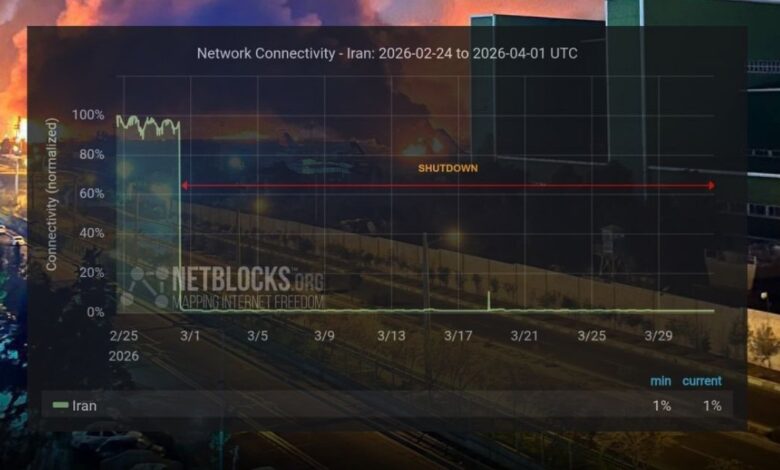
Netblocks warned of the continued internet shutdown in Iran, a silence that has become a tool of repression and concealment to prevent the world from seeing the truth.
International reports and data from internet watchdogs show that the widespread internet shutdown in Iran, which began more than thirty-some days ago, has become one of the longest and most severe digital blackouts in the country’s history. NetBlocks, an organization that monitors internet disruptions worldwide, has reported that internet connectivity in Iran has dropped to about 1 percent of normal levels, leaving millions of citizens without access to the global internet; a situation that has now entered more than 720 hours, effectively cutting off Iran from communication with the outside world.
This digital blackout has come amid widespread tensions and military conflict, but the truth is that it is more than just a means of restricting communication. Cutting off the internet means cutting off the flow of information, preventing independent reporting, and concealing the truth in Iran.
Analyses show that this outage not only disrupts communication with global sites and networks, but also practically blocks information channels independent of government control, so that the outside world does not have sufficient capacity to accurately monitor events in Iran.
Since the beginning of the blackout, the Iranian government has tightly controlled communication networks and facilities, and has even attempted to limit or suppress alternative access such as satellite internet terminals, a move that amounts to an attempt to close every communication channel between people inside Iran and the outside world.
Independent reports also indicate that some of these bans have gone as far as imprisonment and severe penalties, so that the use of satellite internet equipment can be associated with serious risks.
Digital rights watchdogs and freedom of information advocates say such a widespread and prolonged internet shutdown not only violates fundamental rights to freedom of expression and access to information, but also allows the government to hide violent crimes, widespread repression, and even killings behind a media silence.
This situation, especially in the context of internal protests and numerous reports of violent clashes, clearly shows that cutting off the internet is a tool to silence people's voices and keep the truth hidden from the world.
According to assessments, such an approach is not limited to blocking sites, but also includes structures that restrict access to the World Wide Web to only a "white list" of government-approved sites, while the rest of the population remains in complete information blackout.
Finally, criticism is that the Islamic Republic of Iran has not only cut off digital communications and denied freedom of information, but also prevented the truth from coming out about what is happening in Iran. This has prevented the global public, media, and international institutions from accurately reporting the realities on the ground, and instead has only published incomplete or speculative reports, a situation that could contribute to the continuation of violence and human rights violations in Iran without adequate accountability.