Babak Zanjani and the deadly game of sanctions, the narrative of the accused, and a war that is not just economic
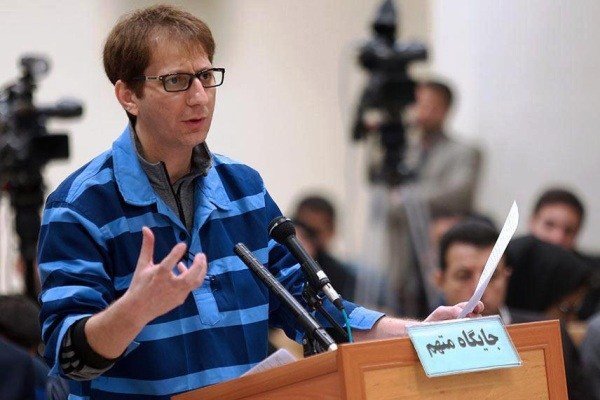
The narrative of economic activist Babak Zanjani, who says, "The enemy is only after money," and the pressures against him, indicate his economic impact on the country and his concern for foreign enemies.
Babak Zanjani, a figure whose name has been associated with major financial cases, international sanctions, and complex power relations for years, once again attempted to present a different picture of his position in economic and political equations by publishing a text on his Instagram account; a narrative in which "money" is introduced not only as a tool, but also as the principle of war.
He wrote in this note: "The issue is not the Islamic Republic, not the monarchy, not the lives of the youth and the nation, and not missiles or nuclear weapons. The enemy only sees money."
Emphasizing what he calls a “multi-year economic war” against Iran, Zanjani claims that whenever the financial interests of foreign powers are threatened, pressures have increased, from sanctions to direct action. In his view, this war is not ideological but purely calculative.
This economic activist describes the boycott of his 660 million Tethers, the targeting of his holding company building with a missile on the first day of the 12-day war, and the fire at his affiliated company building on Kish Island as not signs of weakness, but rather as proof of the effectiveness of his group's economic activities; activities that, in his opinion, have been worrisome to the enemy and beneficial to the country.
In addition to external pressures, Zanjani also attacks domestic opponents, portraying them as aligned with external enemies. He writes: “As long as the rulers of the Islamic Republic do not serve the financial interests of the enemy and the representatives of the enemy serve at the country’s management levels, these pressures will continue.”
One of the most controversial parts of Zanjani’s remarks was his response to the accusation of financing the IRGC and moving $94 billion through cryptocurrency exchanges. He considered the accusation “merely an excuse to seize 660 million Tethers and extort money.”
In an aggressive tone, he finally describes the experience of confiscating his property as "illustrative and repetitive" and says: "We will pull it out of their throats and put each and every one of them on trial."
In line with these positions, the United States announced a new package of sanctions on Friday, January 30, equivalent to 10 Bahman. According to the US State Department, the sanctions were imposed due to the role of the sanctioned individuals in suppressing nationwide protests and widespread misuse of the country's financial resources.
This list includes the names of security and law enforcement officials as well as the name of a prominent economic figure whose case has been presented as a symbol of structural corruption for years.
The US State Department statement, referring to the Iranian people's protests against "47 years of disastrous economic mismanagement," states: "While the country's wealth is spent on weapons and nuclear programs and support for proxy groups, Iranian citizens struggle with soaring inflation, dilapidated infrastructure, and water and electricity shortages."
Washington announced that it supports the protests of the Iranian people against the corrupt and repressive regime, and within this framework, it has targeted six officials responsible for the repression and an investor accused of embezzling billions of dollars from public resources.
Among those sanctioned are figures who each play a key role in the security, military, or economic structure of the Islamic Republic:
- Eskandar Momeni, the Minister of Interior of the Islamic Republic of Iran, is the highest executive official in the field of internal security, directly overseeing the police force and managing the suppression of protests. The United States holds him directly responsible for the widespread violence, arrests, and disappearances of protesters.
- Majid Khademi, head of the Revolutionary Guards Intelligence Organization, an institution that, according to the US Treasury Department, has been the main pillar of the organized suppression of protests, arbitrary arrests, and the creation of a climate of fear.
- "Ghorban Mohammad Valizadeh," the commander of the IRGC in Greater Tehran, a province that, according to official reports, has witnessed the deadliest clashes with protesters, including the killing of children.
- "Hossein Zare-Kamali" and "Hamid Damghani" are IRGC commanders in Hamedan and Gilan, officials under whose command, according to Washington, hundreds of protesters were killed and families were forced to secretly bury the dead under pressure.
- "Mehdi Hajian", commander of the Kermanshah police force, is a person whose role in coordinating between the police, the IRGC, and the Basij to carry out bloody repression, including sexual violence, against protesters has been mentioned.
- "Babak Morteza Zanjani," whom the US Treasury Department calls an "Iranian businessman and sanctions violator," was convicted of embezzling billions of dollars from the National Iranian Oil Company, had his death sentence commuted, and is now being introduced as a financier of major rail projects.
Alongside him, two cryptocurrency exchanges registered in the UK, ZedSex Exchange and ZedShian Exchange, have also been sanctioned for their financial ties and provision of services to networks affiliated with the Revolutionary Guard Corps.
The day before the sanctions were announced, the US State Department, at the behest of Marco Rubio, revoked the privileges of senior officials of the Islamic Republic and their family members in the United States. The message emphasized: “Those who benefit from the Iranian government’s violent repression have no place in our immigration system.”
Meanwhile, the continued internet shutdown, which has lasted for more than two weeks, has been accompanied by warnings from international organizations, which consider this action a deliberate attempt to conceal the dimensions of the massacre and prevent citizens from freely accessing information.
Donald Trump has also repeatedly supported Iranian protesters in recent weeks and warned of the execution of protesters. In an interview with Politico, he accused Supreme Leader Ali Khamenei of “totally destroying the country” and said: “It’s time to look for new leadership in Iran.” He has also emphasized that the job of a leader is to govern the country, not to maintain power at the cost of thousands of lives.