Widespread Human Rights Violations in Iran Reflected in Latest UN Session
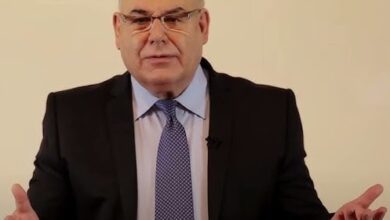
Javid Rahman, the United Nations Special Rapporteur on Human Rights in Iran, called on Thursday, March 17, for the Islamic Republic’s officials to be accountable to the international community for widespread human rights violations in Iran.
In his latest report, Mr. Rahman expressed concern about a significant increase in executions in Iran, particularly those convicted in drug-related cases in 2021, as well as juvenile offenders, women, and minorities without fair trials.
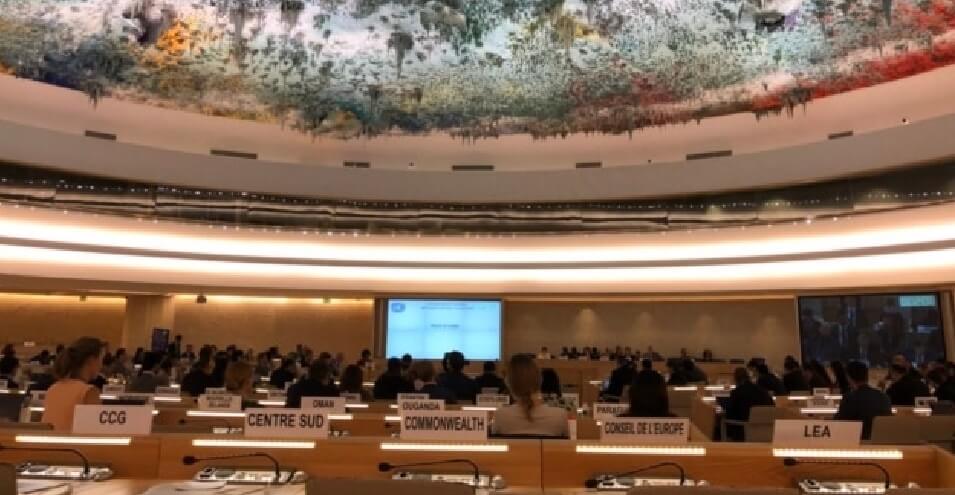
At the 49th session of the UN Human Rights Council held on Thursday, March 17, in Geneva, he reviewed key sections of a report whose written text was published in late February.
According to the report, at least 275 people were executed in Iran in 2021 alone, with 40 of those executed being Baloch citizens and 50 being Kurdish citizens.
The downing of a Ukrainian aircraft by missiles fired by the Islamic Revolutionary Guard Corps’ air defense system, the suppression of public protests against water scarcity and systematic discrimination in more than 20 cities in Khuzestan Province in 2021, as well as internet censorship and suppression of freedom of speech through the passage of a bill called “protection of cyberspace” were among other issues that Mr. Rahman addressed in his video speech.
The UN Special Rapporteur noted at the beginning of his remarks that despite repeated requests to the Islamic Republic’s authorities, he has still not been granted permission to visit Iran.
Following Mr. Rahman’s 15-minute speech on Thursday, representatives of various countries, including Israel; Britain, Germany, Switzerland, and the Czech Republic, as well as the European Union representative, condemned human rights violations by the Islamic Republic and called for Iran’s government to be held accountable.
The speakers particularly emphasized the urgency of abolishing capital punishment in Iran.
They also criticized the passage of a bill called “population youth and family support,” cutting off women’s access to contraception, and the promotion of child marriage by the Islamic Republic’s propaganda apparatus, as well as the suppression of journalists and civil activists.
In contrast, representatives of countries such as Cuba and Venezuela implicitly or explicitly defended the Islamic Republic and repeated the statements of Iranian government officials in justifying human rights violations.
These countries’ representatives questioned the UN Human Rights Council’s accountability of other governments by claiming that Mr. Rahman’s report was the result of “hegemony of Western powers” and “imperialist domination.”
About a month ago, the European Parliament passed a resolution calling on the Islamic Republic of Iran to immediately suspend capital punishment and considered this action a step toward the complete abolition or reduction of such punishment.
The European Parliament’s resolution added that only in January 2022 (from December 31, 2021 to February 10, 2022), 85 juvenile delinquents were on death row in the country.
Source: Radio Farda