Arresting "Afarin Mohajer" and filing a case against him, who is not even capable of surviving
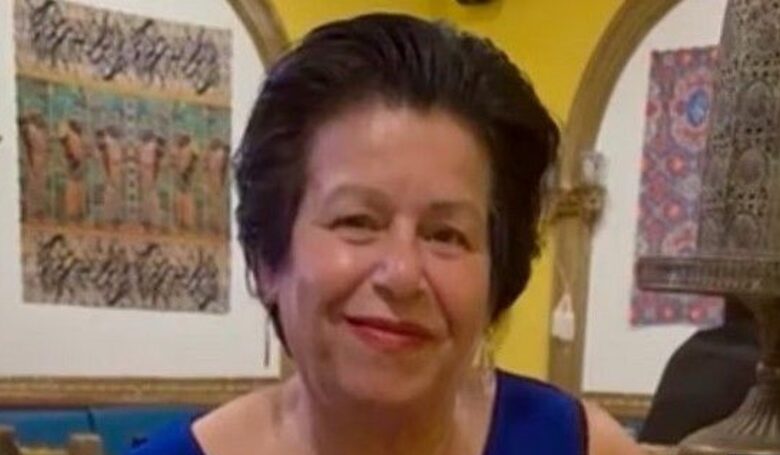
The arrest of "Afarin Mohajer" is another sign that the Islamic Republic has no mercy for the elderly, sick, or dissidents in its case-finding.
In the latest example of the Islamic Republic of Iran's brutal treatment of dual citizens and political critics, "Afarin Mohajer," a 70-year-old Iranian-American citizen, was arrested by security forces at Imam Khomeini Airport upon returning from Iran to the United States, without any information, transparency, or minimal respect for human rights.
This behavior once again showed that the Islamic Republic has no consideration not only for political opponents, but also for religious minorities, including Christians, Baha'is, Yarsans, and even the elderly and sick.
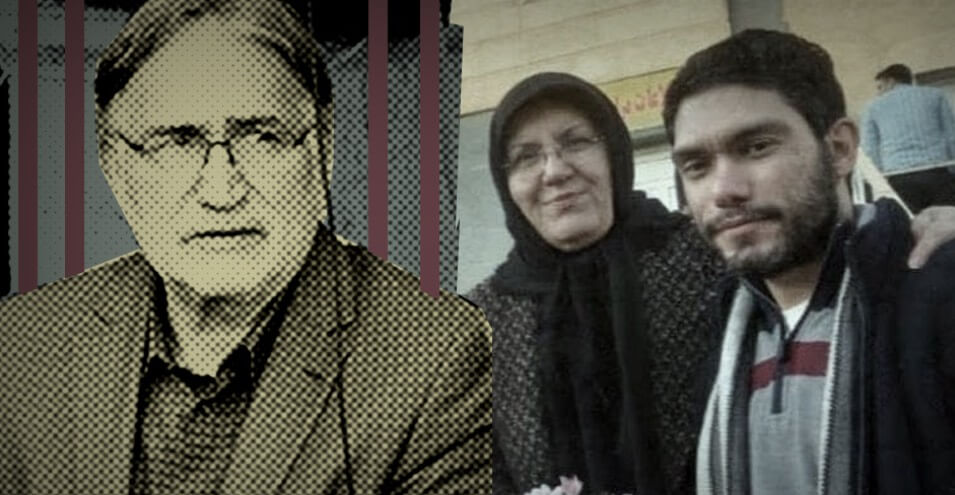
Reza Zarrabi, a political activist and son of a migrant, explained in an interview with Radio Farda on November 19 that his mother was arrested by the IRGC Intelligence Organization, describing the act as “kidnapping.” He says that his family had no news of his mother’s condition for 43 days, and some even accused them of “oppressing” her, while his mother was held in complete silence and ignorance in Ward 209 of Evin Prison for women.
Afarin Mohajer has been living in the United States for more than three decades and, according to his son, suffers from a very dangerous brain tumor and cancer; a disease that is difficult to treat even in the best hospitals in the United States and requires special medications. Before his arrest, doctors had told Afarin that he “does not have much time to live.” Despite these conditions, the Islamic Republic has kept him in detention without adequate medical care and without access to essential medications.
For Christian observers and human rights activists, this behavior is reminiscent of dozens of similar cases in which Christian prisoners, the elderly and sick, or even young people under the age of 18, have been subjected to pressure and torture; it seems that moral and humane boundaries have long disappeared for the Iranian security apparatus.
According to Zarrabi, the charges against his mother include "creating a hostile group," "membership in a hostile group," "propaganda against the regime," "insulting the leadership," and "insulting sacred places," the same clichéd and ready-made list that has been used for years against dissidents, Christian citizens, journalists, and even cyberspace users.
Zarrabi insists that his mother has no political activity and was targeted simply for being by his side; pressure that, he says, has included torture and threats to force him to close the Council for the Subversion. However, he has made it clear that "he will not close this council."
For the Christian community, this case is reminiscent of dozens of other examples: "the arrest of house priests, the suppression of Christian citizens, the issuance of heavy sentences for religious ceremonies, and the creation of a permanent atmosphere of fear for anyone who breathes outside the ideological framework of the government, for political activists, opponents of the regime, social media activists, and so on..."
Now, the arrest of a 70-year-old woman with cancer shows that the policy of repression in Iran knows neither age, nor illness, nor religious belief, nor even basic human rights. Zarrabi says the government is likely to use his mother as a tool to pressure the United States, the same approach that has been taken repeatedly in recent decades towards dual nationals.
He also points out that despite the US government's warnings about dual nationals traveling to Iran, his mother had traveled to Iran for personal matters after his father's death. While he now faces the possibility of being tried and sentenced, the US State Department has only acknowledged receipt of Zarrabi's letter, but has not yet announced any action.