Review of the status of the JCPOA revival in the "Nafdi" meeting; "Real pressure" should be restored on Iran
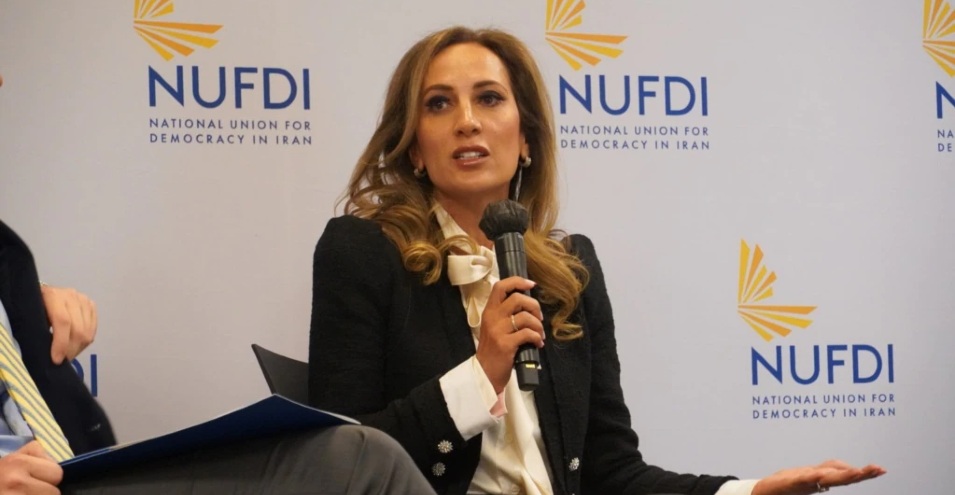
The National League for Democracy in Iran (NLD) discussed the status of the Vienna talks on the Iran nuclear deal, the Joint Comprehensive Plan of Action (JCPOA), at a meeting in Washington. Experts at the meeting suggested that the Joe Biden administration be realistic about the Iran nuclear deal and change its current policy.
The meeting was held on May 11 and was divided into two panels. Referring to the nearly one-year negotiations to revive the JCPOA, the attendees stated that this agreement does not address security concerns about Iran.
Eli Cohanim, a former US State Department diplomat, told the Persian service of the Voice of America on the sidelines of the meeting: "It is clear that the US administration under Joe Biden has been open-minded about what we have offered the Iranian regime, but the regime still refuses to reach an agreement. So it is time for the Biden administration to change course and think about the next steps based on the national security of the United States, our allies in the region such as Saudi Arabia, Israel and others."
Ms. Cohanim added: “The right step for the United States is to bring real pressure back on the Iranian regime, put the option of military action back on the table, and let the regime know for sure that the United States will not tolerate a nuclear Iran.”
Elie Cohanim, who served as the US State Department's deputy special representative for monitoring and combating anti-Semitism in the previous US administration, said about the increase in human rights violations in Iran: "Since becoming president, Joe Biden has promised to make human rights the core of US foreign policy. We have never seen him do that before, and with the Iranian regime. And it is time for the US government to stand strong with the Iranian people, as we see people in Iran protesting in the streets because of hunger, so that they know that we are with them, and that we support them in their quest to enjoy human rights and fundamental freedoms."
The meeting also discussed the possible gains of reviving the JCPOA, which experts believed no longer had the benefits it had at the time.
Behnam Bentaleblou, a researcher at the Foundation for Defense of Democracies, also said on the sidelines of the meeting: “I think since April 2021 and the start of indirect nuclear diplomacy, the Biden administration has been seeking to revive something even less than the JCPOA agreement. The Biden administration seemed willing to give more concessions and receive less in return, and now it may not even be able to achieve that.”
He added: "Throughout these negotiations, Khamenei has been leading them and the ball has been in Iran's court. It depends on what kind of consequences Iran faces for its activities. If you look at it from Tehran's perspective, they are willing to take more risks, which means continuing the negotiations."
Behnam Taleblou said about why these negotiations have not reached a conclusion after nearly a year: "I think there are three reasons why Khamenei and the Iranian extremists have the peace of mind to say no. One is tactics, the other is economics, and the next is ideology."
He continued: "In terms of tactics, the Iranian government knows that the Biden administration will not pressure them when they overdo it, and they believe that the current US administration will not push them. So, similar to what they did with the Obama administration, they will overdo it if possible and they may achieve something in the end. This is a negotiating tactic from Iran that also causes delays."
Behnam Bintaleblou added: "The second is the economic issue. Iran benefits from the increase in oil prices and also from the failure of the Joe Biden administration to implement sanctions for about a year and a half, especially in the fields of oil, exports, storage, transportation, shipping, insurance, as well as other fields that Iran has diversified in terms of investment, including petrochemicals and other non-oil fields. So there is an economic benefit here as well. Although it only benefits a certain class of the ruling regime, it allows them to implement their revolutionary and security policies."
He continued: “The third issue is ideology. Khamenei always wants to humiliate America in the end, and this is part of their strategy. Bringing down a global power like America in this way has always been part of their goal, and if you look at the way Khamenei has been taking a stance, he has even downplayed the importance of the JCPOA nuclear deal, and Ebrahim Raisi is doing the same. What it means is that the regime has gained confidence, and the more confident it is, the more its hostility increases and becomes more dangerous. All of this is a result of Washington not being able to properly convey what the consequences will be. That is why Iran continues to stubbornly postpone and refuse.”
The P5+1 nuclear deal has been underway for about a year. In the latest move, the European Union's coordinator for the talks, Enrique Moura, traveled to Tehran to find a way to move it forward, but no results have been achieved yet.
While Enrique Moura, the head of the Joint Commission on the JCPOA, concluded the first day of his talks in Tehran by holding meetings with Ali Bagheri, the head of the Iranian negotiating team, Ned Price, a spokesman for the US State Department, responded to a question from the Persian service of the Voice of America whether Moura had briefed US officials on the first day of talks with Iran, saying: "I am sure that our group will be in contact with Enrique Moura and his group."
Price, noting that Mora has been exchanging messages between Tehran and Washington for some time, added: "Of course, we cannot share with you much of what was said and heard."
The Foreign Ministry spokesman did not explicitly answer whether the latest message exchanged was from Tehran or Washington, but added: "We have clearly stated that direct communication could have facilitated diplomacy in some ways."
The European Union's foreign policy chief, Josep Borrell, previously told the Financial Times that Mora's trip to Tehran could be "the final straw" in reaching a conclusion to the nuclear talks with Iran.
Source: Voice of America