Hamid Nouri's trial in Sweden is an important event in Iran's political history.
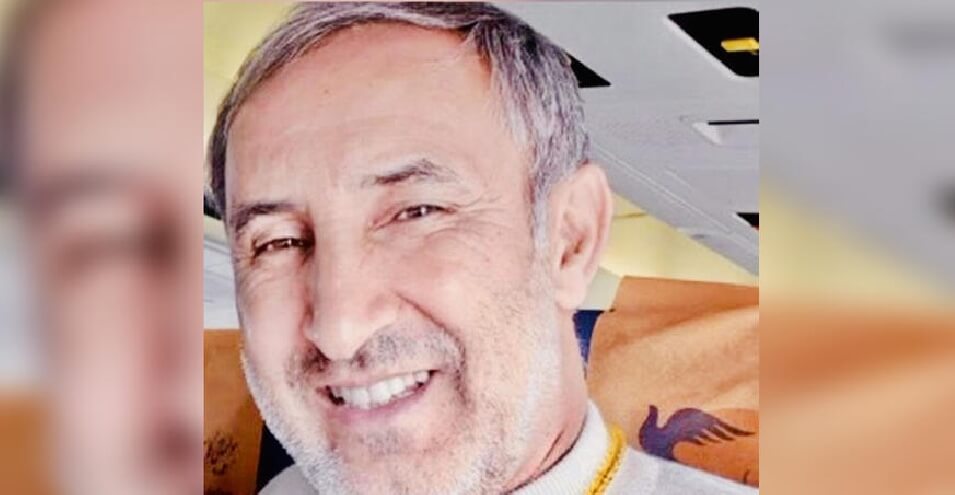
This Tuesday, August 9, a trial will be held in Stockholm, Sweden, against an Iranian man accused of involvement in a murder that occurred in an Iranian prison 33 years ago.
The defendant in this trial is Hamid Nouri, also known as Hamid Abbasi. According to the information contained in the indictment, Hamid Nouri was an assistant prosecutor and assistant to the then deputy prosecutor - Mohammad Moghiseh, alias Naserian - between August and September 1988, during the mass killing of political prisoners in Gohardasht Prison, Karaj.
Nouri is accused of having, in collaboration with and consulting with other defendants and perpetrators of the summer 1988 massacre, intentionally taken the lives of many political prisoners, mostly members or supporters of the People's Mojahedin Organization of Iran, as well as a number of members of leftist and other groups.
Hamid Nouri arrived at Stockholm Airport on November 8, 2019, on a direct flight from Iran, and was immediately arrested and detained. This action was taken based on the principle of universal jurisdiction and Swedish law, under the heading of international crimes, serious crimes, or the crime of war crimes, and the crime of intentional homicide. This principle allows domestic courts to prosecute suspects in domestic courts regardless of their nationality or the country in which the crime occurred.
Hamid Nouri's arrest was carried out with the help of several people and the key role of Iraj Mosadaghi, a former political prisoner, in a pre-coordinated plan by the Swedish prosecutor's office.
His final arrest warrant was issued five days after his arrest on November 12, 2019. He is the first defendant in the 1988 massacres to be arrested and put on trial, and that too outside the country where the crime occurred.
The indictment against Hamid Nouri was issued by the Swedish Public Prosecutor's Office against International Crime and Organized Crime, and specifically by the District Prosecutor, Christina Lindhoff-Carlsson, and was handed over to the Swedish judicial authorities.
By studying the indictment, we find that the prosecutor has accused Hamid Nouri of gross violations of international law, such as Article 147 of the Fourth Geneva Convention and its common Article 3, in connection with the torture, inhumane treatment, and execution of Mujahid prisoners. In the case of prisoners of leftist parties, Nouri is also accused of participating in premeditated murder; that is, in collaboration with and participation in other defendants and during an unfair trial, he facilitated and in some cases carried out the death sentences of the death squad.
The Swedish prosecutor's indictment includes the names of 110 Mojahedin prisoners and 26 prisoners affiliated with leftist parties who were executed in Gohardasht Prison. It also includes the names of 23 pro-MOHID prisoners who survived the massacre.
In another part of the indictment, we find the names of people who will testify as witnesses in court, whose most important role will be to identify and confirm the identity of Hamid Nouri, alias Hamid Abbasi. The testimonies of the witnesses in the indictment show that Hamid Nouri was one of the main people in Gohardasht Prison, who was responsible for monitoring prisoners, guiding them to the death squad, and then participating in their execution.
At the end of the indictment, the names of seven experts appear, who will testify specifically about whether the conflict between the MEK and the Iranian government was an internal or international military conflict. These experts will also comment on the outcome of the fatwa or ruling of Ayatollah Khomeini and the question of whether MEK prisoners were protected by the Fourth Geneva Convention and its Additional Protocols. The plaintiffs in the case are divided into four groups, and four lawyers will represent each group separately. Daniel Marcus and Thomas Soderquist are two of Hamid Nouri’s defense lawyers in this trial.
According to the indictment, the prosecutor considers the military attack by the People's Mojahedin-e Khalq Organization (PMOI) from inside Iraq on Iran to be part of an international armed conflict. The prosecutor noted that even if this conflict is not considered an international armed conflict, it should be considered an internal, non-international armed conflict that occurred on August 28, 1988, between Iran and the political organization of the People's Mojahedin-e Khalq Organization of Iran (PMOI).
The prosecutor's indictment includes 65 documents and evidence. These documents include documents from the families of the victims, reports from Amnesty International and the Iran Tribunal, books and evidence provided by some prisoners who survived the massacre, such as Iraj Mesdaghi, and non-governmental organizations such as the Abdolrahman Boroumand Foundation and Justice for Iran, which have been made available to the prosecutor and the court.
Hamid Nouri was not a member of the death squad, but according to the indictment, he is considered an accessory who played a role in and facilitated the torture, inhumane treatment, and ultimately the murders.
The members of the death squad in Tehran were four: Morteza Eshraghi, who was appointed to the squad directly by Ayatollah Khomeini in the fatwa of the massacre, Hossein Ali Nayiri, Mostafa Pourmohammadi, and Ebrahim Raisi, the current President of Iran, who was at the time the deputy prosecutor of the Tehran Revolutionary Court.
Survivors of the massacre, families of the victims, and those interested in the Iranian justice movement are very hopeful that the Hamid Nouri trial will be a starting point for an international investigation into the massacres of the 1960s, especially the summer massacre of 1988, and for the punishment of its perpetrators and commanders, especially Ebrahim Raisi, the President of Iran.
According to Swedish law, the maximum penalty for Hamid Nouri would be life imprisonment if convicted.
In this case, the behavior of the opponents of the Iranian government, the cooperation and interaction of the People's Mojahedin Organization and leftist groups and supporters or former members of the Mojahedin Organization have been accompanied by many ups and downs. This case is not only important in terms of human rights and humanitarian aspects, but the arrest and trial of Hamid Nouri in a court of another country is one of the most important political events in Iranian history, especially in the history of the Iranian justice movement.
Source: Voice of America