Gantz stresses need to confront "Iranian threats" in meeting with UN Secretary-General
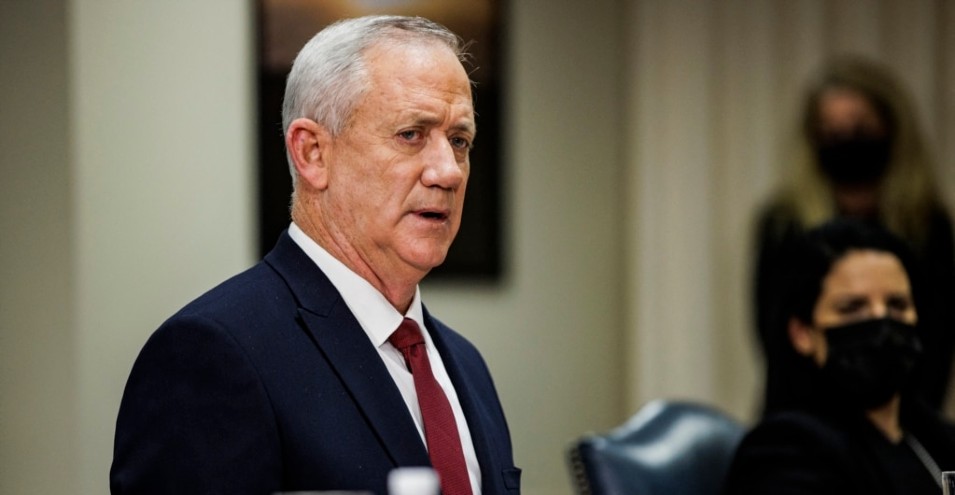
Israeli Defense Minister Benny Gantz, who traveled to the United States for the second time in less than three weeks to raise the "threats of Iran," wrote on Twitter after his meeting with the UN Secretary-General on Monday, September 11, that he had spoken with Antonio Guterres "about the need to create an international front against challenges, foremost among them, the threats from Iran."
According to Israeli media reports, General Gantz told Mr. Guterres that "any nuclear agreement with Iran must include the destruction of all of its centrifuges so that it cannot use them again."
He added that Iran has increased its production of centrifuges, moved them to fortified underground facilities, and "if an agreement is signed with Iran, we must make sure it does not have nuclear weapons."
According to Yedioth Ahronoth, Benny Gantz then "revealed" in a separate meeting with ambassadors of UN Security Council member states and ambassadors of Abraham Peace Pact member states that "Iran has tripled its uranium enrichment capacity."
He added: "Iran is the biggest destabilizer in the Middle East; it can terrorize and cause an arms race, but I believe it can be stopped and the time to act is now."
According to the Israeli Defense Minister, Iran "has endangered the global economy and energy resources, caused food and trade prices to rise, and jeopardized freedom of navigation in the region, and if it comes under the nuclear umbrella, the situation will worsen."
However, Stephane Dujarric, spokesman for Antonio Guterres, said on Monday night: "The Secretary-General has always been a strong supporter of the revival of the JCPOA."
Before his meetings at the United Nations, Benny Gantz, speaking at a meeting in New York on Monday, showed a map of ten locations in Syria and said that Iran had turned Syrian military industries and army bases into "precision missile production factories" and had set up similar factories in Yemen and Lebanon.
Israeli officials, who have not yet convinced Washington to declare the "failure of negotiations" after numerous meetings with American leaders, have increased their efforts and international travels in recent days with the aim of preventing the revival of the JCPOA.
Concurrent with the meetings and speeches of the Israeli Defense Minister in New York regarding Iran, the Israeli Prime Minister also said on September 11, during a meeting with German Chancellor Olaf Schulz in Berlin, that the agreement to revive the JCPOA was a "mistake" and that these "failed negotiations" must be moved beyond.
Israel has welcomed and praised this week's statement by three European countries that Iran has "endangered the JCPOA," and claims that the classified information it provided to these three countries played a role in this new European stance.
In this context, US Secretary of State Antony Blinken, in a position similar to that of European countries, stated that an agreement with Iran may no longer be possible in the short term.
With this in mind, a US State Department official on Monday, in response to Israeli officials' statements that "negotiations are dead," stated that Washington still does not consider the talks with Iran "failed" and that efforts to continue negotiations on the text of the agreement to revive the JCPOA will continue.
Source: Radio Farda