Protest rally of families of imprisoned Ahvaz steel workers
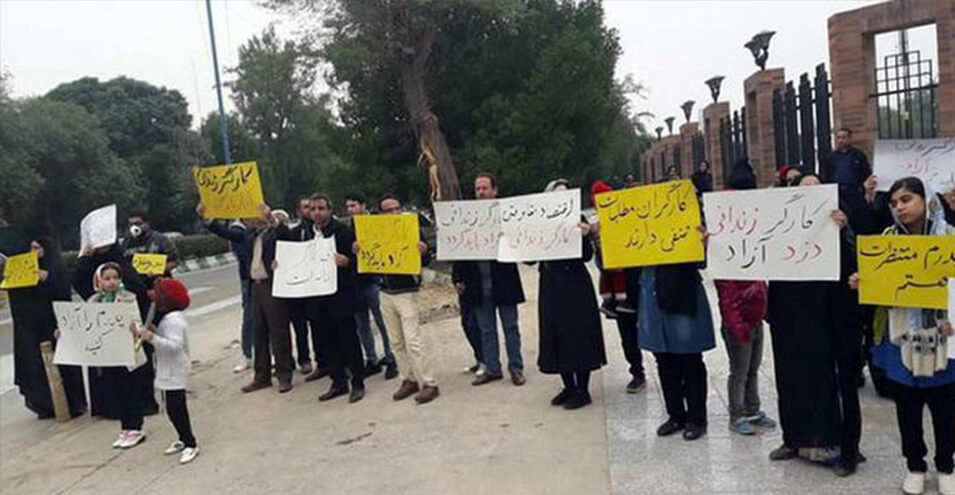
Families of detained workers of the National Iranian Steel Group have held a protest rally in Ahvaz demanding their release. Iranian authorities have announced the release of 20 workers and promised to release 10 more by the end of the week.
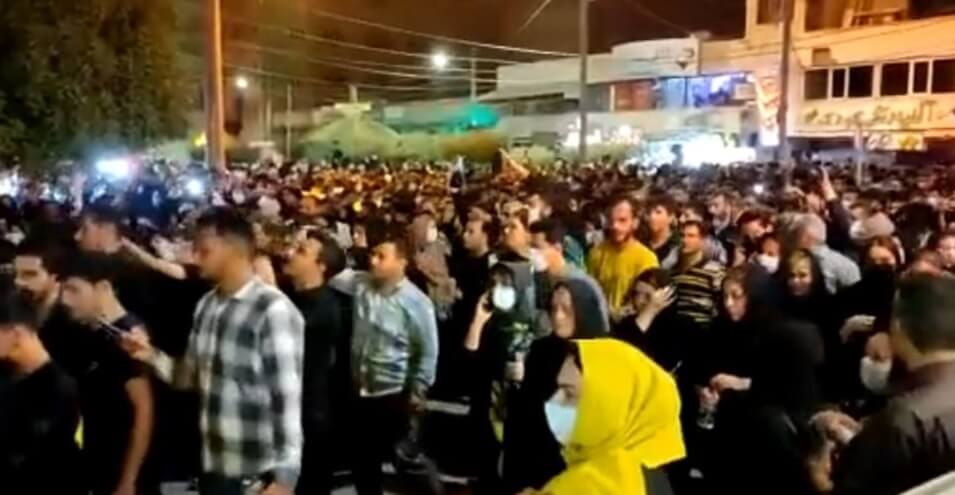
A group of families of imprisoned workers of the National Iranian Steel Group held a protest rally in front of the Khuzestan Governorate in Ahvaz on Monday morning (December 24).
The demand of the participants in this rally was the immediate release of all Ahvaz Steel workers arrested in recent days and "the accountability of the provincial authorities and the Supply Council in this regard."
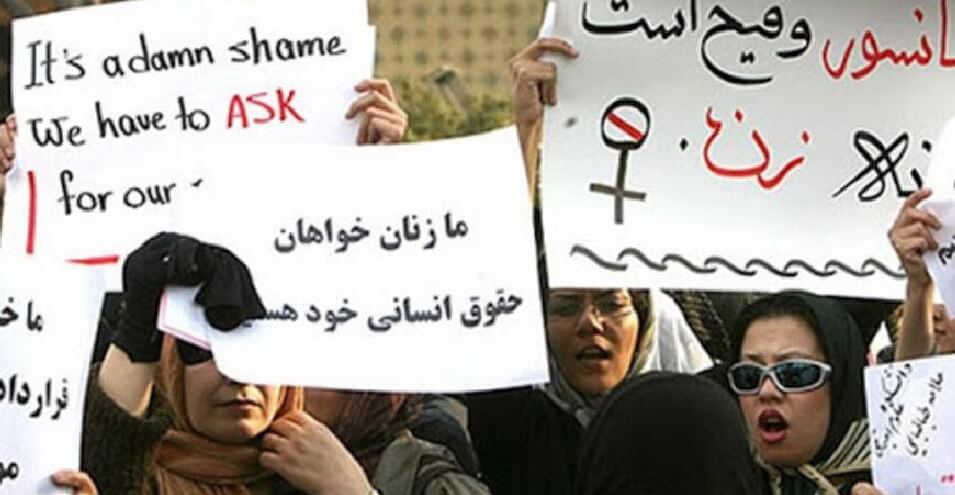
The participants in this protest rally, among whom were the children of workers, carried placards with slogans such as "Imprisoned worker, free thief," "Resistance economy, imprisoned worker," "Imprisoned worker must be free," and "Workers have union demands."
The children of the detained workers also carried slogans during the protest rally, including "Father, I am waiting for you" and "Free my father."
According to the ILNA news agency, "Protesters say that while all officials, from members of parliament to officials from the Ministry of Labor, had promised that all detained workers would be released by Sunday, a number of workers are still being detained."
At the same time, workers from the National Steel Industrial Group of Iran also issued a call for all workers to support the families and children of the detained workers, accusing local officials and judicial authorities of "breaking promises" and attempting to "deceive public opinion."
According to reports from labor organizations, more than 40 workers of the Ahvaz National Steel Group were arrested by Iranian security agents in recent days, some of whom have since been released on bail. These arrests were often carried out at night.
Promise to release 10 more workers by the end of the week
At the same time, Karim Yavari, the special representative of the Iranian Minister of Labor in "following up on the case of problematic production units," told the state news agency IRNA that 20 of the detained workers at Ahvaz Steel have been released so far.
He also promised that 10 other detained workers who had been arrested for union protests would be released by the end of the week.
Karim Yavari emphasized: "Based on the minister's order, workers' union protests should not be turned into a security issue."
Farzaneh Zeilaei, the lawyer representing a number of workers at the Ahvaz National Steel Group, had previously stated that some of the arrested workers were accused of “propaganda activity against the system and acting against national security,” and said: “It has been decided that a number of arrested workers will be released on bail by converting their arrest warrants.”
Ms. Zeilai also pointed out that a case had been filed in the 20th branch of the Ahvaz Public and Revolutionary Prosecutor's Office for the arrested workers, and stated: "A number of workers are scheduled to be released by converting their arrest warrants to bail, but unfortunately, contrary to the law, they announced in general that they would not accept the salary slips of the workers of the National Steel Group as bail. In this regard, a written request from about 20 workers to the Deputy Prosecutor did not yield any results."
“Why don’t workers have a say in the national media?”
Mazyar Gilani-Nejad, a union activist for metalworkers and mechanics, told ILNA today that Iranian workers are not satisfied with the Islamic Republic's Radio and Television (IRTV) regarding its coverage of labor news, saying: "In recent days, IRTV reporters in France have been sending minute-by-minute news about the demonstrations and protests of French workers, and they are providing accurate news coverage of various aspects of this protest, from the police response to the protesters' reactions."
The labor activist also added: "It is interesting that for more than a month, the workers of the Haft Tappeh National Steel and Sugarcane Group have been taking to the streets and protesting, and the sound of their protest has spread throughout Iran to the point where all classes and strata have expressed sympathy for these workers. However, in the national media, apart from a few limited news and reports, and those too late, there is no mention of the workers' protests; why? Our question to the officials of the Iranian Broadcasting Corporation is why don't the workers have a share in the national media, which they themselves pay taxes for?!"
Asking the question, “Are the French Yellow Vests more important than Haft Tappeh and the Ahvaz Steel?”, Gobalani-Nejad considered the “indifference” of the Islamic Republic of Iran Broadcasting (IRIB) to the workers’ demands “precedented” and said: “Last year, around this time, we delivered a petition with 1,000 signatures from the workers of Assaluyeh to IRIB and asked Channel 2, especially the 20:30 news, to come to Assaluyeh and cover the workers’ problems closely, but unfortunately, this collective request of the workers has not yet been met.”
The labor activist also emphasized: "Unfortunately, people's taxes on the Iranian Broadcasting System are not serving the disadvantaged, and this medium has become a showcase for capitalist commerce and propaganda."
Mohammad Taqi Fazel Meybodi, a member of the Qom Seminary Teachers' Assembly, also declared the Islamic Republic Radio and Television (IRTV) one of the factors that made people pessimistic about the government, saying: "If something happens in the country, IRTV does not cover those events, such as the protests of sugarcane workers or Ahvaz Steel, but Persian-language media outlets that are directed from abroad cover these events. That is why people tend to turn to those media outlets."
“Problems should not have a security aspect”
Karim Yavari, Director General of Job Protection and Unemployment Insurance, told Tasnim News Agency yesterday regarding the protest movements of Haft Tappeh Sugarcane Workers and the Ahvaz National Steel Group: "The gatherings held by these dear ones in the past few weeks were purely union-related and for wages and legal rights. The Ministry of Cooperatives, Labor and Social Welfare firmly believes that union problems should not have a security or political aspect, and all national and provincial officials believe in this. The issue of the workers' protests is purely technical, and the necessary and effective attention should be paid to the rights and benefits of the workers and the livelihood of their families."
This official from the Iranian Ministry of Labor added: "Every time hostile foreign newspapers and media outlets try to exploit labor gatherings, their arrows hit the iron steel of the national steel groups in the country and blind them. According to the Minister of Cooperation, Labor and Social Welfare, the release of all arrested steel workers is being pursued seriously, and so far a number of them have been released, and the matter will be pursued until all workers are released."
Karim Yavari had emphasized that "the National Bank must understand the circumstances and provide the raw materials needed by the National Steel Group for continuous production without wasting time and administrative and banking bureaucracy, and no shortcoming in this work has been and is unacceptable."
In 2010, the majority of the ownership of the National Iranian Steel Group was transferred to Amir Mansour Arya (Mehafrid Khosravi), who was later executed on charges of embezzling three trillion rials. During his trial, Mr. Khosravi said, among other things: “I did not buy the National Group with a rent. By God, the gentlemen forced me to buy it.” After the execution of Mehafrid Khosravi, 60 percent of the shares of Ahvaz Steel were eventually transferred to the National Bank of Iran.
The demands of Ahvaz Steel workers, who employ more than 3,000 people, include payment of at least four months of arrears of wages, confronting hidden obstacles preventing production in this industrial group, and divesting them of the National Bank. The workers are also protesting the closure of the production line due to a lack of raw materials.
In recent days and months, Iran has witnessed widespread popular protests against the economic and livelihood situation. These protests included truck drivers' strikes, protests and demonstrations by workers at Haft Tappeh Sugarcane Company and the Ahvaz National Steel Industrial Group, demands from workers at the Tehran Bus Company, and public solidarity and student support for Haft Tappeh Sugarcane and Ahvaz Steel workers.
Among the arrested Haft Tappeh sugarcane workers, Ali Nejati, a member of the board of directors of the company's workers' union, is still in prison. There have also been reports on social media about the arrest of student activist Asal Mohammadi on December 4 for "following and spreading news about the Haft Tappeh and Folad workers' strike" and her transfer to Shush prison.
Source: DW