Imposing the government's security narrative on civic activities regarding mother tongue education
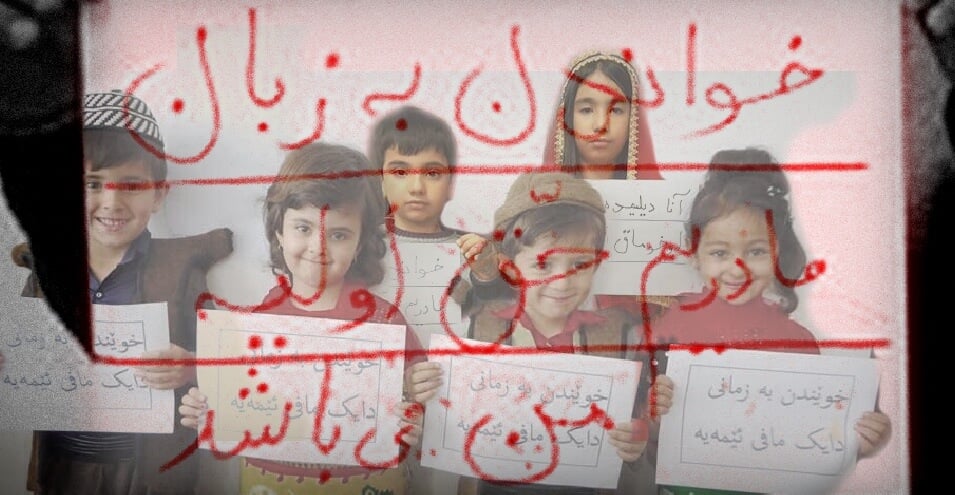
"Concerns about escalating security pressures on minority rights activists and their families are serious"
Twenty-two years ago, UNESCO, the United Nations Educational, Scientific and Cultural Organization, designated February 21, corresponding to the 2nd of Esfand, as "International Mother Language Day."
The history of this naming, of course, goes back to February 1952 and the struggle of the people of Bangladesh to defend their native language.
The United Nations General Assembly declared 2008 the International Year of Languages. At the time, the head of UNESCO called on governments to “incorporate into their formal and informal education systems programs that ensure the coexistence and equal and fruitful development of the various languages of each country.”
The issue of "mother tongue education" has always been one of the most controversial issues among executive and legislative authorities in Iran. An issue that is particularly important given the multitude and diversity of languages in Iran.
Article 15 of the Iranian Constitution states, "The official and common language and script of the Iranian people is Persian. Documents, correspondence, official texts, and textbooks must be in this language and script, but the use of local and ethnic languages in the press and mass media and the teaching of their literature in schools, alongside the Persian language, is free."
On the other hand, Iran has signed various international conventions, including the Convention on the Rights of the Child and the Convention on Civil and Social Rights, and is obligated to implement their provisions. All of these international treaties emphasize the issue of "teaching in the mother tongue." It is obligated to implement its provisions.
Although the executive authorities in the Islamic Republic have always claimed that they have provided the possibility of education in the mother tongue and protected this right of different ethnic groups in Iran in line with international treaties and the country's constitution, the intensification of security clashes with civil activists in the field of mother tongue education in Iran indicates another aspect of the Islamic Republic of Iran's authorities' view of the issue of "mother tongue education" in Iran.
The government's attempt to impose a "security" narrative on activities in the field of mother tongue education
Teaching the mother tongue was one of Hassan Rouhani's election promises. For the first time in the history of Iranian higher education, Kurdish and Turkish literature and language courses were declared university courses. It was in June 2016 that Ali Younesi, former Minister of Information and Hassan Rouhani's special assistant for ethnic and religious minorities, announced the government's order to the Ministry of Education to teach the local Kurdish and Turkish languages in a number of Kurdish and Turkish-populated areas of Iran.
Despite promises and some actions by the executive authorities of the Islamic Republic of Iran regarding the development of mother tongue education, human rights activists in Iran have a different position regarding the approaches of governments and legislators in this regard.
Shahin Hilali, a director of the Azerbaijani Human Rights Organization in Iran, believes that the fundamental problem in the government’s approach to the issue of mother tongue education is the attempt to instill and impose a “security” narrative of these measures. “Over the years, the government has widely instilled the idea that any civic activity in the field of education or preservation of mother tongues is tantamount to separatist activities, and in fact, it has created and is constantly fueling a security narrative of civic activities,” Shahin Hilali told the Campaign for Human Rights in Iran.
Referring to the history of security agencies in dealing with civil activists in the field of mother tongue, this human rights activist says, "In the mid-1970s, student and civil activities in many Iranian universities expanded with a focus on teaching the mother tongue, and finally, after the reform government came to power, it was decided that two optional units of Turkish language courses would be offered in some Iranian universities, such as the University of Ardabil. However, security pressures in those years were such that professors of these classes were constantly forced to cancel classes, and on the other hand, security agencies would send people, mostly students, to the classes, who would later build cases against the students." According to this human rights activist, although about 70 student publications in the local language were published in universities in those years, after a short time, many student and civil activists were arrested and student publications were closed. According to Shahin Hilali, currently, student activities in this field have almost disappeared.
Referring to the actions of the Islamic Republic government in recent years, such as teaching Turkish and Kurdish in undergraduate courses at several universities in the country, this human rights activist considers such actions to be more of a "defensive shield" for the authorities that they use in international forums. In fact, actions such as teaching Turkish and Kurdish do not help "preserve" native languages because the language taught in universities is ultimately not a "native" or "local" language and is more of an academic aspect.
It was in August 2016 that Hossein Tavakoli, the senior advisor to the National Education and Testing Organization, announced the possibility of selecting candidates for enrollment in the undergraduate programs of Turkish Language and Literature and Kurdish Language and Literature.
Shahin Hilali believes that the output of these university programs has nothing to do with preserving and valuing native languages. According to him, working towards teaching native languages outside the defined system of governance is a constant excuse for building cases against civil activists.
Mr. Hilali told the Human Rights Campaign in Iran, "None of the sentences issued to civil society activists in the field of mother tongue education mentions that the reason for the arrest was an attempt to teach the mother tongue. Rather, any action in this area provides an excuse for charges such as gathering and acting against national security."
Shahin Hilali considers the arrest of Behnam Sheikhi, Akbar Azad, Alireza Farshi, and Hamid Manafi on International Mother Language Day in 2013 and the interference of intelligence agencies in the judicial process of this case as a clear example of the security perspective of the Islamic Republic authorities on the issue of education and support for the preservation of the mother tongue.
Behnam Sheikhi, Akbar Azad, Alireza Farshi, and Hamid Manafi were arrested in Tehran's Nasim Shahr in March 2013 and later released on bail pending the outcome of the trial. These four civil society activists were sentenced to long-term imprisonment and exile in 2016 for what was described as "participating in forming a group to disrupt the country's security."
In March 2017, Amnesty International called for the cancellation of Alireza Farshi's 15-year prison sentence and 2 years of exile. Some of the reasons given for the sentence against Mr. Farshi were his participation in private ceremonies commemorating International Mother Language Day in 2014 and 2015, his contact with activists in different cities to organize ceremonies commemorating International Mother Language Day, and his sending a letter to the UNESCO Secretary-General in Tehran, requesting assistance from this organization to obtain permission to hold ceremonies commemorating International Mother Language Day in Tehran. Finally, in January 2019, Branch 54 of the Tehran Provincial Court of Appeal sentenced Behnam Sheikhi, Akbar Azad, Alireza Farshi, and Hamid Manafi to a total of 8 years of imprisonment and 8 years of exile.
According to Shahin Hilali, the involvement of security agencies in such cases and their influence in the trial process makes it unfair for most civil activists in the field of mother tongue education to be prosecuted during the judicial process. On the other hand, the repeated filing of cases against civil activists with the focus and insinuation of a direct correlation between activities aimed at teaching the mother tongue and separatism is a tactic used by security agencies to keep a closer eye on these activists than to read their activities in line with human rights objectives.
Efforts to preserve and teach the mother tongue: An excuse to file cases against civil activists
This year, and simultaneously with the celebration of Mother Language Day, a group of civil activists began to write on the walls of the cities of Tabriz and Kalybar in East Azerbaijan. These writings included sentences such as "Education in the mother tongue is the basic right of every human being," "Where is my mother tongue?", "Life is not possible without language," and "Happy Mother Language Day." Civil activists in the city of Tabriz also installed numerous symbolic stickers and graffiti, including graffiti and graffiti texts protesting the neglect of the right to education in the mother tongue. A number of Azerbaijani civil activists distributed educational books in Turkish in the cities of Urmia, Ardabil, and Meshginshahr on the eve of International Mother Language Day.
Referring to the security forces' frequent filing of cases against civil society activists, Shahin Hilali told the Human Rights Campaign, "Most activities in the context of teaching the mother tongue are measures such as distributing storybooks in the local language in villages or small towns, or talking to families about the importance of preserving the mother tongue. Wall writing and graffiti are also part of the activities that are more visible, but these same actions are considered by the security forces as precedent in the activists' cases and are used against them when activists are possibly arrested."
An example of the case-building against activists in the field of mother tongue education occurred not long ago; just one day before "International Mother Language Day," Alireza Farshi, in a phone call from prison to "Ahmadreza Haeri," a former political prisoner, announced the Ministry of Intelligence's new case-building against him.
Ahmadreza Haeri wrote in a tweet: "Alireza Farshi called, told me about the new case file, and in the interrogation session that was held online, the investigator mentioned that Alireza's new case file is fourteen volumes! Alireza's interrogator apparently printed out all the posts and comments on his Instagram page and put them in the case file as a report." Alireza Farshi is currently serving his two-year sentence in Tehran's Greater Prison.
Amir Amini and Kianoush Aslani are two Turkish activists who were arrested by security forces in Tehran on March 18, 2018, during street activities marking International Mother Language Day. Amir Amini was sentenced to 7 years and 6 months in prison, and Kianoush Aslani was sentenced to 5 years in prison. Both are imprisoned in Evin Prison.
Shahin Hilali, pointing out that in the coming years we will witness more security pressures on minority rights activists in Iran, told the Campaign for Human Rights in Iran, "Our statistics on the arrests of civil society activists per year may be close to 200, but the arrests of a small number of these individuals are reported by the media, and one of the most important reasons for this is the security pressures on the families of the individuals to not provide information."
Shahin Hilali says that in many small towns and villages, we find out a few months after the release of individuals that they were in detention, and when we ask the reason for the incident, it turns out that the activists were threatened that if they reported the arrest, their charges would be increased.
According to this human rights activist, all activities related to minority rights have become an excuse for the government's security perspective to attribute them to "separatism" and "actions against national security," while the reality of activities related to preserving and teaching the mother tongue has no security or political dimension whatsoever.
Shahin Hilali believes that in the coming years, concerns about increased security pressures on the families of minority rights activists have also increased, which reflects the government's sensitivity in reporting news related to civil activists in this field.
According to Shahin Hilali, one of the tactics used by judicial and security institutions in handling activists' cases is to create "delays" and "suspensions" in handling cases, which in turn causes countless difficulties for individuals.
Referring to the repression of civil society activists in the field of education and preservation of the mother tongue in provinces such as Kurdistan and Sistan and Baluchestan, Shahin Hilali says, "Most activities in the field of mother tongue education in other provinces, like Azerbaijan, are focused on the same type of activities, such as distributing books in the mother tongue or writing on walls and peaceful gatherings under the pretext of the beginning of the school year or International Mother Language Day. However, activists in those areas also face accusations such as forming a crowd to disrupt the country's security."
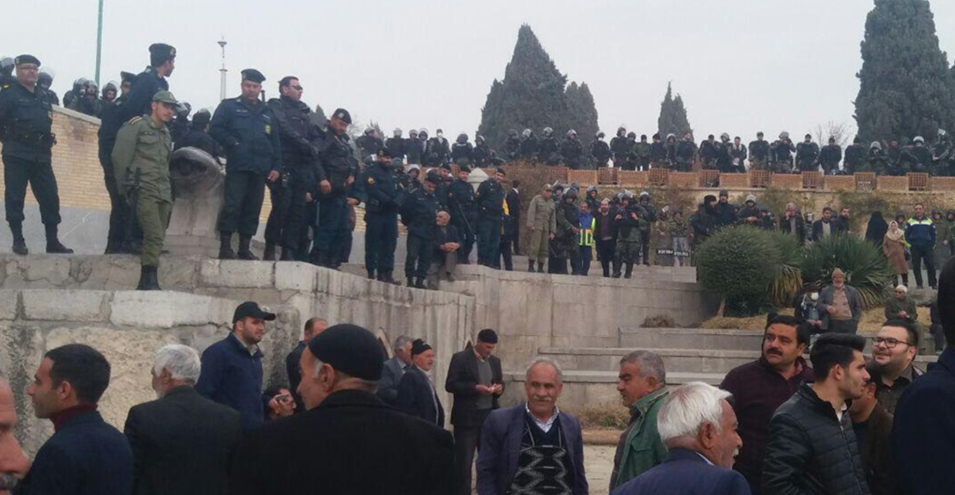
In recent days, coinciding with International Mother Language Day, a number of civil society activists in Sanandaj held a protest rally in front of the city's courthouse, condemning the five-year prison sentence handed down to Zahra Mohammadi, a Kurdish language teacher and activist in the field of mother tongue education.
Zahra Mohammadi was arrested in June 2019 following a raid on her home by intelligence forces and initially sentenced to 10 years in prison for what was described as “forming a group or crowd with the intention of disrupting national security.” Finally, in February of this year, the Court of Appeals sentenced her to 5 years in prison. Ms. Mohammadi is a long-standing activist in the field of mother tongue education in Kurdistan.
Earlier, thirty-eight Kurdish NGOs had written a letter to Iranian President Hassan Rouhani asking him to reconsider the 10-year prison sentence handed down to Zahra Mohammadi, a volunteer Kurdish language teacher.
The government's suppression of civil society activists in the field of mother tongue education and preservation and labeling these activities as "security" and "political" has led to the human dimensions and cultural importance of mother tongue education and preservation not being considered.
In recent days, coinciding with International Mother Language Day, a video was shared on social media in which Mohammad Reza Shafiei Kadkani, a professor of Persian language and literature, emphasized in one of his classes that "local languages are the backbone of our culture," adding, "If we do not preserve local languages, we will not practically understand a large part of our common culture."
Regardless of the cultural dimensions and the importance of preserving native languages in Iran, some statistics show that the lack of the necessary educational infrastructure for teaching "native language" or teaching "in native language" has forced many students to drop out of school.
Previously, Pouran Esmaili, CEO of the Comprehensive Benevolent Friends Foundation, which works in the field of rural development and education in the Dashtiari region of Sistan and Baluchestan province, had said in an interview, referring to the fundamental problem among many students in the region in "bilingual" schools, "Children in this region are not familiar with the Persian dialect and sounds until they start school, because they speak Balochi at home and Iranian television is rarely seen. These children must learn to read, write, and speak Persian after entering first grade. Learning Persian and studying in this language becomes a general problem when children enter school."
According to this social activist, "These conditions cause students to be weak in reading, writing, and speaking Persian and not make significant progress, and they enter the next grades of education in the same condition. After a while, this often leads these children to a dead end. That is, the child, due to the problem of being bilingual and the difficulties he endures in understanding the material in Persian, reaches a stage where he has a desire to drop out of school, and the family is also prepared to do so due to poverty, and as a result, the child drops out of school."
Despite similar problems in other provinces of Iran, the approach of the country's executive authorities towards the importance and necessity of teaching the mother tongue has not changed in recent years.
Source: Human Rights Campaign