According to FCNN, in September 2010, while the Islamic Revolution had not yet reached two years, few people imagined that an eight-year war would break out in Iran with enormous financial and human losses. But that is what happened.
In February 2002, when Iran, as a member of the International Atomic Energy Agency, announced that Iranian experts were providing nuclear fuel for Iran's nuclear power plants, few people thought that a 12-year crisis longer than war was on the way for Iran. But, that is what happened.
In insisting on war until Saddam's destruction, Ayatollah Khomeini had said, "Peace between Islam and infidelity is meaningless." His successor, Ayatollah Khamenei, had also considered insisting on the nuclear issue an "indisputable right."
However, in the end, these two insisted that Ayatollah Khomeini called accepting Resolution 598 "drinking a cup of poison" and Ayatollah Khamenei called accepting negotiations with the United States in the nuclear negotiations "heroic leniency!"
What is important is that at the beginning of these two harmful crises for Iran, few in the Islamic Republic believed that the process that had begun would lead, in the first case, to a devastating war, and in the second case to a harmful and fruitless project that would ultimately have to be abandoned in both cases.
Bypassing Hezbollah sanctions; the ball is in Iran's court
Hezbollah is under a stifling banking embargo in its home country of Lebanon, at the behest of the United States. Today, few would believe that this could lead to crippling sanctions on Iran.
The story goes that on December 15, 2015, the US Congress passed a bill requiring Lebanese banks, including the country’s Central Bank, to impose banking sanctions on all key institutions, organizations, and individuals of the party, including Hassan Nasrallah. The US itself prepared a long list of these institutions and individuals and communicated it to Lebanese banks. As a result, on July 9, 2016, the Central Bank and Lebanese banks implemented all of the US’s conditions for imposing banking sanctions on 100 Hezbollah institutions, organizations, and individuals.
Hezbollah's initial reaction was to deny that the sanctions had any effect on the party. In a statement issued by the party, it stated: "This new [American] attack against Hezbollah will fail through the banking sector."
However, since that day, the main question for observers has been what Hezbollah's coping mechanism will be in response to the heavy US banking sanctions, especially in Hezbollah's birthplace, Lebanon?
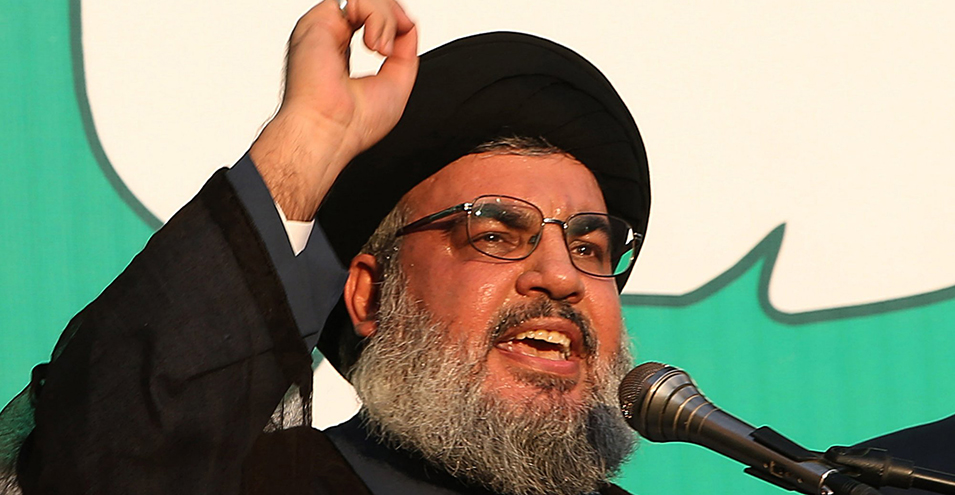
This important question was answered by Hassan Nasrallah in his speech on July 25. He said with a smile: “As long as Iran has money, we have money… We have no financial institution that can break our backs with a banking embargo. Let the whole world know… [In the resistance against Israel] all our projects, all our expenses, all our food, all our weapons and missiles are all financed by the Islamic Republic of Iran. Just as the missiles with which I threaten Israel come from Iran, all our property comes from Iran.”
Analyzing the content of Nasrallah's words is nothing more than that he revealed, with complete transparency and in a way that left no doubt for anyone, the mechanism of circumventing the sanctions of his party. He said that Hezbollah's financial resources are not in Lebanon at all, and that the sanctions on Lebanese banks would cut off Hezbollah's financial resources. He continued his frankness to the point where he said: "As long as Iran has money, we have money too."
It is highly doubtful that Nasrallah would absolutely deny the effectiveness of sanctions. However, with Nasrallah revealing the mechanism for circumventing sanctions, the important question is what are the implications of Nasrallah's words for Iran?
Three more sanctions on Iran
Let us remember that the clear position of the United States and its allies was that only nuclear sanctions on Iran would be lifted as a result of the JCPOA. Barack Obama had said that the negotiations leading to the ratification of the JCPOA would not include other sanctions. These three other sanctions are:
Sanctions related to missile activities
Sanctions based on human rights violations
Sanctions for supporting terrorism
According to this article, the third type of sanctions on Iran (support for terrorism) are being completed one by one. Hezbollah in Lebanon is now listed as a terrorist organization not only by the US, Australia, Canada and the European Union, but also by the Arab League and, most importantly, by the Organization of Islamic Cooperation. This means that all Islamic countries (with the exception of Tehran and Damascus), even Iraq and Lebanon (Hezbollah's birthplace), have considered Hezbollah a terrorist organization. (See the article: The Islamic Republic and Diplomatic Failure in the Organization of Islamic Cooperation)
In such a wide range of countries in the world, including Arab, Muslim, and Western countries, what is the corrupt outcome of Nasrallah's words for Iran?
Nasrallah's positions: paving the way for "re-sanctioning" Iran
If the analysis of the content of Nasrallah's words is nothing other than that he confidently considers his sources of income not to be in Lebanon but in Iran, and considering that Iran is accused of supporting terrorist networks not only by Western countries but even by an institution such as the Organization of Islamic Cooperation, is the corrupt conclusion of Hassan Nasrallah's positions anything other than that we should expect the arrow of sanctions that has targeted Hezbollah in Lebanon to be directed at Iran? Hasn't Hassan Nasrallah completed the puzzle of "re-sanctioning" Iran as well and transparently as possible, but this time with the subject of supporting terrorism?
This question is important given that the Financial Action Task Force (an institution established by the seven major economic powers of the world to combat money laundering) has recommended in its recent report that Iran "fully address its deficiencies in combating money laundering, and in particular in combating support for terrorism."
On the other hand, the crippling effect of sanctions (a term used by Hillary Clinton) on the issue of nuclear activity is now no secret to anyone, not even Ayatollah Khamenei. Like Nasrallah today, Ayatollah Khamenei himself had repeatedly denied the effectiveness of sanctions. But in the end, he was forced to soften; what he called heroic softening!
With this in mind, firstly, one can doubt Nasrallah's denial that sanctions have no effect on Hezbollah, and secondly, one can believe that Nasrallah's words have no meaning other than addressing the re-imposition of sanctions on Iran.
Now, if sanctions on Iran for supporting terrorism are not implemented during the Obama era, it will be necessary to wait a few months for either Trump or Hillary Clinton, who have tough positions against Iran, to enter the White House and impose new sanctions on Iran, the exact address of which has been given by Hassan Nasrallah.
—————————-
The notes express the opinions of their authors and do not reflect the views of FCNN.