Hashtag, “I was tortured too”
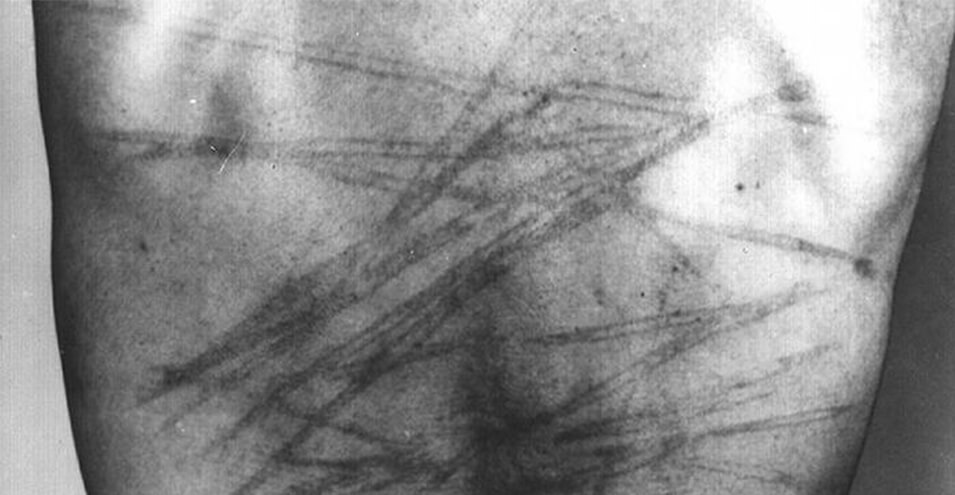
Following the publication of a letter by labor activist Esmaeil Bakhshi, who wrote about his torture during his detention, a wave of accounts from other former imprisoned activists about torture in Iranian prisons has now emerged.
“As someone who was persecuted by the Islamic Republic, I have a few questions for the leaders of the Islamic Republic: Why did you keep a 21-year-old girl in solitary confinement in the 2A security detention center of the Sarallah Guards for 8 days in the worst conditions and force her to wear a blindfold? Why did a man with the organizational name of Fazlallahi repeatedly verbally abuse a 21-year-old girl in the interrogation room and even threaten me with physical torture and sexual assault while laughing in a derogatory manner? To the point that I would crumple in my cell every night and stare at the cell door in terror until morning and was even afraid to sleep!” This is part of an Instagram post by Shima Babaei, a civil activist who was arrested in Tehran in June 2016.
Babaei is now one of those continuing the path that Haft Tapeh Sugarcane Company worker Esmaeil Bakhshi began some time ago. They write about their mental and physical torture in Iranian prisons, and the hashtag "I was tortured too" is intended to link all of these online writings together.
After my release, I was interviewed and told the authorities at the time about the torture. Mortazavi summoned me in the presence of my lawyer and said, "You have to file a complaint!" I filed a complaint. He said, "Now that the case has been filed, you have to prove it, or I will give you a long prison sentence myself." I became a defendant in my own complaint.
Ejei said that if a department files a complaint, the prosecutor will step in.— Fereshteh Ghazi (@iranbaan) January 6, 2019
On January 4 of this year, Esmaeil Bakhshi wrote an open letter to Mahmoud Alavi, the Minister of Intelligence of the Islamic Republic of Iran, about his torture in prison. In this letter, he invited the Minister of Intelligence to a public debate on the matter. His letter has provoked a wave of reactions, even in the Iranian parliament and government.
Shima Babaei continued her Instagram post, emphasizing that her work continues to inspire. She wrote: “Why did you force me to strip naked in front of your eyes when I first entered a cell the size of a grave, when even my mother had never seen me naked?” She described her psychological torture and wrote that the prison authorities “were doing her a favor” by not physically torturing her.
Torture of prisoners' families
Of course, writing with the hashtag “I was tortured too” is not limited to former prisoners, and a number of other citizens have also joined in. In a letter that was shared on social media, the mother of Atena Daimi, another political prisoner, announced her support for questioning the Minister of Intelligence and provided an account of the violent behavior she had witnessed.
In the letter, which begins with the sentence "I am the mother of Atena Daemi, a girl who was tortured many times in prison," she wrote: "I was never able to ask my daughter about the torture during interrogation, but every time someone asked me or Atena about the torture and I was forced to listen, I broke down."
She also writes about the treatment she received in and out of court: "When I was attacked by at least 10 male officers in front of the prison with my little daughter, I positioned myself in front of my little daughter so that the batons and tasers wouldn't hit my liver. When the plainclothes officers used obscene and sexual language, I broke down and felt humiliated, but my only concern at that time was my daughter. I held her hand with all my strength so that they wouldn't separate her from me like Athena."
The debate about whether torture is arbitrary or systematic in Iran is heated, but the focus is on political prisoners. While my experience and that of other lawyers who have worked on criminal cases shows that ordinary prisoners are tortured far more brutally and defenselessly. I will mention just one case as an example:
— Shadi Sadr (@shadisadr) January 7, 2019
Atena Daemi was arrested on October 19, 2014 and spent 86 days in solitary confinement and under interrogation. She was transferred to the women’s ward of Evin Prison on January 19 of the same year. Daemi was sentenced to 14 years in prison on charges of “propaganda against the system, gathering and colluding against national security, insulting the leadership, insulting the founder of the Islamic Republic, and concealing evidence of a crime.” This sentence was reduced to seven years in prison on appeal.
Torture narrative
The ongoing debate about torture in Iranian prisons goes beyond the hashtag “I was tortured too,” with other hashtags such as “torture narrative,” “torture in Iranian detention centers,” “Ismail Bakhshi,” or without a hashtag on social media. Majid Tavakoli, a former student activist and prisoner, is one of those who has described some of the prison conditions on Twitter. Majid Tavakoli wrote a detailed description of physical and psychological torture, ranging from constant beatings to prolonged unconsciousness.
He finally explains that “in late July 2007, four members of parliament came to 209 to follow up on the torture incident. That group had probably heard the description of the torture of us polytechnicians in the fake publications incident from the family and some of the released people. Even though I was not familiar with the circumstances, I described the torture as best I could. Three of them from that group were very upset and one of them cried seriously. But after that description, one of them said: “Now it’s okay, imagine a father punching his son in the ear.”
Addressing the issue of torture in Iran is on the wrong track.
The horror, bitterness, and immoral cruelty of existing tortures are buried under a few false and inaccurate statements.
A series of tweets about some of my personal experiences with torture/1— Majid Tavakoli (@MajidTavakoli) December 23, 2018
However, Tavakoli, who himself has exposed the situation in detention centers, writes that based on his personal experience and what he has heard from other friends, he is convinced that the developments in prisons are "the result of the revelations."
Source: DW