Traffic in Iran has increased, but the coronavirus situation has not returned to "normal."
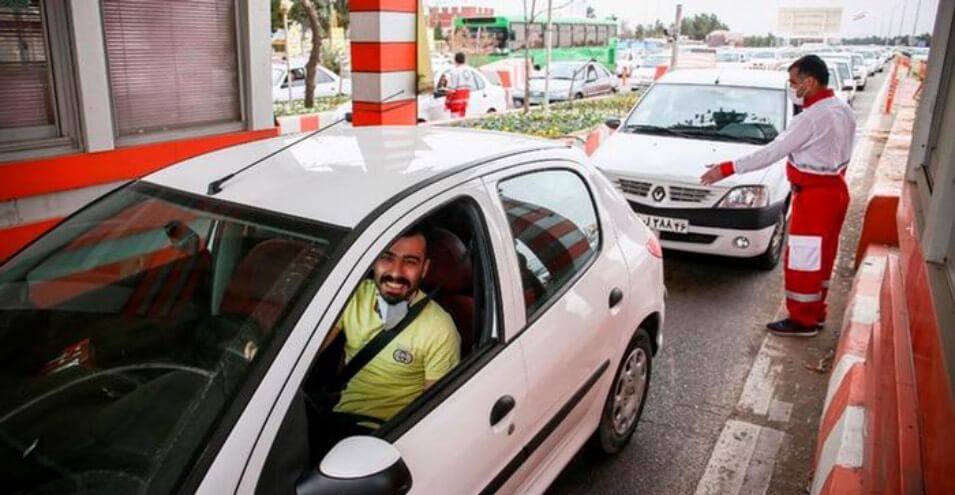
Road traffic in Iran increased by 23 percent in the first week of May, and 116 cities have been declared "white." However, the Ministry of Health and the Interior emphasize that "the situation regarding the coronavirus has not returned to normal."
Nader Rahmani, head of the Traffic Information and Control Center of the National Traffic Police (NAJA), told ISNA news agency on Monday, April 27, that statistics show that traffic on Iranian roads increased by 23 percent in the first week of May compared to the last week of Farvardin.
According to him, no roads are closed due to coronavirus prevention, and all traffic restrictions in this regard have been lifted in accordance with the order of the National Headquarters for Combating Coronavirus.
Iraj Harirchi, the deputy minister of health, also announced on a television program on the same day that wearing masks would be mandatory on the subway and public transportation. He said that people are required to wear masks and that "as many masks as possible will be made available to the public at reasonable prices and with a small subsidy at the entrances of subway stations."
"White" status in 116 counties
The Deputy Minister of Health has declared the situation in 116 Iranian cities as "white." At the same time, Interior Minister Ali Rabiei and Deputy Minister of Health Alireza Raisi have emphasized that these statistics do not mean that the situation is normal.
ISNA news agency quoted Ali Rabiei as saying, "The fact that the government is said to be seeking to normalize the situation is not true at all, and we do not have a normal situation regarding the coronavirus."
Alireza Raisi also said in a video conference with reporters about the coronavirus situation in Iran that the 116 counties that are included in the white areas have a population of about 14 to 15 million. "Accordingly, we are still dealing with the virus in most parts of the country and we must continue to fight it seriously, and the situation is not normal or good at all."
According to him, some reopenings in green spaces have not been carried out properly and health measures are not being observed in them: "We identified 71 new cases of the disease in one of the city markets, and these issues could cause a reconsideration."
Latest statistics on coronavirus and victims of counterfeit alcohol in Iran
According to Alireza Jahanpour, spokesman for the Ministry of Health, 991 people have been infected with the coronavirus in the past 24 hours. According to these statistics, after 36 days, the number of new daily cases of the COVID-19 virus in Iran has dropped to less than 1,000. According to official statistics, the total number of COVID-19 patients in Iran has reached 91,472 as of Monday, and the total number of deaths from the disease has reached 5,806, of whom 96 have lost their lives since yesterday.
Statistics from the Ministry of Health show that the number of citizens who died from consuming adulterated alcohol has reached 5011 as of Monday morning. Of these, only 525 have been referred to medical centers. According to these statistics, the number of victims of adulterated alcohol is only 795 fewer than the number of coronavirus cases in Iran.
There are no conditions for reopening religious places.
Hassan Rouhani, under pressure from the Qom seminary and some hardline factions, was forced to agree to open mosques during Ramadan. But not all religious centers will open. Alireza Raisi told reporters that his main concern, more than the coronavirus itself, is the idea that the situation has become “normal,” and that this could “create the biggest problem for controlling and managing the disease.”
Regarding the reopening of religious and pilgrimage sites, he emphasized that "this situation does not exist" either now or until the end of Ramadan, and "with the current trend, I think it is unlikely that this will happen soon."
Source: DW